ISO certification can apply to a product, process, service, or system. In most business conversations, however, ISO certification means the organization’s management system has been assessed against a standard.
That is why people often say a company is “ISO certified.” Technically, the company’s management system is certified for a defined scope.
For example:
- A construction company may be certified to ISO 9001 for quality management in project delivery.
- A logistics company may be certified to ISO 45001 for occupational health and safety management.
- A food supplier may be certified to ISO 22000 for food safety management.
- A technology company may be certified to ISO/IEC 27001 for information security management.
This distinction helps prevent misleading claims. ISO certification is not a general badge that covers everything a company does. It is a formal conformity claim tied to a named standard, a defined scope, and a certification body.
What Gets Certified: A Company, System, Product, or Process?
ISO certification can apply to a product, process, service, or system. In most business conversations, however, ISO certification means the organization’s management system has been assessed against a standard.
That is why people often say a company is “ISO certified.” Technically, the company’s management system is certified for a defined scope.
For example:
- A construction company may be certified to ISO 9001 for quality management in project delivery.
- A logistics company may be certified to ISO 45001 for occupational health and safety management.
- A food supplier may be certified to ISO 22000 for food safety management.
- A technology company may be certified to ISO/IEC 27001 for information security management.
This distinction helps prevent misleading claims. ISO certification is not a general badge that covers everything a company does. It is a formal conformity claim tied to a named standard, a defined scope, and a certification body.
Who Issues ISO Certification?
ISO does not issue ISO certificates.
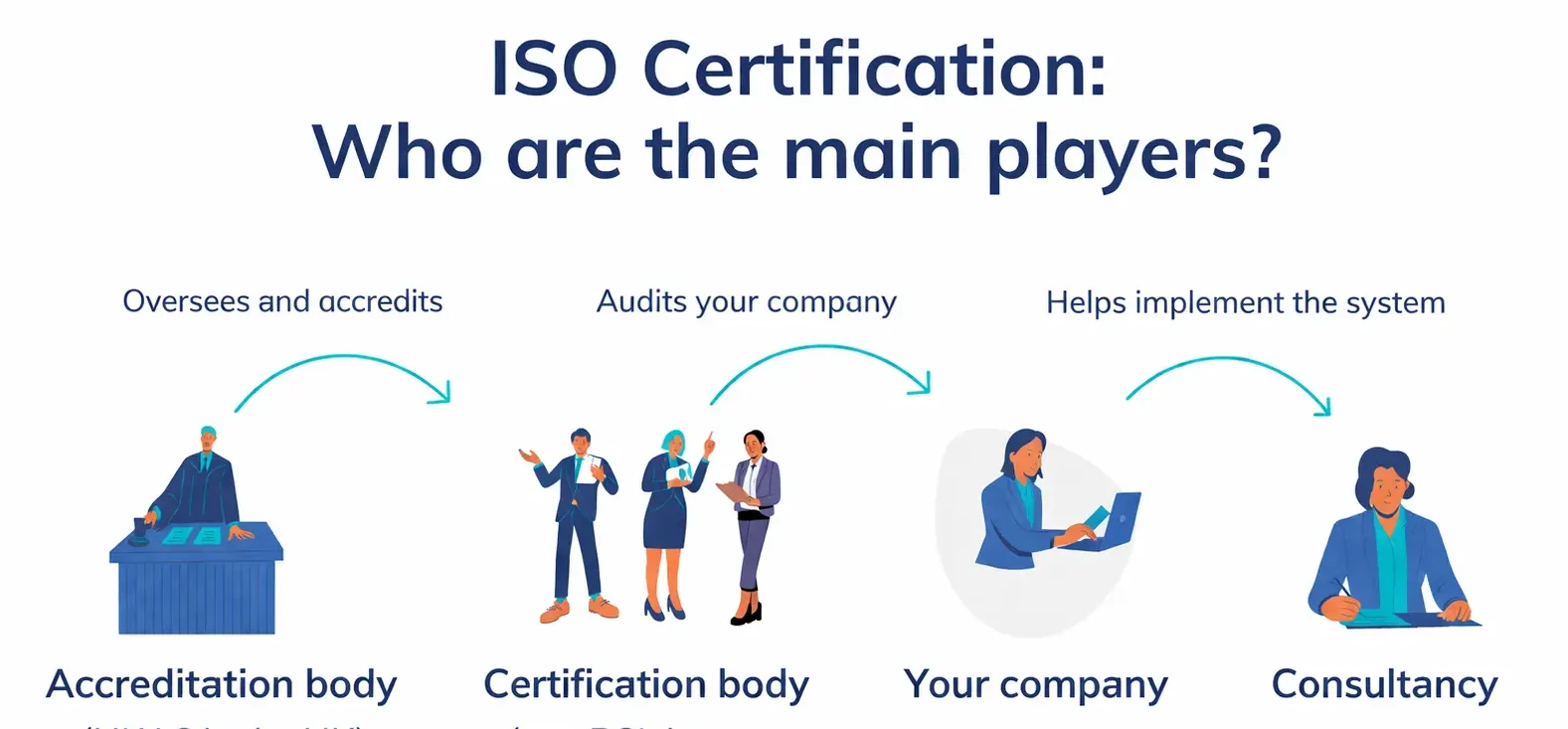
ISO develops and publishes standards. Certification is carried out by external certification bodies. These bodies audit an organization against the requirements of a standard and issue certification when the organization meets those requirements.
The trust question then becomes: who checked the certification body?
That is where accreditation becomes important. Accreditation is an independent evaluation of a certification body’s competence, consistency, and impartiality. In simple terms:
- ISO publishes standards.
- Certification bodies audit organizations and issue certificates.
- Accreditation bodies assess certification bodies.
- IAF-related recognition helps support trust across accredited conformity assessment systems.
This chain matters because an unsupported certificate may carry less credibility than one issued through an accredited certification route.
The most common ISO certifications are management system certifications. These standards help organizations build structured systems for managing important business responsibilities.
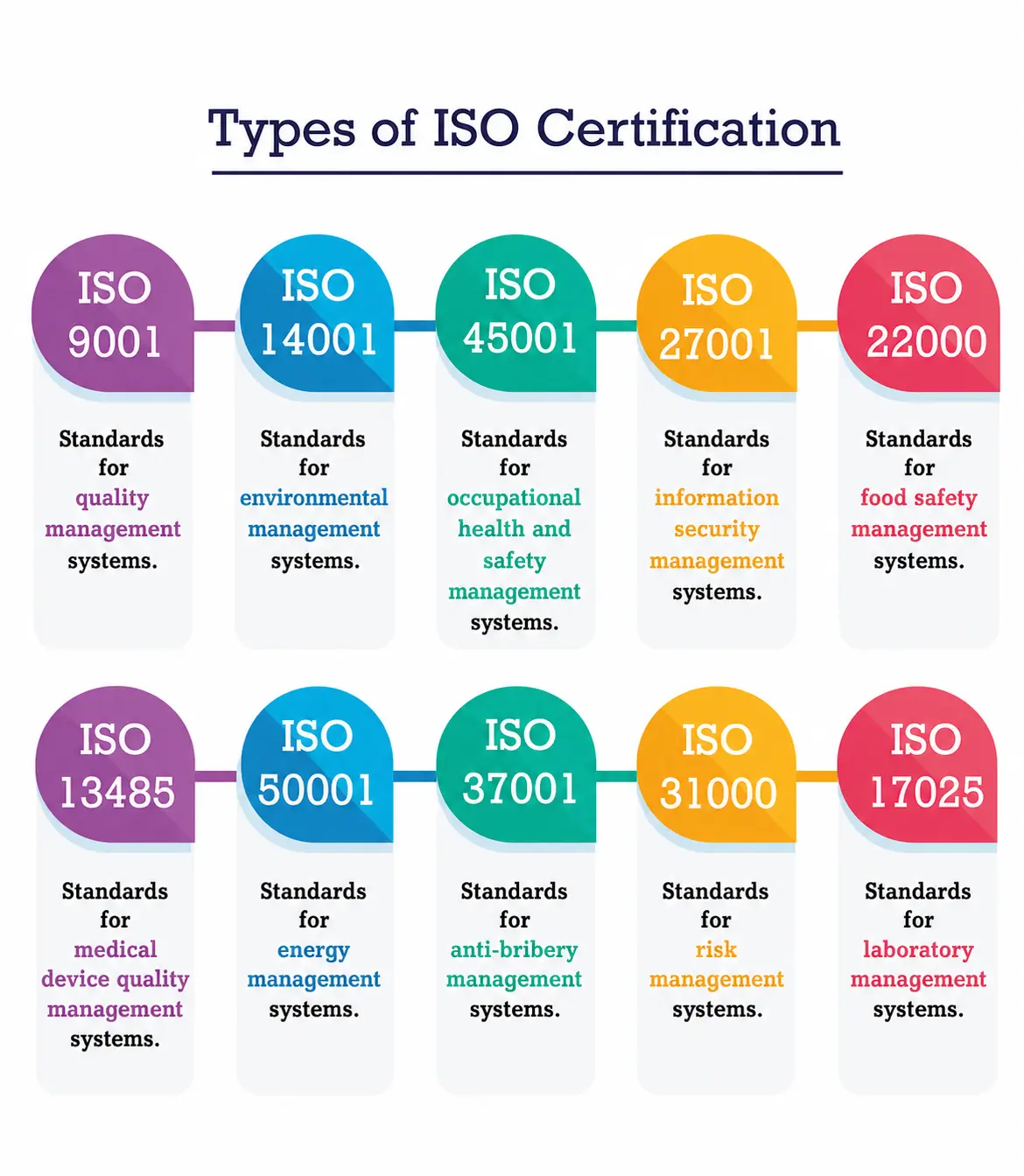
ISO 9001: Quality Management
ISO 9001 is the best-known quality management standard. It helps organizations improve consistency, customer satisfaction, process control, and continual improvement.
Businesses often pursue ISO 9001 certification when they need to show that their products or services are delivered through a controlled and documented quality management system.
ISO 14001: Environmental Management
ISO 14001 focuses on environmental management. It helps organizations identify environmental responsibilities, manage environmental risks, control impacts, and improve environmental performance.
This can be especially relevant for construction, manufacturing, energy, logistics, oil and gas, and industrial operations.
ISO/IEC 27001: Information Security Management
ISO/IEC 27001 focuses on information security management. It helps organizations manage risks related to data, systems, access, confidentiality, integrity, and availability.
This standard is relevant for technology companies, financial services, healthcare organizations, government suppliers, data-handling businesses, and any organization that needs stronger information security controls.
ISO 45001: Occupational Health and Safety Management
ISO 45001 focuses on occupational health and safety. It helps organizations manage workplace health and safety risks and improve worker protection.
This is highly relevant for construction, oil and gas, logistics, manufacturing, facilities management, and other industries where workplace safety risk is significant.
ISO 22000: Food Safety Management
ISO 22000 focuses on food safety management. It sets requirements for a food safety management system and can be used by organizations across the food chain. ISO states that ISO 22000 can be used by organizations regardless of size or position in the food chain.
This can apply to food producers, processors, caterers, restaurants, hospitals, hotels, food storage providers, packaging suppliers, and logistics companies involved in food handling.
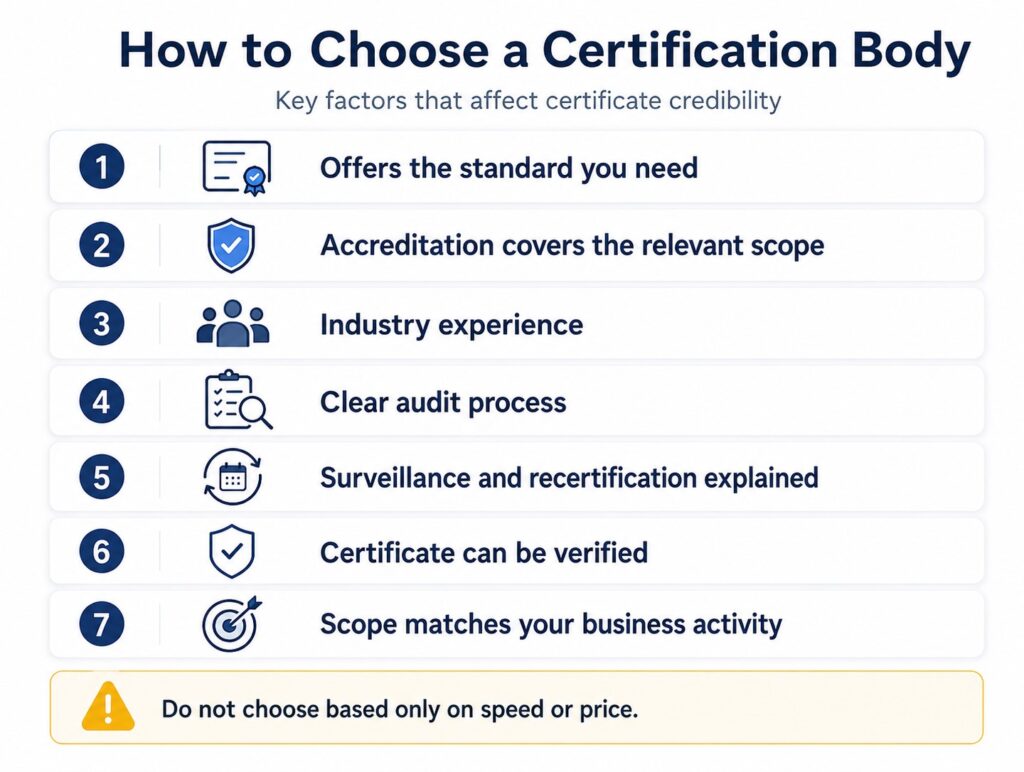
Choosing the right certification body is important because the credibility of the certificate depends partly on the credibility of the body that issues it.
When reviewing a certification body, consider:
- Whether it offers the standard you need
- Whether its accreditation covers the relevant certification scope
- Whether it has experience in your industry
- Whether its audit process is clear
- Whether it explains surveillance and recertification requirements
- Whether the certificate can be verified
- Whether the scope on the certificate matches your actual business activity
Avoid choosing a provider based only on speed or price. A weak certificate may create problems later if a client, buyer, or tendering authority checks the certificate and finds unclear scope, unsupported claims, or poor verification.
How to Verify an ISO Certificate
To verify an ISO certificate, do not rely only on a logo shown on a company’s website.
Check the certificate details carefully, including:
- Name of the certified organization
- Certification body
- Accreditation body or accreditation mark, if applicable
- Standard name and version
- Certification scope
- Site or location coverage
- Issue date
- Expiry date
- Certificate number
- Status of the certificate
For accredited certifications, IAF CertSearch may be used as a global verification route where applicable. IAF describes CertSearch as part of its effort to support a single world database for accredited conformity assessment.
You can also confirm the certificate directly with the certification body or relevant accreditation body.
What Makes an ISO Certification Claim Credible?
A credible ISO certification claim should be specific, traceable, and verifiable.
A strong claim usually includes:
- The exact ISO standard
- The certified organization’s legal name
- A defined scope
- A recognized certification body
- Accreditation details, where applicable
- A valid certificate number
- Clear issue and expiry dates
- A way to verify the certificate
A weak claim may use vague language such as:
- “ISO approved”
- “Certified by ISO”
- “Globally certified for all standards”
- “Instant ISO certificate”
- “ISO certificate without audit”
- “Lifetime ISO certification”
These phrases should be treated carefully because ISO certification requires a defined standard, a defined scope, and an independent certification process.
How AGS Iraq Supports ISO Certification Pathways
AGS Iraq supports organizations through a structured ISO certification and audit lifecycle.
This may include helping businesses understand:
- Which ISO standard fits their business need
- What scope should be certified
- What documents and records may be required
- How the audit process works
- How certification claims should be presented
- How surveillance and maintenance requirements work
- How accredited certification verification may apply
AGS Iraq serves organizations in Iraq and across the Middle East that need practical, credible, and scope-appropriate ISO certification support.
Whether the goal is tender readiness, supplier approval, risk management, operational improvement, or customer confidence, the right ISO pathway starts with selecting the correct standard and understanding the certification process clearly.
Request ISO Certification Support in Iraq
If your organization needs ISO certification for tenders, client approval, supplier qualification, or internal improvement, AGS Iraq can help you understand the right certification pathway.
Contact AGS Iraq to discuss the standard, scope, documentation, audit requirements, and certification route that fits your organization.