ISO 50001 Certification for Energy Management Systems


    ISO Certification

    ISO 14001 CERTIFICATION
    ISO 18001 CERTIFICATION
    ISO 45001 CERTIFICATION
    ISO 27001 CERTIFICATION
    ISO 22000 CERTIFICATION
    ISO 50001 CERTIFICATION
    ISO 29001 CERTIFICATION
    ISO 18788 CERTIFICATION
    ISO 37001 CERTIFICATION
    ISO 22301 CERTIFICATION
    ISO 13485 CERTIFICATION
    ISO 10002 CERTIFICATION
    ISO 21500 CERTIFICATION
    ISO 17025 CERTIFICATION
    ISO 15189 CERTIFICATION

    ISO 50001 energy management concept with glowing energy bulb

    ISO 50001 certification is a third-party confirmation that an organization’s Energy Management System conforms to ISO 50001:2018. In plain terms, it shows that energy performance is being managed through a structured system built around measurement, review, and continual improvement, not scattered energy-saving projects. ISO says the standard applies to organizations of all types and sizes and is designed to improve energy performance, including energy efficiency, energy use, and energy consumption.

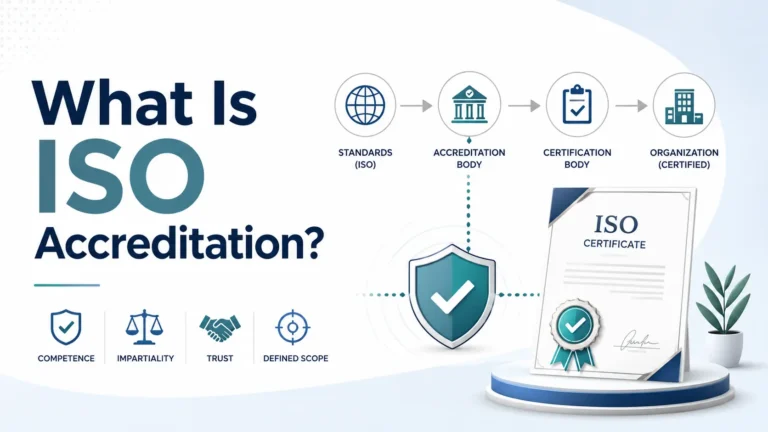
    ISO publishes the standard, but ISO does not certify organizations or issue certificates. Certification is carried out by independent certification bodies. Certification is possible, but it is not obligatory under ISO 50001 itself. ISO also points users to IAF CertSearch to confirm accredited certification status.

    Why do companies bother with it? Because better energy performance usually means lower operating cost, tighter governance, stronger external credibility, and a cleaner answer when customers, procurement teams, or stakeholders ask how energy is actually being managed. If your organization is looking to achieve these outcomes through an independently audited certification process, AGS can support you from readiness through to ISO 50001 certification.

    What ISO 50001 Certification Is

    ISO 50001 is the standard. ISO 50001 certification is the external confirmation that an organization’s EnMS meets that standard. The certified object is the organization’s management system for energy, not a technology product, not a one-time efficiency project, and not a logo claim. ISO describes ISO 50001:2018 as a framework for establishing, implementing, maintaining, and improving an EnMS.

    That distinction matters more than people think. Implementation is the work of building and operating the EnMS. Certification is the independent audit of the EnMS by a certification body. Accreditation sits above that and validates the certification body’s competence and impartiality.

    Who ISO 50001 Certification Is For

    ISO 50001 certification is for organizations with enough energy use, operational complexity, or external scrutiny that energy performance needs to be managed formally and demonstrated credibly. That usually includes manufacturers, logistics operators, hospitals, hotels, data-heavy facilities, multi-site businesses, utilities, infrastructure operators, and organizations under cost, procurement, or sustainability pressure. ISO says the standard supports organizations in all sectors, and DNV says it applies to organizations of any size.

    The strongest fit tends to be commercial rather than philosophical. If energy cost is material, if facilities are spread across sites, or if buyers and stakeholders want stronger proof of governance, ISO 50001 certification starts to make practical sense. That is where an EnMS moves from “nice idea” to a business control system. This is an inference from ISO’s broad applicability and the way service pages position ISO 50001 around cost, control, and external confidence.

    Why ISO 50001 Certification Is Important And Whether It Is Worth It


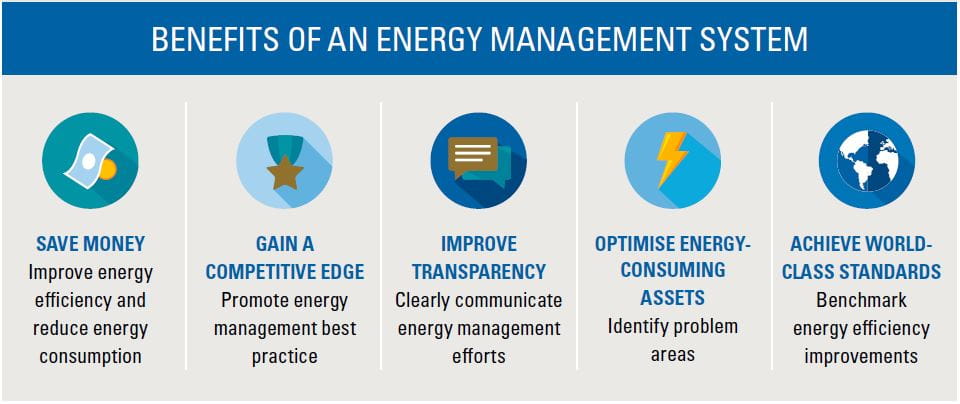
    Energy management system benefits for cost savings and energy efficiency

    For the right organization, it is worth it because the upside is operational, financial, and reputational at the same time. ISO says the standard helps organizations improve energy performance. Provider pages such as DNV and BSI consistently connect certification with lower energy cost, better efficiency, reduced environmental impact, and stronger market positioning.

    Here’s where the value usually shows up:

    • Lower energy costs through better control of energy use and consumption
    • Improved energy performance because the system is built around targets, data, review, and action
    • Stronger compliance posture because energy management becomes documented, reviewed, and easier to evidence
    • More credibility in tenders and procurement, where independent certification helps separate claims from proof
    • Reduced emissions and environmental impact as energy performance improves over time

    The real point is not that certification makes a company look greener. The point is that it gives the organization a repeatable, auditable system for managing energy performance and proving that the system has been checked by an independent party.
    ISO 50001 Certification With AGS – Ready To Improve Energy Performance?

    Understand where your organization stands today and what it takes to move forward with a structured, auditable Energy Management System.

    A readiness review from AGS helps you clearly identify your:

    • Current EnMS maturity and compliance level
    • Scope of ISO 50001 application across your operations
    • Key gaps against ISO 50001:2018 requirements
    • Expected timeline for certification readiness
    • Step-by-step pathway toward successful certification

    This gives you a clear, practical roadmap so you can move forward with confidence instead of uncertainty.


    Request your ISO 50001 readiness review with AGS

    What ISO 50001 Requires At A High Level


    ISO 50001 is built around system management, not one-off technical fixes. ISO’s official explainer boils it down to six core actions: develop an energy policy, set targets and objectives, use data to understand energy use, measure results, review how the policy works, and continually improve energy management.

    At a business level, that usually means the organization needs:

    • an energy policy
    • defined targets and objectives
    • energy data and measurement methods
    • review mechanisms
    • continual improvement activity
    • clear governance around energy performance
    • an active EnMS rather than a dormant procedure set

    ISO also says ISO 50001 uses the same continual-improvement management system model found in standards such as ISO 9001 and ISO 14001, which is why it integrates more easily with existing management systems than many first-time buyers expect.

    What Top Management Must Do

    Top management is not a ceremonial add-on in ISO 50001. ISO’s standard page says top management is responsible for making sure the EnMS aligns with the organization’s strategic direction, that resources are available, and that continual improvement is promoted. SGS frames it the same way in plain language.

    In practice, leadership has to do three things. Set the direction. Back it with resources. Keep the system moving when operations get busy. If top management is absent, the EnMS usually turns into reporting with no real leverage. If leadership stays engaged, ISO 50001 becomes a governance tool instead of a side project. This second sentence is an inference grounded in ISO’s explicit leadership requirement.

    How The ISO 50001 Certification Process Works

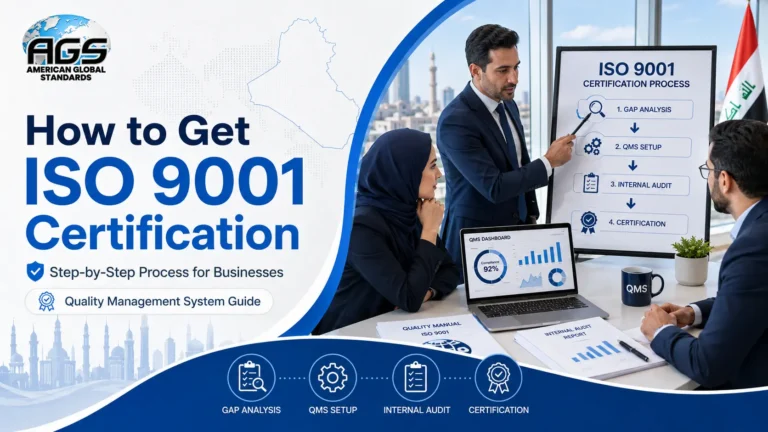
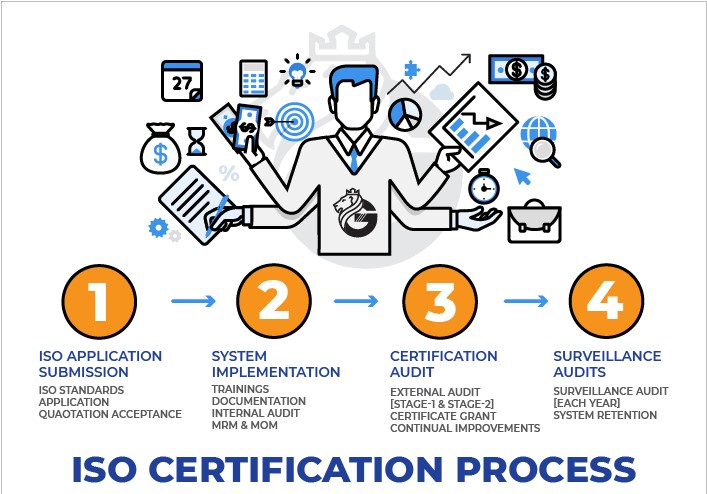
    ISO 50001 certification process from application to surveillance audit

    Certification follows implementation and an independent audit of the organization’s energy management system. The broad route is consistent even though the exact timing varies. ISO 50003:2021 exists specifically to set requirements for bodies auditing and certifying ISO 50001 EnMS, including competence, consistency, impartiality, audit process, audit time, and multi-site sampling.

    A typical path looks like this:

    1. Define scope and energy-management boundaries
      Decide what facilities, operations, and activities sit inside the EnMS.
    2. Assess readiness or gaps
      Review the current system against ISO 50001 requirements.
    3. Implement or mature the EnMS
      Put the needed controls, data practices, review mechanisms, and responsibilities in place.
    4. Conduct internal checks and management review
      Test whether the system is actually running before the external audit.
    5. Choose a certification body
      Select an independent certifier with the right competence and accreditation route.
    6. Complete Stage 1 audit
      This usually focuses on readiness, system design, and whether the organization is prepared for the main audit.
    7. Complete Stage 2 audit
      This is the main certification audit of implementation and effectiveness.
    8. Address nonconformities if needed
      If the auditors find gaps, the organization responds with corrective action and evidence.
    9. Receive certification
      Once conformity is confirmed and the certification decision is made, the certificate is issued.
    10. Move into surveillance and recertification
      The certification then enters the ongoing audit cycle.

    That sequence matters because a lot of delay comes from skipping the readiness work and treating Stage 1 as a formality. It is not. The organizations that move faster are usually the ones that define scope early, clean up evidence early, and go into audit with a functioning system. This is an inference based on how certification stages are structured and how provider pages describe recertification and surveillance.


    Doing the right thing, at the right time.

    300+

    Satisfied Clients

    10+

    Years of Experience

    1700+

    ISO certifications

    How Organizations Maintain ISO 50001 Certification

    Getting certified is only the first checkpoint. Keeping certification means the EnMS has to stay active. Provider process pages consistently describe a lifecycle built around surveillance and recertification, with recertification being more in-depth than a routine surveillance visit. SGS describes this as a continuous certification system with a triennial recertification cycle.

    What that means in practice is simple enough. The system has to keep producing evidence. Energy performance has to keep being reviewed. Objectives cannot just sit in a policy file. Surveillance checks whether the EnMS is still operating, and recertification checks whether the system still deserves the certificate.


    Industries Sector

    Oil & Gas
    Construction & Infrastructure
    Manufacturing & Industrial Production
    Food, Agriculture & Processing
    Security & Private Protection Services
    Government & Public Sector
    IT & Digital Services
    Healthcare & Medical Services
    Laboratories & Testing Facilities
    Logistics & Transportation
    Energy & Utilities
    Banking, Financial Services & Insurance
    Educational institutions
    Healthcare Organizations

    Trainings

    Quality
    Environment
    Health & Safety
    Food Safety
    Business Continuity

    Blogs & News

    ISO Certification

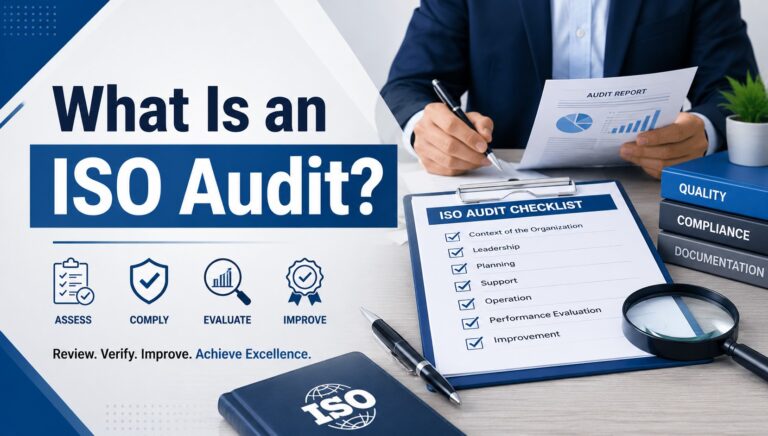
    ISO audit meaning for management system evaluation

    What Is an ISO Audit? Scope, Evidence & Findings

    What Is an ISO Audit? Types, Stages, and How to Prepare An ISO audit is…
    READ MORE →
    ISO 9001 quality management system explained

    What Is ISO 9001? QMS Requirements & Certification

    What Is ISO 9001? A Beginner’s Guide for Businesses Most businesses don’t struggle with quality…
    READ MORE →
    ISO certification

    How Many Types of ISO Certification Are There?

    How Many Types of ISO Certification Are There? ISO certification applies to 4 categories of…
    READ MORE →
    ISO certification benefits for business systems and performance

    What Is ISO Certification? Definition, Process, and How to Verify It

    What Is ISO Certification? ISO certification is an independent third-party confirmation that a product, process,…
    READ MORE →
    Basra Municipality Requirements for ISO Certification

    Government Procurement & Tender Requirements in Basra

    Government Procurement & Tender Requirements in Basra ISO Certification, Compliance Expectations & Practical Guidance Government…
    READ MORE →
    Basra Municipality Requirements for ISO Certification

    Basra Municipality Requirements for ISO Certification: What Businesses Must Comply With

    Basra Municipality Requirements for ISO Certification: What Businesses Must Comply With Basra Municipality does not…
    READ MORE →
    ISO for Food Businesses in Basra

    ISO for Food Businesses in Basra

    ISO for Food Businesses in Basra: A Complete Guide to Food Safety, Compliance & ISO…
    READ MORE →
    ISO for Manufacturing in Basra

    ISO for Manufacturing in Basra

    ISO for Manufacturing in Basra: How International Standards Strengthen Industrial Performance? Basra’s manufacturing sector is…
    READ MORE →
    ISO for Construction Companies in Basra

    ISO for Construction Companies in Basra

    ISO for Construction Companies in Basra: A Complete Guide for 2026 This is the practical…
    READ MORE →

    How To Choose An Accredited ISO 50001 Certification Body

    This is where buyers either reduce risk or create it. A certification body audits your EnMS and makes the certification decision. An accreditation body checks whether that certification body is competent and impartial. ISO’s guidance is blunt on the role split: ISO writes standards, certification bodies certify, and accreditation is the formal recognition that certifiers operate according to international standards.

    A practical shortlist should answer these questions:

    • Is the certification body accredited for the relevant route?
    • Can certificate status be checked through IAF CertSearch?
    • Does the certifier have experience with your sector and energy profile?
    • How are Stage 1, Stage 2, surveillance, and recertification handled?
    • What support is available before the audit, and what remains independent?

    If the route is accredited, IAF CertSearch gives users a way to confirm that the certificate is valid, that the certification body is accredited, and that the accreditation body is an IAF MLA signatory. That is a much stronger trust signal than a certificate PDF sitting alone on a website.

    Get Started With ISO 50001 Certification With AGS

    If your organization is actively considering ISO 50001 certification, the next step should be a readiness review, not a random quote request. You need to know your scope, the maturity of your current EnMS, the state of your data and measurement practices, and how much work sits between today and an external audit.

    At AGS, the route is positioned around independent third-party ISO 50001 audits for organizations that need an EnMS assessed by a certification body, not a generic energy-efficiency claim. AGS states that it is headquartered in the USA, has a regional office in Iraq, and provides accredited third-party ISO certification services across the Middle East.


    Talk to an expert about your certification path

    Logo
    Logo
    Logo
    Logo
    Logo
    Logo
    Logo
    Logo
    Logo
    Logo
    Logo
    Logo
    Logo
    Logo

    ISO 50001 Certification FAQ

    No. Certification is possible, but not obligatory, under ISO 50001 itself. ISO says an organization can implement the standard for internal and external benefits without treating certification as a requirement, unless regulation or another outside obligation makes it necessary.

    Yes. ISO says ISO 50001 is based on the same continual-improvement model used by standards such as ISO 9001 and ISO 14001, which makes integration easier.

    No fixed technology stack is mandated by the standard. ISO frames ISO 50001 around policy, targets, data, measurement, review, and continual improvement. It is a management system standard focused on structured energy performance improvement, not a prescription for one technology package.

    ISO 50001 focuses specifically on energy management and energy performance. ISO 14001 is broader and covers environmental management more generally. Because ISO 50001 shares a common management system structure with ISO 14001, integration is often easier than companies expect.

    No. ENERGY STAR certification recognizes achievement of a specific level of energy performance, while ISO 50001 certification verifies that an organization has an energy management system meeting specified requirements. They are related, but they are not the same thing.

    50001 Ready is a U.S. Department of Energy designation based on self-attestation through the 50001 Ready Navigator. It is not the same as ISO 50001 certification, which is a formal third-party certification route carried out by an independent certification body.

    Start Your ISO 50001 Certification Journey with AGS

    Translate »