Home » ISO 22301
ISO 22301 certification is for certifying an organization’s business continuity management system, not for certifying one person through training. It shows that a certification body has audited your BCMS against ISO 22301 and found it conforms to the standard. This page explains what ISO 22301 certification covers, who it fits, what it costs, and how to get it.
ISO 22301 certification is independent proof that an organization’s business continuity management system has been audited against ISO 22301. ISO 22301 is the international standard for business continuity management systems, and certification is carried out by external certification bodies, not by ISO itself.
ISO 22301:2019 covers the framework for planning, establishing, implementing, operating, monitoring, reviewing, maintaining, and continually improving a business continuity management system. In practice, that means it covers how an organization prepares for disruption, responds when disruption happens, and recovers at an acceptable level. The current standard is ISO 22301:2019, with Amendment 1:2024 adding climate action changes.
The ISO standard is the requirements document. Certification is the external audit of an organization’s BCMS against that standard. Training is education for individuals and does not certify the organization. Those are three different things, and buyers often confuse them.
ISO 22301 certification is mainly for organizations that need to keep operating during disruption and need credible proof that their continuity system works. It is relevant for leadership teams, risk owners, compliance teams, procurement-facing businesses, and organizations that depend on uptime, contractual continuity, or regulated service delivery.
ISO 22301 certification is especially relevant in sectors where downtime can damage customers, contracts, service delivery, or public trust. That often includes utilities, transport, healthcare, logistics, financial services, technology, data services, manufacturing, and essential public services. The standard is not limited to those sectors, but disruption risk makes the business case more obvious there.
Certification is worth evaluating when downtime would hurt customers, operations, contracts, or regulated services. It also becomes more relevant when customers ask for continuity assurance, when supplier due diligence is getting stricter, when resilience is part of tenders, or when the organization already has continuity controls but needs external proof that they are real and working.
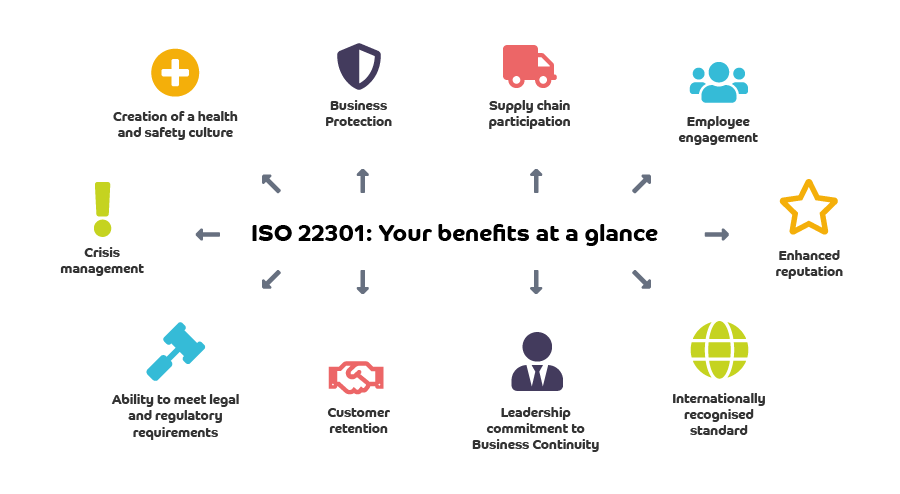
ISO 22301 certification helps organizations improve resilience, recover faster from disruption, strengthen continuity planning, and give customers and stakeholders clearer proof that the BCMS has been independently audited. It turns continuity from an internal claim into externally checked evidence.
Operationally, ISO 22301 certification helps organizations build a more structured continuity system. That usually means clearer roles, better business impact analysis, stronger recovery planning, more disciplined testing, and a more systematic response when disruption happens. It also helps move continuity planning beyond documents and into operating practice.
Commercially, ISO 22301 certification can strengthen customer confidence, support supplier due diligence, improve procurement credibility, and give boards, regulators, and other stakeholders more confidence that continuity controls are in place. It is not just about resilience language. It is about showing external parties that the organization has been audited against a recognized continuity standard.
Satisfied Clients
Years of Experience
ISO certifications
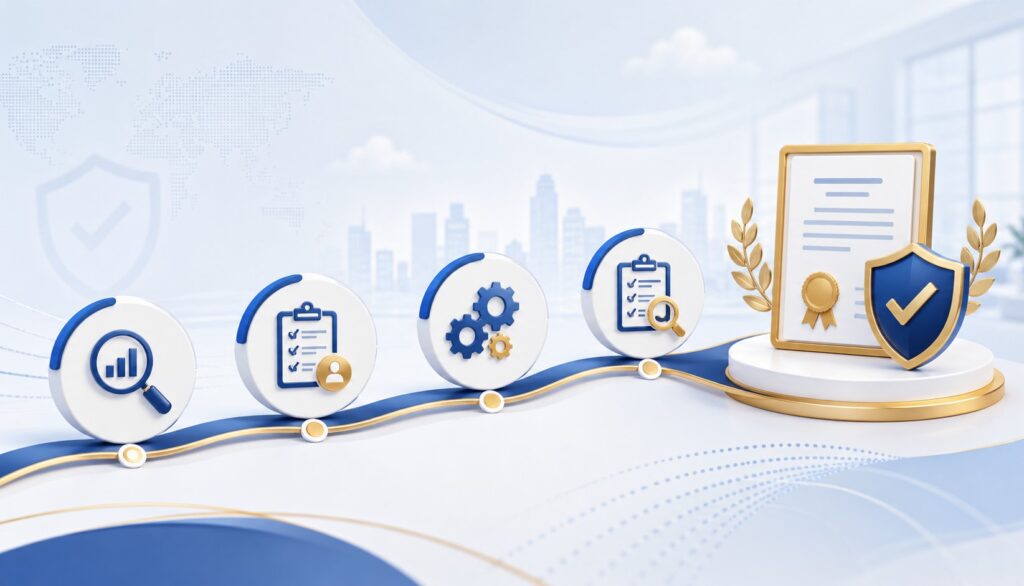
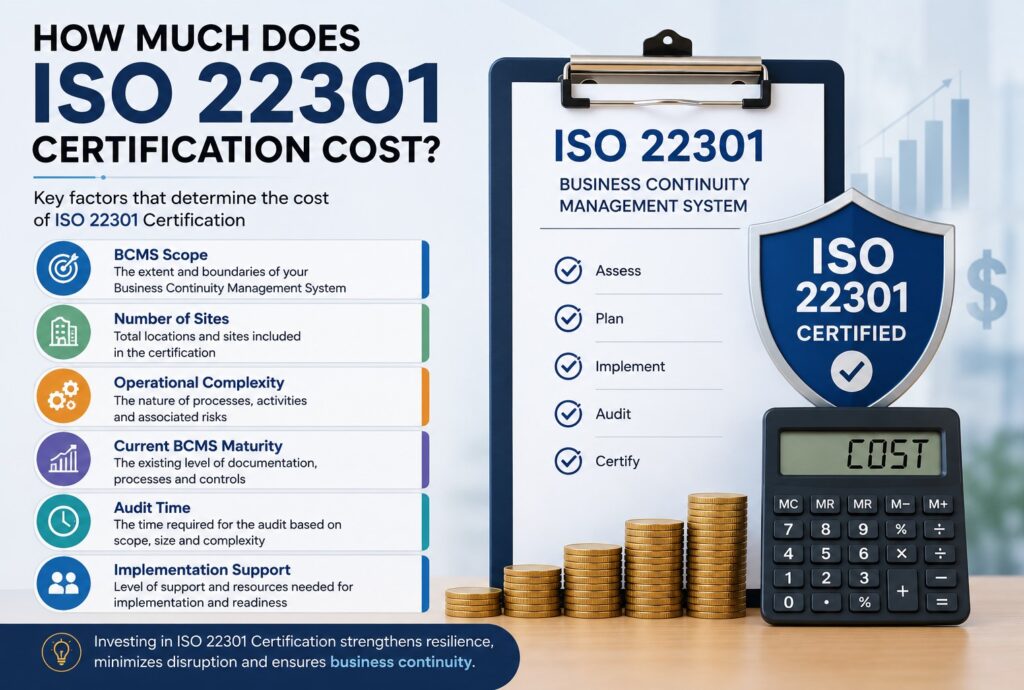
Getting ISO 22301 certification usually follows a simple sequence. First, define the BCMS scope. Second, identify critical activities, disruption risks, and recovery needs. Third, document and implement the system. Fourth, run the BCMS long enough to generate evidence. Fifth, complete internal review and audit activity. Sixth, go through Stage 1 and Stage 2 with an external certification body.
ISO 22301 requires a working business continuity management system, not just emergency notes in a folder. In practical terms, the core requirements usually include scope, policy, roles, business impact analysis, risk assessment, continuity strategies, continuity plans and procedures, exercises, internal audit, and management review. The real issue is readiness. Auditors look for a functioning system with evidence, not a document set built at the last minute.
Stage 1 checks readiness. It focuses on whether the BCMS is defined, documented, and ready for the main audit. Stage 2 checks how the system works in practice. It looks for evidence that the BCMS is operating, that internal checks have happened, and that the organization can support its continuity claims with records, reviews, and actual implementation.
The usual implementation problems are weak scope, weak evidence, and weak testing. Some organizations define the BCMS too vaguely. Others produce continuity plans that have never been exercised. Another common mistake is treating ISO 22301 like a documentation project instead of an operating management system. The fix is straightforward: define the scope properly, run the system, test it, and build evidence before the audit starts.
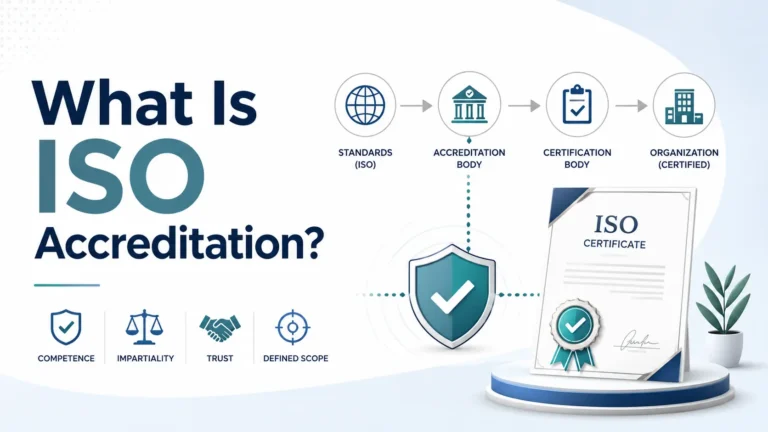
Accredited ISO 22301 certification matters because buyers need confidence that the certification body is competent, impartial, and recognized for this scope. If the certification route is weak, the certificate is weaker too. Accreditation is what turns the certificate into something customers, procurement teams, and other stakeholders are more likely to trust.
Check whether the certification body is accredited for management systems certification and whether ISO 22301 is within its accredited scope. Then check which accreditation body stands behind it, whether that accreditation is recognized, and whether the certificate can be verified through the certification body or a recognized accreditation directory. This is a checklist issue, not a branding issue.
Check the certification body name, the accredited scope, the organization name, the covered sites, if relevant, the standard reference, the certificate status, and the issue and expiry dates. Also, check whether the certificate can be verified through the certification body or an accreditation directory. A certificate that cannot be verified is a weaker proof signal.


Yes, when disruption risk is real, and continuity matters to customers, operations, contracts, or regulators. If downtime has commercial, operational, or reputational consequences, certification can be worth evaluating because it provides external proof that the BCMS has been audited against a recognized standard.
No, not as a universal rule for every organization. But in some sectors, contracts, customer requirements, or sector-specific expectations can make formal continuity controls commercially necessary. That is not the same thing as a universal legal requirement, and the exact position depends on jurisdiction and sector.
ISO 22301 focuses on business continuity. ISO 27001 focuses on information security. ISO 9001 focuses on quality management. They are different standards with different objectives, even though they can be integrated into the same organization. Buyers should not treat them as substitutes unless the actual risk and control objective is the same.
This page is about organization certification. It is about whether a certification body can audit and certify your organization’s BCMS against ISO 22301. It is not about training one person, buying a lead auditor course, or earning an individual learning credential.
Yes, an organization can be certified to ISO 22301 if its business continuity management system conforms to the standard and passes the certification audit. The certificate applies to the organization and the defined scope of its BCMS, not to an individual employee.