Is ISO Certification Worth It? A Cost-Benefit Guide for Businesses
ISO certification is worth it when it helps a business win contracts, meet customer requirements,…

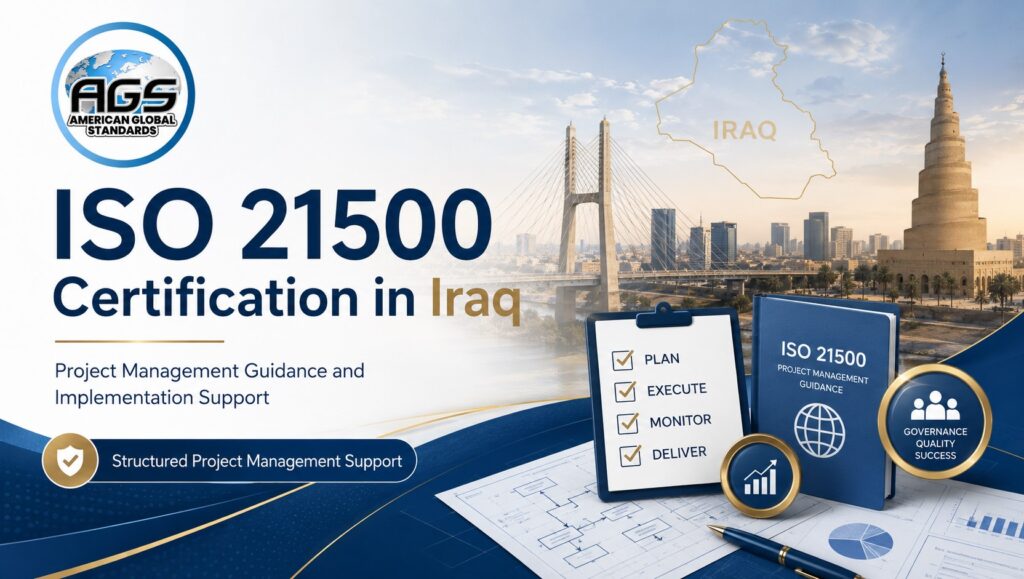
The phrase ISO 21500 certification is often used as a shortcut for several different needs.
Some professionals use it when they want project management training. Others use it when they want a personal credential. Companies may use it when they want their PMO, project teams, departments, or contractor operations aligned with ISO-based project management guidance.
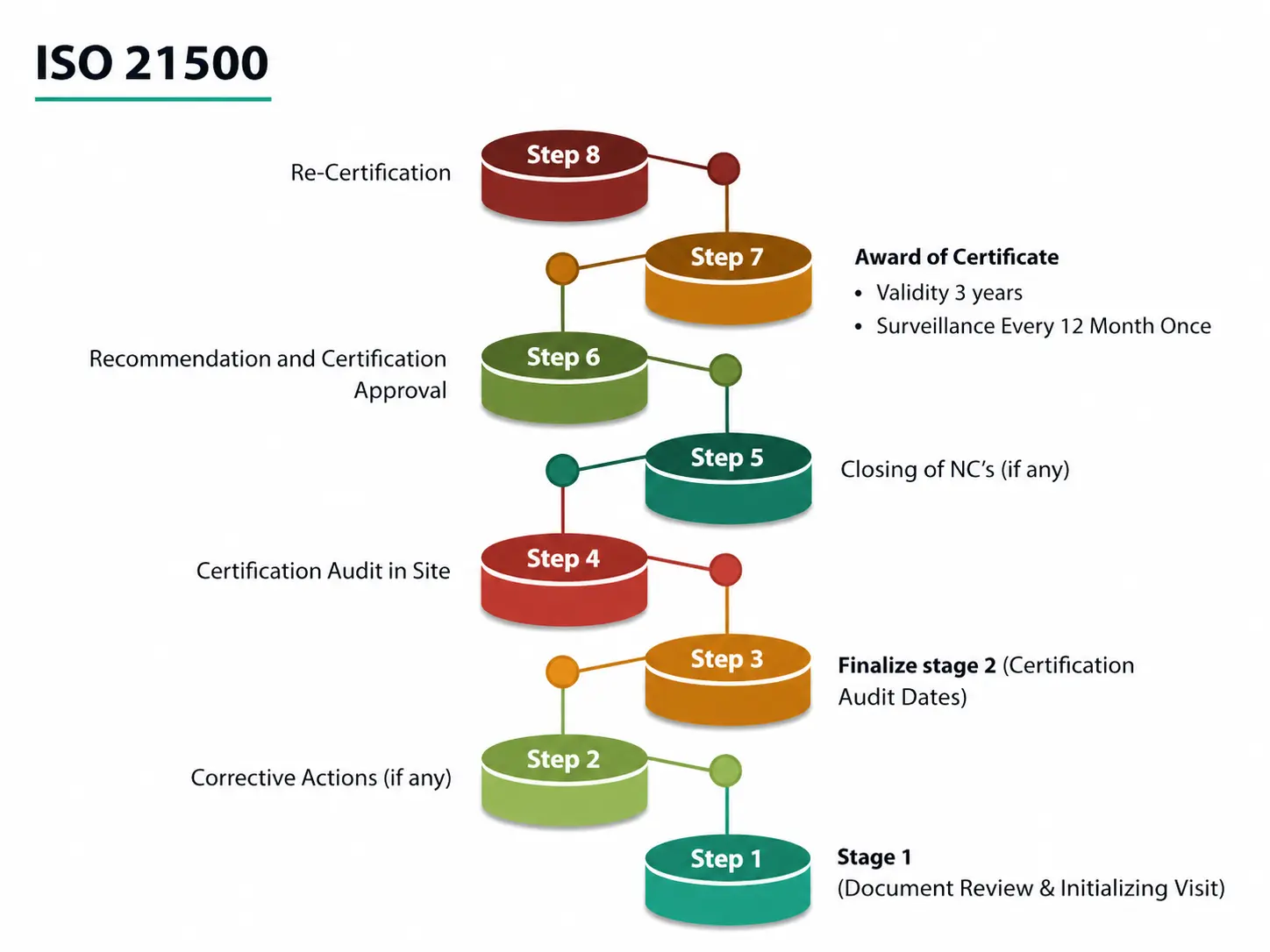
This distinction matters because ISO 21500:2021 is a context-and-concepts standard for project, programme, and portfolio management. ISO 21502:2020 is the more practical project management guidance standard that many current training and certification routes refer to.
For that reason, AGS starts with practical route selection before recommending training, PMO support, documentation work, or conformance evidence. The right path may be:
A credible provider should explain the correct route before offering any certificate.
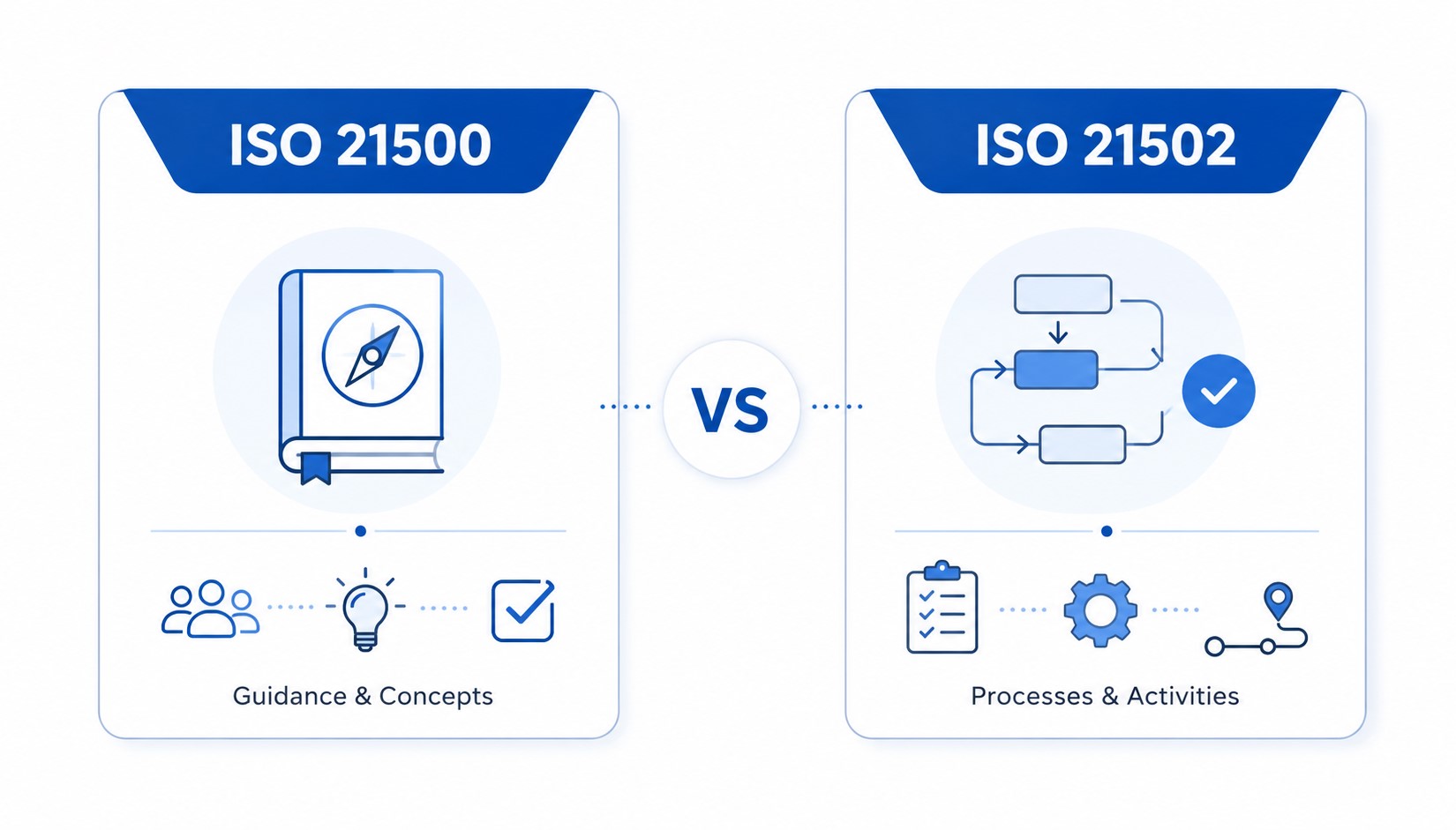
ISO 21500 and ISO 21502 are related, but they do different jobs.
Standard or phrase | Current role | Practical meaning |
ISO 21500:2021 | Project, programme, and portfolio management context and concepts | Helps explain the wider structure, concepts, and organizational context |
ISO 21502:2020 | Guidance on project management | Gives practical guidance for managing projects across different organization types and delivery approaches |
ISO 21500 certification wording | Market search term | Often points to training, person certification, PMO support, or conformance evidence |
ISO 21502 training or certification route | Current provider route in many cases | Often used for project management training and person-certification paths |
ISO 21500:2012 is no longer the current anchor document for project management guidance. The current ISO 21500 family separates the broader context-and-concepts layer from practical project management guidance. For most buyers, that means ISO 21502 should be reviewed when the real need is project management training, project control, or PMO implementation.
Organizations in Iraq may need more than a course.
A contractor, supplier, NGO, construction firm, oil and gas service company, logistics provider, engineering team, IT service provider, infrastructure contractor, or public-sector vendor may need a repeatable project management structure that works across departments, sites, contracts, and client requirements.
AGS can support organization-level project management improvement through:
This work helps the organization answer practical questions:
ISO 21500 and ISO 21502 support is useful for people and organizations that manage complex projects, client-driven contracts, multi-site operations, donor-funded work, infrastructure work, engineering work, supplier obligations, or project-based service delivery.
Common users include:
AGS can support Iraq-based organizations where project delivery discipline, documentation, and governance evidence matter for clients, tenders, internal controls, or delivery performance.



A route review should match the buyer’s real goal. A professional who wants a credential needs a different path from a company that wants PMO alignment.
Review area | What may be checked |
User goal | Training, person certification, PMO support, conformance evidence, or client requirement |
Standard route | ISO 21500 awareness, ISO 21502 guidance, or related project management standards |
Project governance | Roles, sponsors, approvals, reporting, escalation, and decision rights |
Project documents | Charter, project plan, risk register, issue log, change log, stakeholder register, closure report |
PMO structure | Templates, reporting cadence, project controls, portfolio visibility, governance model |
Team readiness | Training needs, role clarity, project control habits, documentation discipline |
Conformance evidence | Records that show project management practices are being applied |
Tender or client requirement | What proof the buyer, client, or tender reviewer is actually asking for |
AGS can help Iraqi organizations move from unclear project practices to a more structured project management system of work.
The first step is to check why the organization is asking for ISO 21500 certification. The reason may be training, a tender request, a client requirement, a PMO improvement project, a governance weakness, a project documentation gap, or a professional development need.
This step prevents the buyer from treating every request as the same type of certificate.
The route may be ISO 21500 awareness, ISO 21502 project management training, person-certification guidance, PMO implementation support, or conformance evidence review.
AGS helps clarify whether the request is for an individual, a project team, a department, a PMO, or the wider organization.
AGS may review how projects are initiated, approved, planned, monitored, changed, reported, and closed.
The review may also check whether risks, stakeholders, resources, costs, schedules, decisions, issues, changes, and lessons learned are documented.
Documentation should support real project delivery, not just sit in a folder.
Depending on the route, AGS may help review or structure project charters, governance models, stakeholder registers, risk registers, project plans, change logs, issue logs, meeting records, status reports, and closure records.
Training should connect ISO guidance to the way teams actually manage projects.
For Iraq-based teams, this may include project roles, client reporting, contractor coordination, approval records, risk control, change requests, document control, and project closure evidence.
If the organization needs to show evidence to a client, tender reviewer, sponsor, or internal leadership team, AGS can help structure the evidence around the selected route.
This may include a gap report, readiness summary, document checklist, training record, PMO improvement plan, or conformance evidence pack.
The required documents depend on whether the goal is training, PMO setup, conformance support, or client evidence. Most organizations should start with core project management records.
Document or record | Why it matters |
Project charter | Defines the project purpose, sponsor, scope, objectives, and authority |
Governance structure | Shows decision rights, approvals, escalation, and reporting lines |
Project management plan | Explains how the project will be planned, controlled, and reported |
Scope record | Defines what is included and excluded |
Schedule record | Tracks planned work, dates, dependencies, and progress |
Budget or cost control record | Shows cost planning, monitoring, and financial control where applicable |
Risk register | Records risks, causes, owners, actions, and review status |
Stakeholder register | Identifies stakeholders, expectations, communication needs, and responsibilities |
Change log | Records requested changes, approval status, impact, and decision history |
Issue log | Tracks active issues, owners, status, and actions |
Status reports | Show progress, blockers, decisions, risks, and next steps |
Closure report | Records outcomes, acceptance, lessons learned, and final project status |
The deliverable depends on the route selected after review.
Need | AGS support | Expected output |
Training route review | Review learner or team needs | Training path recommendation |
ISO 21502 guidance | Explain current project management guidance | Standard route summary |
PMO gap review | Compare current practice with project governance needs | Gap report and improvement priorities |
Documentation support | Review or build project records and templates | Project document checklist or template set |
Organization conformance support | Review evidence of project management alignment | Readiness summary or conformance evidence pack |
Tender or client readiness | Review requested proof and current records | Evidence checklist and corrective actions |
Team training support | Support project teams with standards-based project controls | Training plan and attendance evidence where applicable |
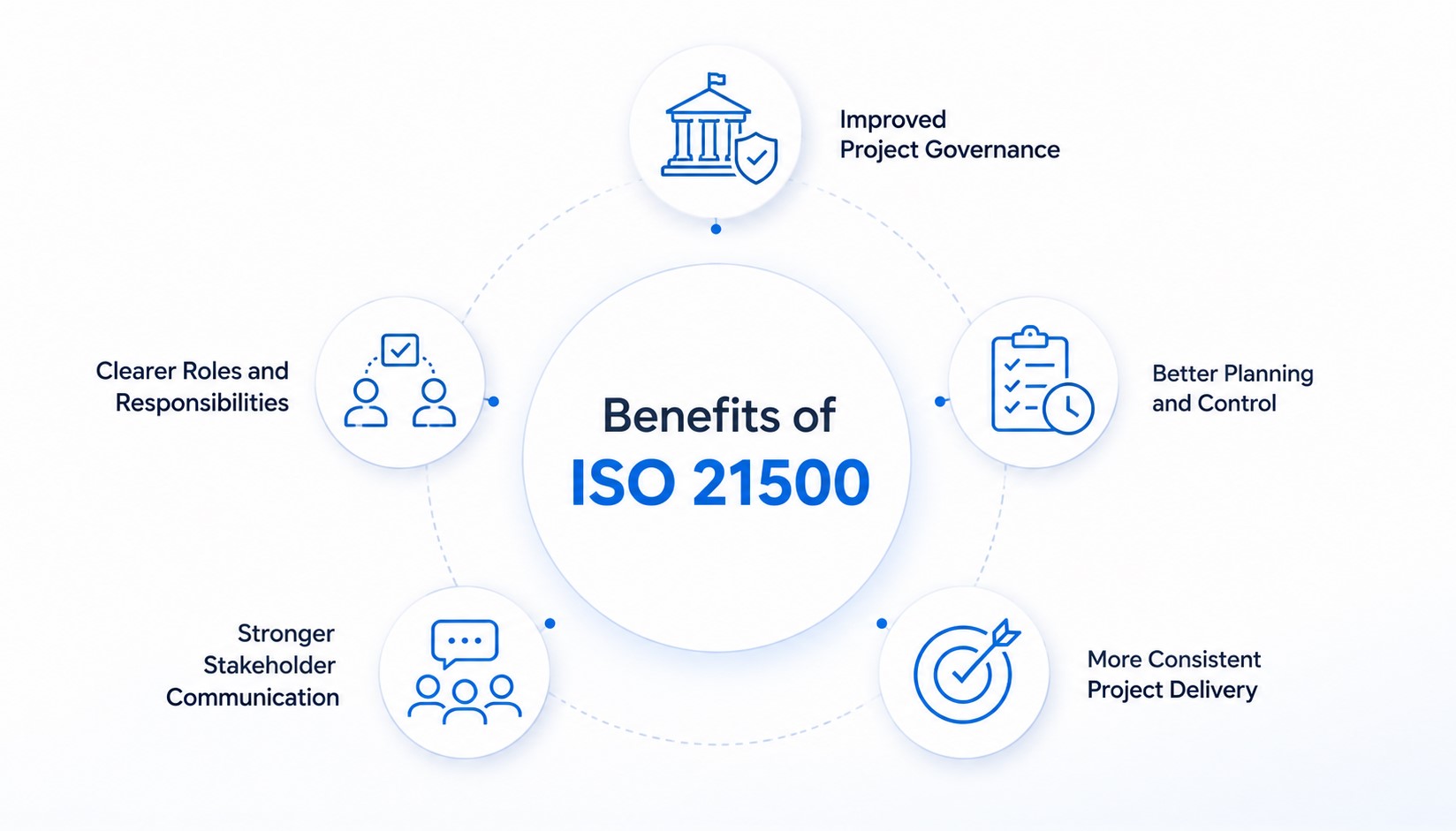
The main benefit is better project control.
ISO 21500 and ISO 21502 can help teams create clearer project roles, stronger governance, better reporting, more consistent documentation, and improved risk and change control.
For contractors and suppliers, this can support client confidence because project records become easier to review. For PMO leaders, it can help standardize how projects are initiated, monitored, changed, reported, and closed. For professionals, training can improve understanding of project management practices and support a clearer competence story.
Key benefits may include:
The benefit should be framed honestly. ISO 21500 support does not guarantee tender approval, project success, or client acceptance. Those outcomes depend on the buyer, project conditions, evidence quality, team performance, and the specific requirement being reviewed.
Cost and timeline depend on the route.
A one-person training request is different from a PMO implementation review for a contractor with several project sites. A document review for client evidence is different from a full project governance improvement programme.
Pricing may depend on:
A quote should be based on the actual route, not a generic fixed certificate price.
A credible provider should explain what is being issued, who issues it, what standard or scheme it is based on, whether it is training proof, person certification, or organization-level conformance evidence, and how the credential or report can be verified.
Ask the provider:
Be cautious with any claim that says ISO itself certifies your company to ISO 21500. ISO does not issue certificates.
AGS can review your requirement and help define the right path for your situation.
Before requesting support, prepare these details:
This helps AGS identify whether you need ISO 21500 awareness, ISO 21502 guidance, training support, PMO implementation, project document review, or conformance evidence.