HACCP Certification Services for Food Manufacturers, Processors, and Distributors


    ISO Certification

    ISO 14001 CERTIFICATION
    ISO 18001 CERTIFICATION
    ISO 45001 CERTIFICATION
    ISO 27001 CERTIFICATION
    ISO 22000 CERTIFICATION
    ISO 50001 CERTIFICATION
    ISO 29001 CERTIFICATION
    ISO 18788 CERTIFICATION
    ISO 37001 CERTIFICATION
    ISO 22301 CERTIFICATION
    ISO 13485 CERTIFICATION
    ISO 10002 CERTIFICATION
    ISO 21500 CERTIFICATION
    ISO 17025 CERTIFICATION
    ISO 15189 CERTIFICATION

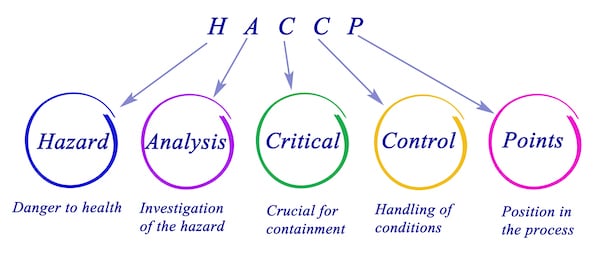
    HACCP certification for a business means third-party review of a food operation’s hazard-control system, documented HACCP plan, and audit readiness. HACCP itself is the food safety system. The FDA defines HACCP as a management system that controls biological, chemical, and physical hazards from raw material handling through manufacturing, distribution, and final consumption. This page is about business or facility certification services, not an employee course.


    Searchers also use “HACCP certification” to mean online training. That is why this topic gets messy. StateFoodSafety’s HACCP offer is a 16-hour online training course accredited by the International HACCP Alliance, with a 50-question exam and a certificate of completion. That is not the same thing as a facility audit or a third-party certification program for a food business.

    What HACCP Certification Means for Your Business?

    For a food business, HACCP certification means your operation is assessed against a functioning HACCP system and the controls needed to manage food safety hazards. NSF frames HACCP certification as proof that an operation complies with the HACCP system, while FDA frames HACCP as a preventive hazard-control system rather than end-product inspection.


    HACCP Certification vs HACCP Training


    HACCP training qualifies people. HACCP certification assesses a business or facility. Training usually ends with a certificate of completion for an individual. Certification usually involves scope review, document review, audit activity, corrective actions, and an ongoing certification cycle for the business.


    If your goal is staff competence, training is the right first step. If your goal is supplier approval, customer confidence, audit readiness, or third-party recognition for a facility, you are looking for the certification route. NSF and NQA both position HACCP on the service side as certification or audit support for food operations, not as a simple online purchase.


    Who HACCP Certification Applies To


    HACCP certification applies to food-chain businesses that need structured hazard control and auditable food safety practices. Codex applies the hygiene and HACCP framework from primary production to the final consumer. NQA says HACCP can be used by organizations directly or indirectly involved in the food chain, including food service providers, farms, fisheries, dairies, processors, transporters, and distributors.


    That includes businesses such as food manufacturers, seafood processors, juice facilities, meat and poultry establishments, storage and distribution operators, caterers, restaurants, and supporting logistics providers. The exact regulatory pressure changes by sector, but the commercial reasons are similar: safer production, customer acceptance, and stronger audit readiness.

    HACCP Certification Requirements and Readiness Checklist

    HACCP certification readiness depends on a working HACCP system, strong prerequisite programs, and records that prove the system is operating. A facility is not ready because it has a template. It is ready when the plan exists, the controls are running, and the evidence is there. FDA’s HACCP guidance and NQA’s certification process both support that logic.


    Documents and Controls You Need Before the Audit


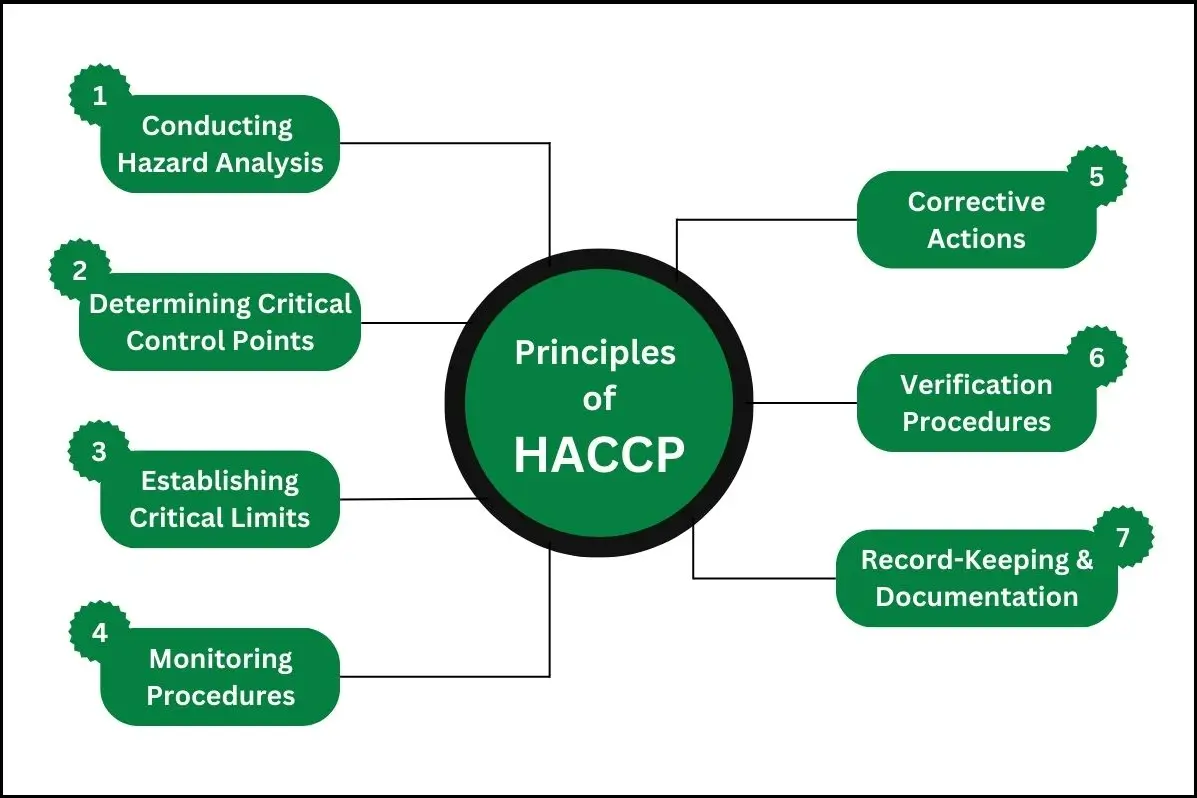
    At a minimum, your HACCP plan needs to show the controls FDA expects to see. FDA’s HACCP guidance identifies seven basic principles and also describes what a HACCP plan summary table should contain.


    Your readiness file should usually include:

    • hazard analysis
    • identified CCPs
    • critical limits
    • monitoring procedures
    • corrective actions
    • verification procedures and schedule
    • record-keeping procedures
    • Responsibility and frequency details for key activities


    GMPs and Prerequisite Programs That Support HACCP


    HACCP does not stand on its own. It sits on top of prerequisite programs. Codex recommends good hygiene practices throughout the food chain, and NSF treats GMP audits as the evaluation of prerequisite programs such as maintenance, cleanliness, pest control, and personal hygiene. NQA also states that organizations implementing HACCP must comply with GMPs as a mandatory requirement within the standard.


    In plain English, that means you need the basics under control before a HACCP audit goes well. Sanitation, personnel hygiene, cleaning, supplier controls, facility upkeep, and process discipline are not side issues. They are the ground the HACCP plan stands on.


    What “Audit Ready” Means in Practice

    Audit-ready means the system is live, reviewed, and internally checked. NQA publicly states that the management system should be operational for a minimum of three months and should already have gone through a management review and a full cycle of internal audits before the initial certification audit. That is a provider-specific benchmark, but it is a useful one because it reflects what serious readiness looks like.


    Doing the right thing, at the right time.

    300+

    Satisfied Clients

    10+

    Years of Experience

    1700+

    ISO certifications

    How does the HACCP Certification Process Work?

    The process usually moves in a straight line: scope review, gap assessment, readiness review, audit, corrective action, certification decision, and surveillance. Service pages often bury this behind contact forms. They should not. Buyers need the path in plain English before they commit. NQA’s published process is the clearest benchmark in the current service-side set.


    Step 1: Scope Review and Gap Assessment


    The first step is defining what is actually being certified. That means the site, products, sector, processes, current GMP status, HACCP documentation, and commercial objective all have to be clear. NQA starts with a quote request so it can define the scope of assessment, which is the right logic for any serious certification route.


    Step 2: Stage 1 Readiness Review


    The second step is a readiness review of the system and documents. This is where the certification body or provider checks whether the facility has a working HACCP plan, supporting records, internal audits, management review, and enough maturity to move into the audit stage. NQA’s public process and FDA’s plan-content guidance fit together closely here.


    Step 3: Stage 2 Audit, Certification Decision, and Ongoing Surveillance


    The third step is the audit itself, followed by corrective actions and a certification decision. NQA states that the initial certification audit consists of two mandatory visits, and after a successful stage two audit, certification is issued for three years with surveillance audits in years one and two and recertification in year three. That is a provider-specific cycle, not a universal rule for every scheme, but it is a strong public example of how the lifecycle works.

    Benefits of HACCP Certification for Food Businesses

    The main business outcomes are stronger audit readiness, better customer confidence, and lower food safety risk. NSF says HACCP certification helps reduce the risk of producing unsafe products, increase confidence with global customers and partners, and support review and verification activities that keep site documentation aligned with procedures. NQA adds trust, faster response in food safety emergencies, lower barriers to trade, and stronger competitive positioning.


    Audit Readiness, Supplier Approval, and Customer Confidence


    HACCP certification helps when customers or supply-chain partners want proof, not promises. Retailers, importers, brand owners, distributors, and procurement teams often want to see a documented, preventive system for food safety hazards. Codex also ties HACCP-based hygiene practices to maintaining confidence in internationally traded food.


    Market Credibility, Risk Reduction, and Compliance Support


    A certified HACCP system is easier to defend than an informal one. FDA’s HACCP model is preventive by design, and NQA’s public benefits language ties certification to trust, legal compliance, and stronger market performance. That does not mean certification solves everything. It means the business is easier to audit, easier to assess, and easier to trust.

    Basra Municipality Requirements for ISO Certification

    Industries and Operations Covered by HACCP Certification

    HACCP certification is not one-size-fits-all, but it does cover a wide range of food operations. Codex applies the hygiene framework across the food chain, while the FDA and USDA maintain sector-specific HACCP tracks where regulatory emphasis changes.


    Sector Matrix: Manufacturing, Meat and Poultry, Seafood, Juice, Retail, and Distribution


    HACCP audit focus changes by operation type, because the hazards, prerequisite programs, and regulatory expectations are not the same across the food chain.


    Recognition, Standards, and Related Food Safety Systems

    “Recognized” means different things in this market, and sloppy pages blur them together. Training recognition, certification-body credibility, customer acceptance, and the FDA’s import-specific third-party program are not the same thing. A clean page has to separate them.


    What Recognized or Accredited Means in HACCP


    On the training side, recognition often means a course is accredited by the International HACCP Alliance. StateFoodSafety’s HACCP course is a clear example. On the facility-certification side, service providers such as NSF and NQA are talking about audits and certification of business operations. FDA’s Accredited Third-Party Certification Program is a different system again: it is a voluntary program tied to foreign food facilities and specific import uses such as VQIP eligibility or FDA-required import certification in rare cases.


    HACCP vs GMP vs ISO 22000 vs FSSC 22000


    HACCP is the hazard-control system. GMPs are the prerequisite foundation. ISO 22000 builds a wider food safety management system around hazard control. FSSC 22000 is a certification scheme built on ISO 22000, sector-specific PRPs, and additional requirements. NQA states that HACCP implementation requires GMPs and also states that certifiable and voluntary food safety management systems, such as ISO 22000 and FSSC 22000, are based on the implementation of a HACCP system. Intertek describes ISO 22000 as a food safety management standard and positions HACCP services against GFSI, ISO 22000, and regulatory requirements.


    Industries Sector

    Oil & Gas
    Construction & Infrastructure
    Manufacturing & Industrial Production
    Food, Agriculture & Processing
    Security & Private Protection Services
    Government & Public Sector
    IT & Digital Services
    Healthcare & Medical Services
    Laboratories & Testing Facilities
    Logistics & Transportation
    Energy & Utilities
    Banking, Financial Services & Insurance
    Educational institutions
    Healthcare Organizations

    Trainings

     
    Quality
     
    Environment
     
    Health & Safety
     
    Food Safety
     
    Business Continuity

    Other ISO Certifications We Provide in Iraq

    As an accredited body, we issue certificates for the most sought-after management system standards:

    Need HACCP Training or HACCP Certification?

    Choose training when you need people qualified. Choose certification when you need the facility assessed. If the goal is staff knowledge, course completion, or an IHA-accredited employee certificate, training is the right fit. If the goal is supplier approval, retailer confidence, certification-body review, or a third-party audit of the operation, you need the service route.

    Blogs & News

    ISO Certification

    ISO certification

    How Many Types of ISO Certification Are There?

    How Many Types of ISO Certification Are There? ISO certification applies to 4 categories of…
    READ MORE →
    ISO certification

    What Is ISO Certification? Definition, Process, and How to Verify It

    What Is ISO Certification? Definition, Process, and How to Verify It ISO certification is a…
    READ MORE →
    Basra Municipality Requirements for ISO Certification

    Government Procurement & Tender Requirements in Basra

    Government Procurement & Tender Requirements in Basra ISO Certification, Compliance Expectations & Practical Guidance Government…
    READ MORE →
    Basra Municipality Requirements for ISO Certification

    Basra Municipality Requirements for ISO Certification: What Businesses Must Comply With

    Basra Municipality Requirements for ISO Certification: What Businesses Must Comply With Basra Municipality does not…
    READ MORE →
    ISO for Food Businesses in Basra

    ISO for Food Businesses in Basra

    ISO for Food Businesses in Basra: A Complete Guide to Food Safety, Compliance & ISO…
    READ MORE →
    ISO for Manufacturing in Basra

    ISO for Manufacturing in Basra

    ISO for Manufacturing in Basra: How International Standards Strengthen Industrial Performance? Basra’s manufacturing sector is…
    READ MORE →
    ISO for Construction Companies in Basra

    ISO for Construction Companies in Basra

    ISO for Construction Companies in Basra: A Complete Guide for 2026 This is the practical…
    READ MORE →
    ISO for Security Companies in Basra

    ISO for Security Companies in Basra

    ISO for Security & PSC Companies in Basra (2026 Guide) This is the practical guide…
    READ MORE →
    ISO Certification for Oil & Gas Companies in Basra

    ISO Certification for Oil & Gas Companies in Basra

    ISO Certification for Oil & Gas Companies in Basra This is the practical guide for…
    READ MORE →
    Logo
    Logo
    Logo
    Logo
    Logo
    Logo
    Logo
    Logo
    Logo
    Logo
    Logo
    Logo
    Logo
    Logo

    Frequently Asked Questions Related HACCP certification

    What is the difference between accredited and non-accredited ISO 9001 certification?

    Accredited ISO 9001 certification is issued by a certification body formally evaluated by a recognized accreditation body (like IAS or UAF), while non-accredited certification carries no independent verification of the certifier's competence. Non-accredited certificates are often not accepted for government tenders, international contracts, or by multinational companies, and cannot be verified through IAF CertSearch.

    How do I verify if an ISO 9001 certificate from Iraq is genuine?

    You can verify an ISO 9001 certificate's authenticity through the IAF CertSearch global database by entering the certificate number or organization name. AGS also provides a dedicated certificate verification tool for quick status checks. Certificates from accredited bodies are registered in IAF CertSearch, where you can check current status, scope, and accreditation details.

    Can a USA-headquartered certification body certify my company in Iraq?

    Yes. AGS is headquartered in the USA with a regional office in Basra, Iraq, and provides on-site audits across Baghdad, Erbil, and other Iraqi cities by locally based auditors. International certification bodies routinely operate across borders through local offices or qualified representatives. AGS's structure ensures both global standards and local presence.

    What are surveillance audits and why are they required?

    Surveillance audits are annual assessments performed in years 1 and 2 of your 3-year certification cycle to verify that your quality management system continues to conform to ISO 9001 requirements. These audits ensure your QMS remains effective and continuously improves, rather than being a one-time effort. They are mandatory to maintain certification.

    Is ISO 9001 certification required for Iraqi government tenders?

    Yes, ISO 9001 certification is increasingly listed as a mandatory requirement or a significant evaluation criterion in Iraqi government tenders, particularly for construction, services, and supply contracts. This is common in tenders issued by the Oil Ministry, Ministry of Construction and Housing, and Ministry of Electricity. Accredited certification carries more weight in tender evaluations than non-accredited alternatives.

    Do you offer Arabic-language documentation support?

    Yes. Auditors review in Arabic or English, conduct interviews in Arabic, and deliver bilingual reports.

    It can mean either, which is exactly why this topic causes confusion. In the live market, training providers sell HACCP certification as an individual course and certificate of completion, while certification bodies and service providers use HACCP certification to mean a third-party audit or certification route for the business or facility.

    It depends on your sector and market. FDA maintains specific HACCP tracks for juice and seafood, and FSIS requires meat and poultry establishments to conduct hazard analysis and implement written HACCP plans where hazards are reasonably likely to occur under 9 CFR Part 417. Outside those sector-specific requirements, customer and supply-chain demands often drive certification decisions.

    You need a real HACCP plan and the records behind it. FDA’s HACCP guidance supports a documented plan with hazard analysis, CCPs, critical limits, monitoring, corrective actions, verification procedures, and record-keeping procedures, together with responsibility and frequency details for the activities.

    There is no honest universal timeline. Scope, sector, number of sites, current documentation, GMP maturity, and corrective-action workload all affect timing. One public example comes from NQA, which says the system should already have been operating for at least three months before the initial certification audit.

    Yes, in practical terms. HACCP needs prerequisite programs under it. NSF treats GMP audits as the evaluation of those foundational controls, and NQA states that organizations implementing HACCP must comply with GMPs because they are a mandatory requirement included within the HACCP standard.

    Training can. Facility certification cannot be reduced to an online checkout. StateFoodSafety’s HACCP course is fully online, but service-side certification routes still involve real assessment and audit activity. NQA publicly describes the initial certification audit as two mandatory visits.

    Certification cycles depend on the certification body and scheme. One public example is NQA, which states that HACCP certification is valid for three years and maintained through surveillance audits in years one and two, with recertification in year three. That is a provider-specific example, not a universal rule for every market.

    HACCP controls hazards. GMPs create the basic operating conditions. ISO 22000 builds a broader food safety management system around HACCP principles. NQA and Intertek both support that layered view.

    Yes. That is usually the smartest place to start when the business has some food safety controls in place, but is not yet sure whether the HACCP plan, prerequisite programs, records, and internal checks are ready for certification.

    Request a Quote or Start a Gap Assessment

    If your operation needs HACCP certification, the next smart move is not guessing. It is defining the scope, checking readiness, and finding out what has to be fixed before the audit.


    We help food businesses review their current system, identify gaps in the HACCP plan and prerequisite programs, prepare documents and records, and move toward an audit with a clearer path and less wasted time.


      ISO Certification

      ISO 9001 CERTIFICATION
      ISO 14001 CERTIFICATION
      OHSAS 18001 CERTIFICATION
      ISO 45001 CERTIFICATION
      ISO 27001 CERTIFICATION
      ISO 22000 CERTIFICATION
      ISO 50001 CERTIFICATION
      ISO 29001 CERTIFICATION
      ISO 18788 CERTIFICATION
      ISO 37001 CERTIFICATION
      ISO 22301 CERTIFICATION
      ISO 13485 CERTIFICATION
      ISO 10002 CERTIFICATION
      ISO 21500 CERTIFICATION
      ISO 17025 CERTIFICATION
      ISO 15189 CERTIFICATION
       

      Industries Sector

      Oil & Gas
      Construction & Infrastructure
      Manufacturing & Industrial Production
      Food, Agriculture & Processing
      Security & Private Protection Services
      Government & Public Sector
      IT & Digital Services
      Healthcare & Medical Services
      Laboratories & Testing Facilities
      Logistics & Transportation
      Energy & Utilities
      Banking, Financial Services & Insurance
      Educational institutions
      Healthcare Organizations

      Trainings

      Quality
      Environment
      Health & Safety
      Food Safety
      Business Continuity
      Translate »