ISO 14001 certification is a third-party confirmation that an organization’s environmental management system meets the requirements of ISO 14001:2026. It applies to the organization’s EMS, not to an individual, and it is voluntary. Organizations usually pursue it because it strengthens environmental management, supports compliance discipline, and adds credibility in buyer, supply-chain, and stakeholder reviews.
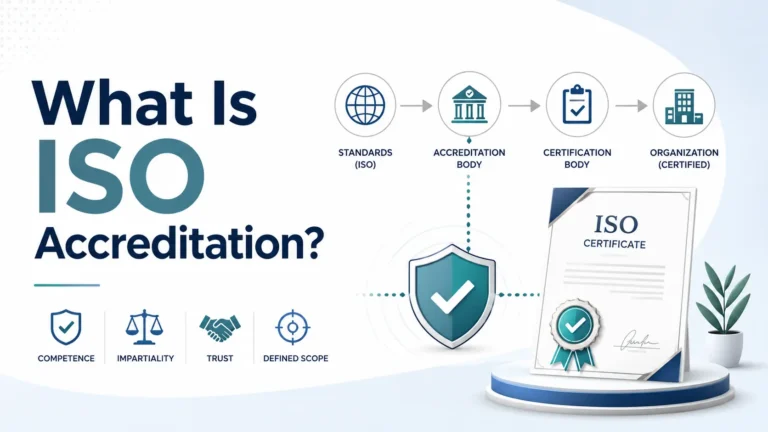
ISO publishes the standard, but ISO does not certify organizations. Certification is carried out by an independent certification body. ISO defines certification as written assurance from an independent body that a product, service, or system meets specified requirements, and it defines accreditation as formal recognition that a certification body operates according to international standards.
For organizations evaluating certification now, the practical question is simple: will an audited EMS help us manage environmental impacts more consistently, control environmental responsibilities more clearly, and reduce doubt during procurement, tendering, or customer review? For many organizations, that is exactly why ISO 14001 certification matters.
ISO 14001 is the standard. ISO 14001 certification is a third-party confirmation that an organization’s EMS conforms to that standard. The object of certification is the organization’s environmental management system: the policies, controls, responsibilities, monitoring, and improvement activities used to manage environmental aspects, impacts, and compliance obligations.
ISO says ISO 14001 provides a structured framework for organizations of all sizes in both public and private sectors. That makes the standard relevant to manufacturers, logistics providers, construction firms, energy businesses, service organizations, public-sector bodies, and multi-site operations that need better environmental control and clearer proof of system discipline.
This page is about organizational EMS certification, not training or accreditation. An organization implements EMS. A certification body audits it. An accreditation body recognizes certification-body competence. Keeping those roles separate is what makes the certification route credible.
Organizations pursue ISO 14001 certification because it turns environmental management into a controlled operating system instead of an ad hoc promise. The standard is designed to help organizations improve environmental performance, manage environmental impacts, support compliance with applicable legal requirements, and improve performance over time. ISO also ties the standard to resource efficiency, environmental footprint reduction, and a stronger response to customer, investor, and regulatory expectations.
At a business level, the value usually shows up in five places:
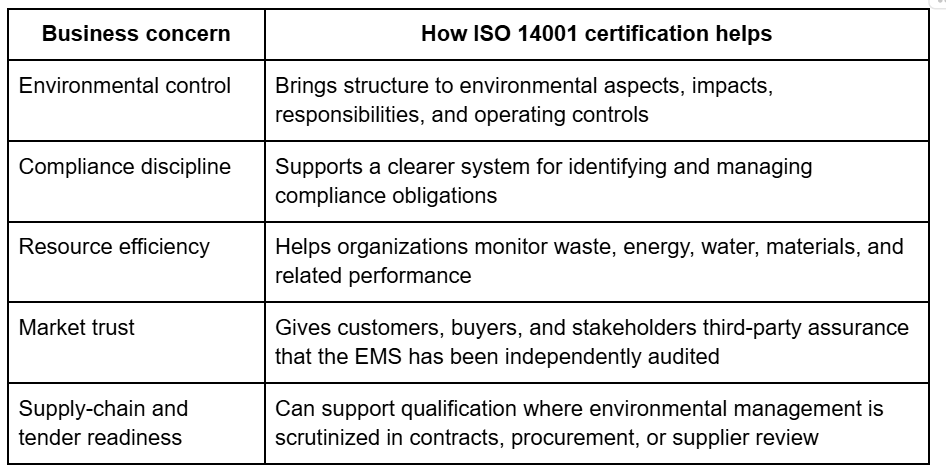
These are the outcomes organizations usually care about most: less operational drift, stronger evidence, and more confidence that environmental responsibilities are being managed through a repeatable system. Certification is voluntary, but ISO states it can add credibility and may be a legal or contractual requirement in some industries or buyer contexts.
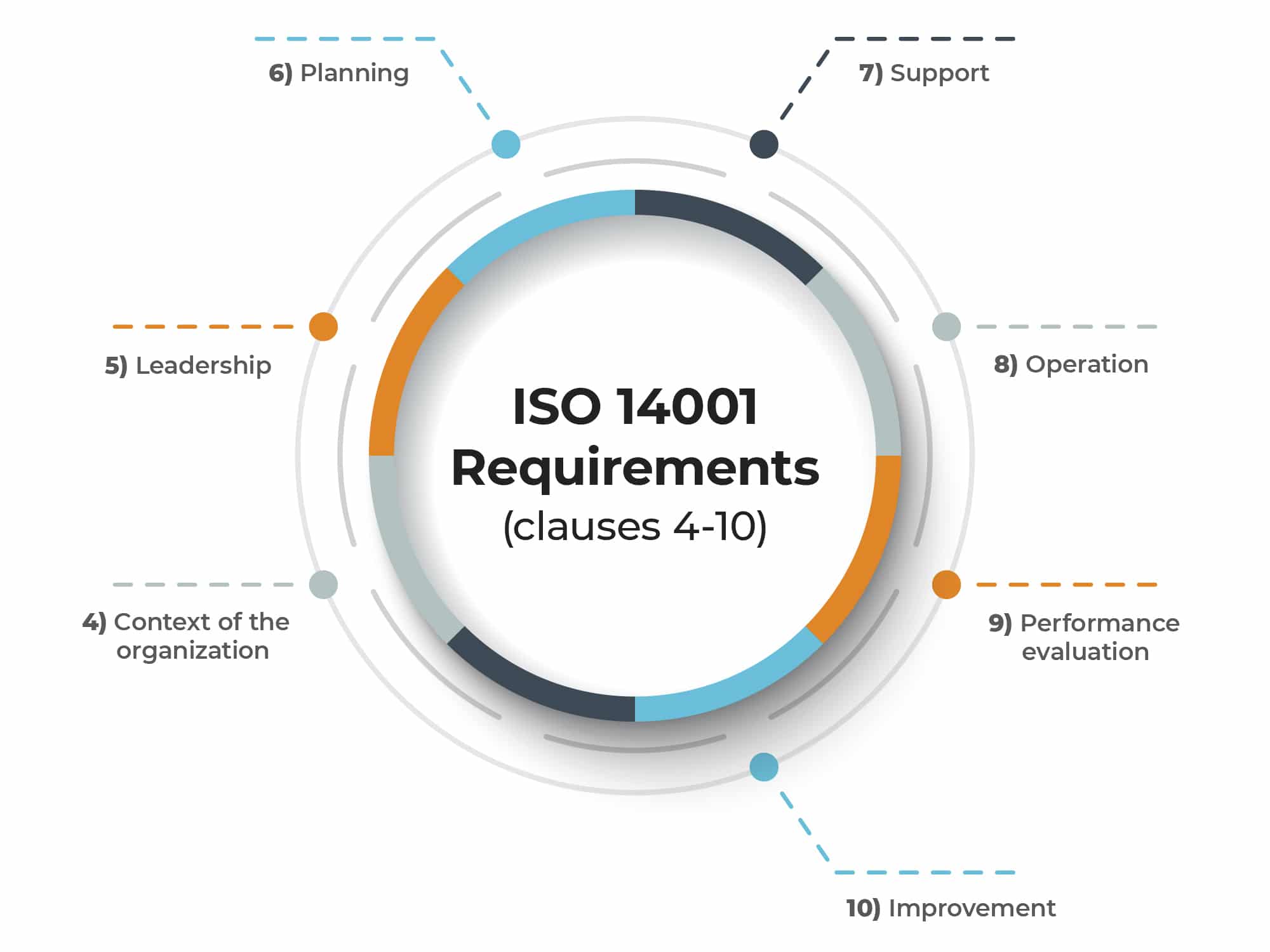
ISO 14001 requires a working EMS, not a binder of generic environmental paperwork. At a high level, the organization needs to identify environmental aspects and impacts, set objectives and indicators, understand compliance obligations, manage risks and opportunities, train relevant people, monitor performance, and keep improving the system over time. ISO also says environmental considerations need to be integrated into strategic planning and day-to-day operations.
In practical terms, most organizations need these elements in place:
Because ISO 14001 follows the same high-level structure used by ISO 9001 and ISO 45001, it is often integrated into a broader management system instead of being run as a standalone silo. That matters for organizations trying to avoid duplicate controls, duplicate audits, and fragmented governance.

Satisfied Clients
Years of Experience
ISO certifications
Before moving toward certification, most organizations benefit from a quick gap check to understand where their current environmental management system stands against ISO 14001 requirements.
Request a focused EMS readiness review to identify gaps, clarify scope, and understand the most efficient path to certification.
Get a structured ISO 14001 readiness assessment today.
Certification follows implementation and an independent audit of the EMS. It is a staged route, not a one-form application, and not a marketing badge. ISO describes the path as moving from gap analysis and implementation to internal checks and external certification by an independent body.
This is where structured support makes a real difference. Most delays come from unclear scope, weak evidence, poor readiness, or avoidable rework between audit stages. Good preparation reduces confusion. It does not replace system maturity.
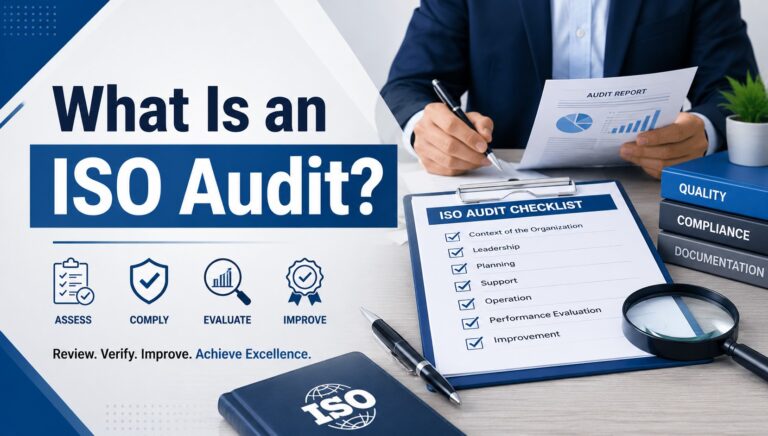
The audit path is structured. Internal audit is the organization’s own system check. The certification audit is an independent third-party assessment. Stage 1 is typically the readiness and documentation review. Stage 2 is the main implementation and effectiveness audit, where auditors review evidence, observe processes, and interview relevant personnel.
If issues are found, the process does not automatically fail. Findings are classified, corrective action is taken, and the certification decision proceeds only when the certification body has enough evidence to confirm conformity. AGS’s published guidance also notes that the certification decision is separated from the audit team, which helps preserve impartiality.
After certification, the organization moves into the maintenance phase. ISO’s current ISO 14001 page says certified organizations usually undergo surveillance audits annually, with a recertification audit every three years. AGS describes the same pattern in its published audit services and certification lifecycle content. Your exact cycle should still be confirmed with the certification body and the applicable accreditation scope.
Where accredited certification data is listed, IAF CertSearch is presented as the official global database for accredited certificates, which gives buyers and counterparties a route to verify certification status.
These four things are not interchangeable. Confusing them is one of the easiest ways to misread the market.
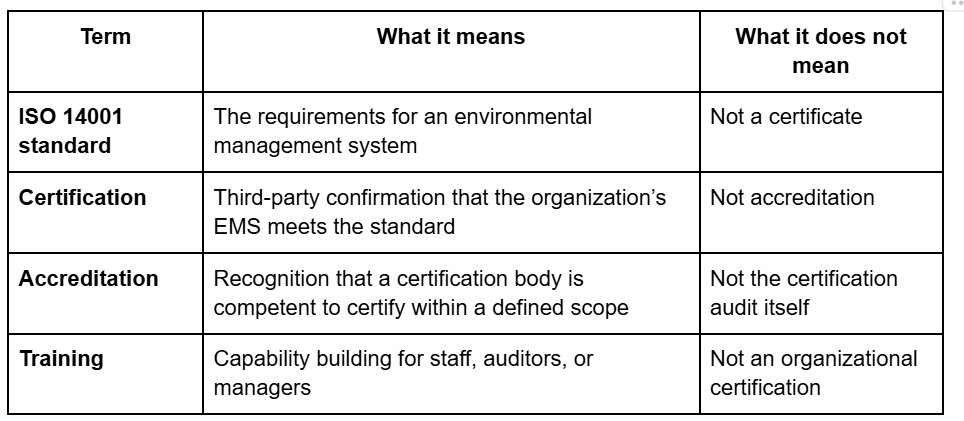
ISO states that certification is a written assurance from an independent body and that accreditation is formal recognition of a certification body’s competence. It also says accreditation is not compulsory, though it provides independent confirmation of competence. That is why buyers often ask about the certification body, the accreditation route, and certificate verification separately.
This also fixes a common confusion point: a company can certify its EMS, while individuals usually pursue awareness, internal auditor, or lead auditor training instead. Those are different services and different conformity-assessment intents.







AGS’s strongest positioning is not “we are trusted.” It is essential that the business publishes a structured certification route and clear service boundaries. On its website, AGS presents itself as an independent third-party conformity assessment body under ISO/IEC 17021-1:2015, headquartered in the USA with a regional office in Iraq and service coverage across the Middle East. It publicly lists ISO 14001 among its certification standards and publishes certificate-verification guidance through IAF CertSearch.
AGS also publishes the parts of the route that matter to a serious buyer: Stage 1 and Stage 2 certification audits, surveillance audits, recertification audits, and gap analysis or pre-assessment audits. It additionally states that organizations receiving documentation support are audited by independent teams to preserve impartiality, which is the kind of proof signal that matters more than generic brand adjectives.
From a sector-fit perspective, AGS publicly shows management-system certification activity across industries where ISO 14001 often matters, including logistics and transportation, manufacturing, energy and utilities, and oil and gas. It also states that accreditation scope varies by accreditation body, standard, and industry sector, which is the right way to present recognition boundaries instead of implying universal coverage.
If your organization is actively evaluating ISO 14001 certification, the right next step is a readiness discussion, not a rushed price-only request. The practical starting point is to confirm your EMS scope, site count, operational complexity, environmental risk profile, current maturity, and whether you need only certification or also readiness support before the audit.
AGS is a fit for organizations that want a structured route covering readiness assessment, certification planning, independent audit, and ongoing surveillance support, with public contact points and published geographic presence across the USA, Iraq, and the Middle East.
Request an ISO 14001 readiness discussion
Usually no. ISO says certification is voluntary, though organizations often pursue it because customers, supply chains, contracts, or other stakeholders expect independent confirmation.
Yes. ISO says the framework works for organizations of all sizes in both public and private sectors. The system should be proportionate to the organization’s size, activities, and environmental context.
An organization can assess itself or self-declare conformity, but that is not the same as formal third-party certification. A recognized certification is a written assurance from an independent body.
This page is about organizational EMS certification. Individuals may take environmental or auditor training, but that is a separate offering and a different intent from certifying an organization’s management system.
ISO 14001 is an EMS standard, not a carbon-only standard. ISO says it provides the environmental management foundation that can support climate action, greenhouse gas initiatives, and broader sustainability commitments.
Most accredited management-system certification routes use a certification cycle with surveillance after initial certification and recertification before the cycle ends. ISO’s current ISO 14001 page says certified organizations usually undergo surveillance audits annually and a recertification audit every three years, but your exact cycle should be confirmed with the certification body handling your certificate.