ISO 17025 Certification in Iraq


    ISO Certification

    ISO 14001 CERTIFICATION
    ISO 18001 CERTIFICATION
    ISO 45001 CERTIFICATION
    ISO 27001 CERTIFICATION
    ISO 22000 CERTIFICATION
    ISO 50001 CERTIFICATION
    ISO 29001 CERTIFICATION
    ISO 18788 CERTIFICATION
    ISO 37001 CERTIFICATION
    ISO 22301 CERTIFICATION
    ISO 13485 CERTIFICATION
    ISO 10002 CERTIFICATION
    ISO 21500 CERTIFICATION
    ISO 17025 CERTIFICATION
    ISO 15189 CERTIFICATION

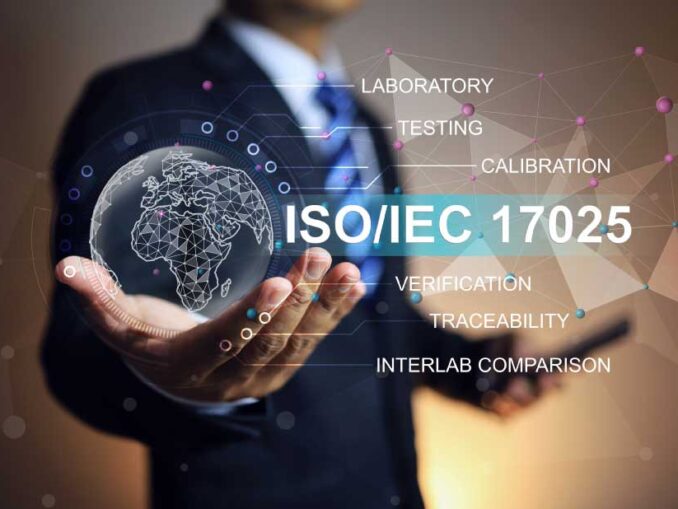
    ISO/IEC 17025 accreditation for testing and calibration laboratories

    For testing and calibration laboratories in Iraq seeking implementation, documentation, training, internal audits, and accreditation-readiness support.

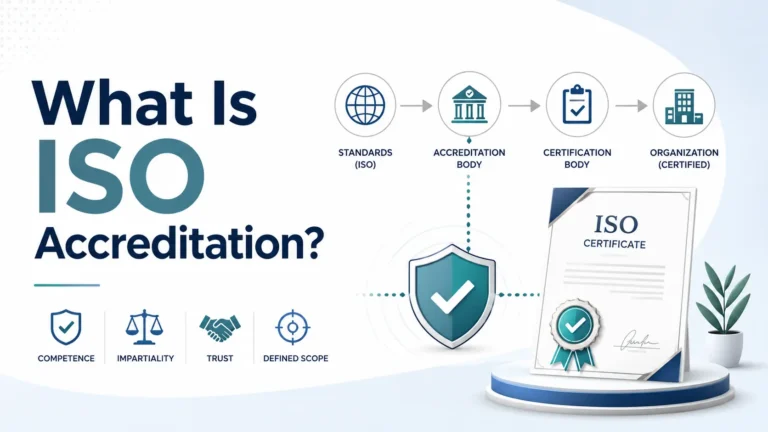
    ISO/IEC 17025 is the international standard used to assess the competence, impartiality, and consistent operation of testing and calibration laboratories. For laboratories in Iraq, it is the benchmark used when the goal is reliable results, stronger technical control, and a credible path toward recognized accreditation. ISO says the standard helps laboratories demonstrate that they operate competently and generate valid results, while IRNAC lists ISO/IEC 17025 as one of its accreditation programs.

    In the Iraqi market, the phrase “ISO 17025 certification” is common, but the technical route laboratories usually need is ISO/IEC 17025 accreditation. That matters because the issue is not just getting a certificate-shaped document. The real issue is building a laboratory system that can stand up to external assessment for scope, competence, method control, traceability, records, and management oversight.

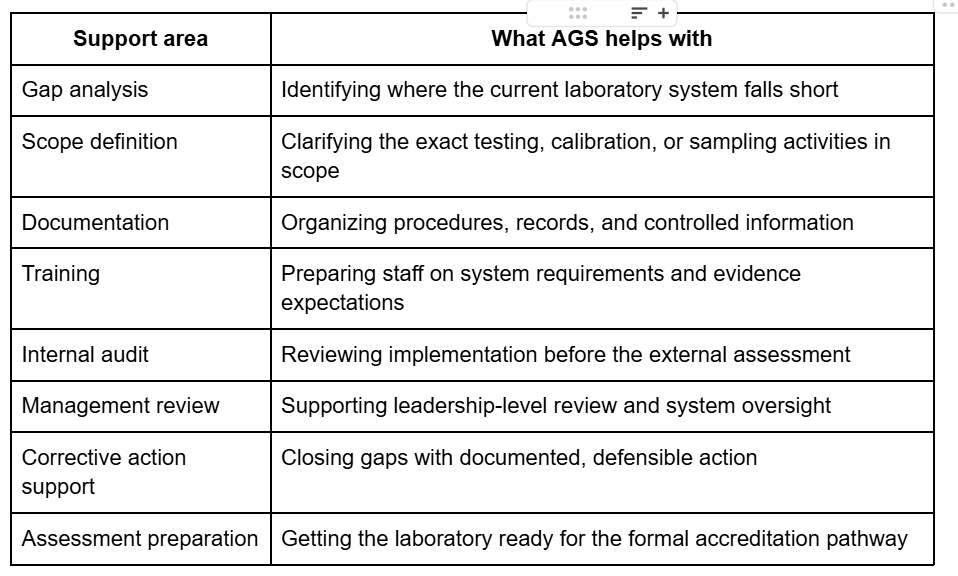
    AGS supports that path in Iraq through scope definition, gap analysis, documentation support, method and traceability readiness, internal audit support, corrective-action preparation, and assessment-readiness work. AGS also states that it operates from a regional office in Basra and provides on-site audits across Baghdad, Erbil, and other Iraqi cities through locally based auditors.

    What Is ISO/IEC 17025 Certification in Iraq?

    ISO/IEC 17025 certification in Iraq usually refers to support for achieving ISO/IEC 17025 accreditation readiness for a laboratory. ISO/IEC 17025:2017 is the standard used to assess laboratory competence, impartiality, and consistent operation. For laboratories, accreditation is the technically correct term because the laboratory is assessed by an accreditation body against a defined scope of testing, calibration, or related sampling activities.

    That wording matters because “certification” is the search term many buyers use, but “accreditation” is the real technical outcome. ISO publishes the standard. Accreditation bodies assess laboratories against it. In Iraq, IRNAC presents ISO/IEC 17025 as an accreditation program for testing and calibration laboratories, which makes the route clear: consultant or support provider on one side, accreditor on the other.

    ISO/IEC 17025 Requirements for Laboratories

    At a practical level, laboratories need more than a written procedure set. They need a working system that proves competence and valid results. The requirements revolve around competence, impartiality, consistent operation, technical controls, documented information, internal audits, management review, and evidence that results are generated through controlled methods and reliable systems.

    That usually means the laboratory has to control people, methods, equipment, records, traceability, quality control, result review, and corrective action in a way that is both technically sound and auditable. The system also has to match the actual scope that the laboratory wants recognized. A broad claim with a weak scope definition creates problems early.

    Who Should Consider ISO 17025 Certification in Iraq?

    This route is built for testing and calibration laboratories. In Iraq, that can include petroleum laboratories, healthcare laboratories, manufacturing and industrial laboratories, construction-materials laboratories, environmental laboratories, university or research laboratories, and other facilities that need technically reliable results and stronger external trust. ISO states that the standard is useful for any organization performing testing, sampling, or calibration, including laboratories owned by government, industry, or other organizations.

    Commercially, this page is for the people making the decision: laboratory owners, quality managers, technical managers, and leadership teams who need to move from “we should do this” to a real implementation and assessment plan in Iraq.

    Benefits of ISO/IEC 17025 Accreditation in Iraq

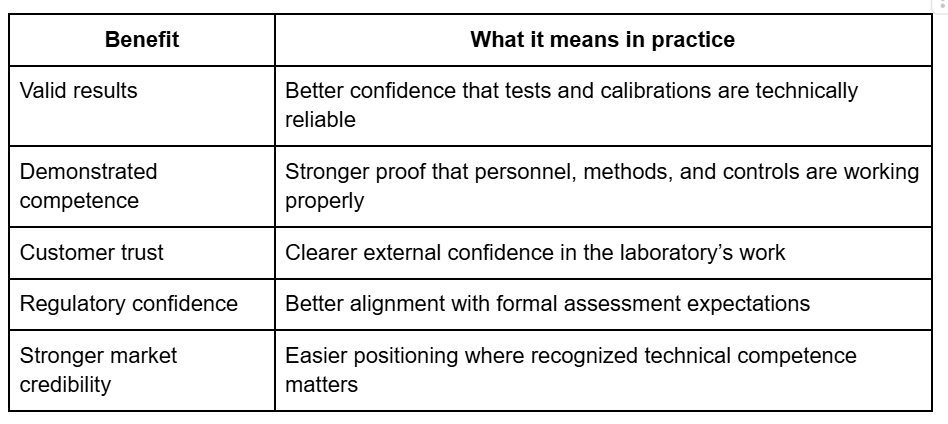
    The main gains are valid results, technical competence, stronger customer trust, more regulatory confidence, and better market credibility. ISO says ISO/IEC 17025 helps laboratories demonstrate competent operation and valid results, while the ILAC MRA framework exists to support broader acceptance of accredited services and results across borders.

    For Iraqi laboratories, that benefit is not abstract. A controlled ISO/IEC 17025 system helps reduce doubts around test reliability, calibration integrity, method execution, and technical recordkeeping. It also makes the laboratory easier to trust during client review, tender evaluation, supplier approval, and cross-border technical acceptance, where recognized accreditation matters.
     

    Doing the right thing, at the right time.

    300+

    Satisfied Clients

    10+

    Years of Experience

    1700+

    ISO certifications

    How to Get ISO/IEC 17025 Accreditation in Iraq

    The route usually starts with scope and readiness, not with the assessment itself. A laboratory first needs to define what activities it wants to be recognized for, compare its current system against the standard, close the obvious gaps, and then prepare for the external accreditation pathway. IRNAC’s public structure makes clear that ISO/IEC 17025 sits inside its accreditation programs, while AGS positions its own role on the preparation side through audits, readiness work, and implementation support.

    A practical implementation flow usually looks like this:

    1. Define the laboratory scope
      Identify which tests, calibrations, or related sampling activities need to be covered.
    2. Run a gap analysis
      Compare the current system against ISO/IEC 17025 requirements and find the weak points.
    3. Build or improve the system
      Tighten documentation, technical controls, methods, records, traceability, and management oversight.
    4. Train the relevant people
      Make sure technical staff, quality staff, and managers understand their roles and evidence requirements.
    5. Conduct internal audits and management review
      Test the system before the external assessment starts.
    6. Prepare for the accreditation assessment
      Review files, records, scope language, corrective actions, and readiness for assessor questions.
    7. Respond to findings if needed
      If gaps are raised, close them with evidence and controlled corrective action.

    If your laboratory already has methods and records but still feels exposed, that usually means the problem is system control, not technical effort. AGS can help turn scattered technical evidence into a clearer accreditation-ready structure before the formal assessment stage begins.
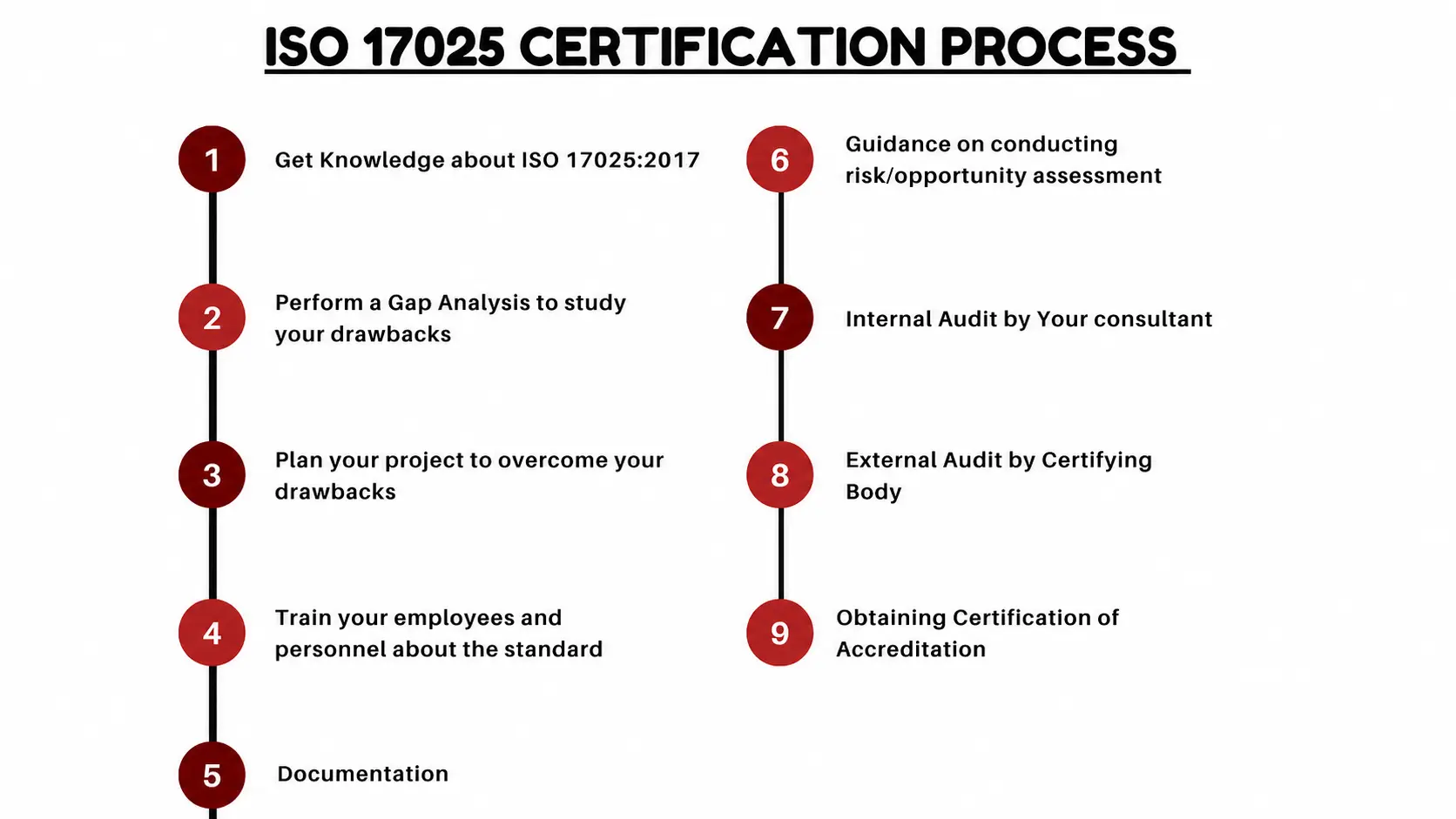
    ISO 17025 accreditation process from gap analysis to external audit

    What Our ISO/IEC 17025 Support Includes in Iraq

    AGS presents a practical support model rather than a vague “consulting” label. The core deliverables include the pieces that laboratories usually struggle with most: scope definition, documentation, internal review, and assessment readiness.

     

    Industries Sector

    Oil & Gas
    Construction & Infrastructure
    Manufacturing & Industrial Production
    Food, Agriculture & Processing
    Security & Private Protection Services
    Government & Public Sector
    IT & Digital Services
    Healthcare & Medical Services
    Laboratories & Testing Facilities
    Logistics & Transportation
    Energy & Utilities
    Banking, Financial Services & Insurance
    Educational institutions
    Healthcare Organizations

    Trainings

     
    Quality
     
    Environment
     
    Health & Safety
     
    Food Safety
     
    Business Continuity

    Blogs & News

    ISO Certification

    ISO audit meaning for management system evaluation

    What Is an ISO Audit? Scope, Evidence & Findings

    What Is an ISO Audit? Types, Stages, and How to Prepare An ISO audit is…
    READ MORE →
    ISO 9001 quality management system explained

    What Is ISO 9001? QMS Requirements & Certification

    What Is ISO 9001? A Beginner’s Guide for Businesses Most businesses don’t struggle with quality…
    READ MORE →
    ISO certification

    How Many Types of ISO Certification Are There?

    How Many Types of ISO Certification Are There? ISO certification applies to 4 categories of…
    READ MORE →
    ISO certification benefits for business systems and performance

    What Is ISO Certification? Definition, Process, and How to Verify It

    What Is ISO Certification? ISO certification is an independent third-party confirmation that a product, process,…
    READ MORE →
    Basra Municipality Requirements for ISO Certification

    Government Procurement & Tender Requirements in Basra

    Government Procurement & Tender Requirements in Basra ISO Certification, Compliance Expectations & Practical Guidance Government…
    READ MORE →
    Basra Municipality Requirements for ISO Certification

    Basra Municipality Requirements for ISO Certification: What Businesses Must Comply With

    Basra Municipality Requirements for ISO Certification: What Businesses Must Comply With Basra Municipality does not…
    READ MORE →
    ISO for Food Businesses in Basra

    ISO for Food Businesses in Basra

    ISO for Food Businesses in Basra: A Complete Guide to Food Safety, Compliance & ISO…
    READ MORE →
    ISO for Manufacturing in Basra

    ISO for Manufacturing in Basra

    ISO for Manufacturing in Basra: How International Standards Strengthen Industrial Performance? Basra’s manufacturing sector is…
    READ MORE →
    ISO for Construction Companies in Basra

    ISO for Construction Companies in Basra

    ISO for Construction Companies in Basra: A Complete Guide for 2026 This is the practical…
    READ MORE →

    Why Choose AGS for ISO/IEC 17025 Support in Iraq

    AGS is positioned around practical implementation and readiness support, not theory. On its ISO/IEC 17025 page, AGS focuses on the exact areas laboratories usually need help with: scope definition, gap analysis, system implementation, method and traceability readiness, internal audits, corrective actions, and assessment preparation.

    AGS also publicly states that it is headquartered in the USA, operates from a regional office in Basra, and provides on-site audits across Baghdad, Erbil, and other Iraqi cities through locally based auditors. That matters in Iraq because laboratory implementation work often needs site access, document review, technical discussion, and hands-on follow-up rather than only remote calls.

    The other advantage is role clarity. AGS supports the laboratory on readiness and implementation. The accreditor handles accreditation. That separation keeps the route cleaner and avoids the usual confusion between support work and formal recognition.

    If you want a realistic ISO/IEC 17025 path for your laboratory in Iraq, send AGS your scope, current methods, and where the system feels weakest.
    You’ll get a proposal built around actual laboratory work, not generic ISO talk.

    Logo
    Logo
    Logo
    Logo
    Logo
    Logo
    Logo
    Logo
    Logo
    Logo
    Logo
    Logo
    Logo
    Logo

    Frequently Asked Questions About ISO/IEC 17025 Accreditation in Iraq

    In common market language, it usually means support for achieving ISO/IEC 17025 accreditation readiness. The technical route for laboratories is accreditation against ISO/IEC 17025, not a generic management-system certificate.

    Accreditation is the formal recognition of laboratory competence within a defined scope. “Certification” is often used in search and sales language, but for laboratories, the technically correct recognition route under ISO/IEC 17025 is accreditation.

    Testing and calibration laboratories in Iraq that need stronger technical credibility, valid results, and a structured path toward accreditation should consider it. That includes labs in oil and gas, healthcare, manufacturing, research, construction materials, and environmental work.

    There is no single universal timeframe. It depends on the size of the scope, current system maturity, documentation quality, training needs, and how much corrective work is required before assessment readiness is reached.

    Scope size, method complexity, number of disciplines, documentation gaps, training needs, internal-audit readiness, and the external accreditation route all affect the cost.

    Yes. AGS publicly lists documentation support, training, internal-audit support, corrective-action preparation, and assessment-readiness work as part of its ISO/IEC 17025 support approach.

    IRNAC is Iraq’s national accreditation center and lists ISO/IEC 17025 among its accreditation programs. In practical terms, IRNAC sits on the accreditation side of the route, while a support provider helps the laboratory get ready for that assessment.

    AGS states that it provides on-site audits across Baghdad, Erbil, and other Iraqi cities through locally based auditors and operates from a regional office in Basra.

    Yes. A new laboratory can start with scope definition, readiness review, and implementation planning before it is ready for formal assessment. That is often the cleaner route when the system is still being built.

    Request an ISO/IEC 17025 Readiness Assessment

    Translate »