ISO 13485:2016 Medical Devices


    ISO Certification

    ISO 14001 CERTIFICATION
    ISO 18001 CERTIFICATION
    ISO 45001 CERTIFICATION
    ISO 27001 CERTIFICATION
    ISO 22000 CERTIFICATION
    ISO 50001 CERTIFICATION
    ISO 29001 CERTIFICATION
    ISO 18788 CERTIFICATION
    ISO 37001 CERTIFICATION
    ISO 22301 CERTIFICATION
    ISO 13485 CERTIFICATION
    ISO 10002 CERTIFICATION
    ISO 21500 CERTIFICATION
    ISO 17025 CERTIFICATION
    ISO 15189 CERTIFICATION

    ISO 13485:2016 for Medical Devices

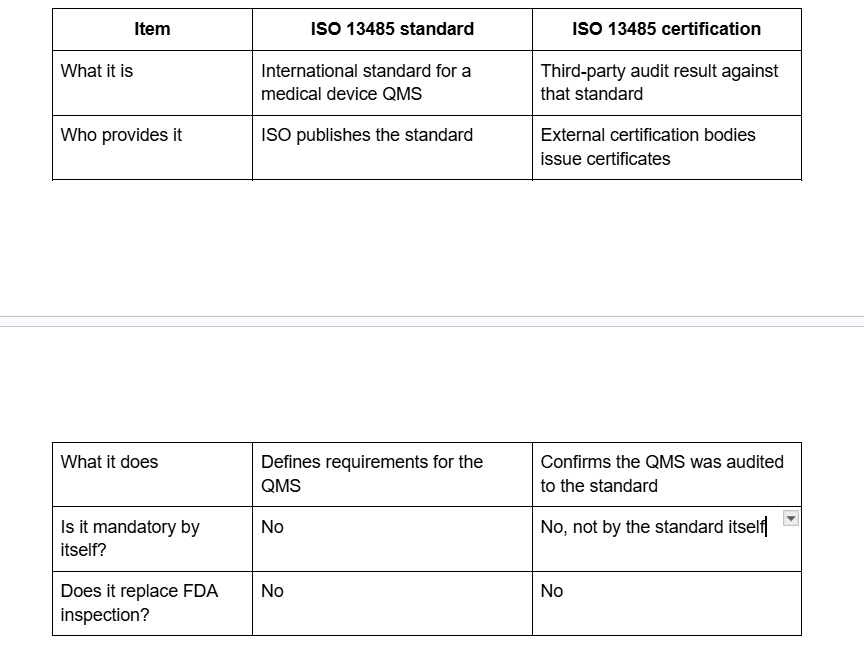
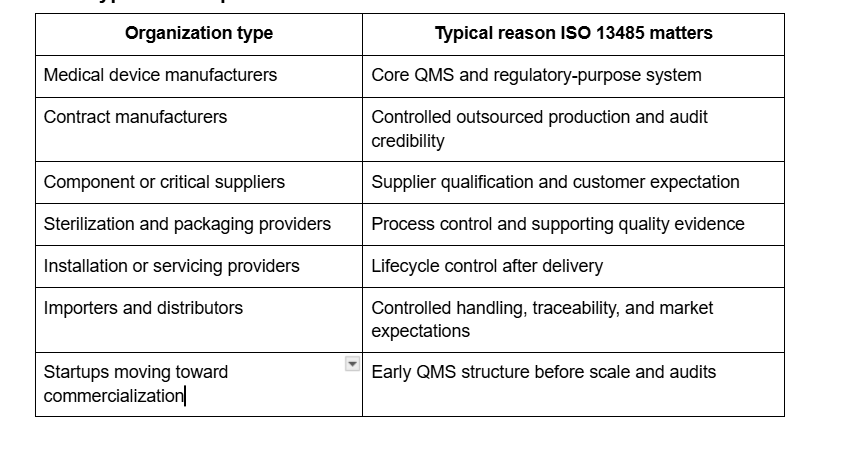
    ISO 13485:2016 is the internationally recognized standard for quality management systems (QMS) specific to the medical devices industry. It provides a framework for companies involved in the design, production, installation, and servicing of medical devices to demonstrate their commitment to quality, regulatory compliance, and patient safety. The standard aligns with many regulatory requirements globally and is widely adopted by medical device manufacturers, suppliers, and service providers.


    ISO 13485:2016 focuses on risk management and process-based approaches to quality, ensuring that medical devices are safe and effective throughout their lifecycle. By adhering to this standard, organizations can meet customer and regulatory expectations, minimize risk, and enhance their reputation in a highly regulated industry.

    Benefits of ISO 13485:2016 Certification

    Implementing ISO 13485:2016 provides several advantages for organizations in the medical device industry, promoting both compliance and competitive positioning:

    1. Enhanced Regulatory Compliance
      ISO 13485 certification aligns with the regulatory requirements of major markets, including FDA (U.S.), CE (Europe), and Health Canada. This alignment ensures that medical devices are designed, manufactured, and maintained in accordance with safety and quality standards, facilitating smoother market entry.
    2. Risk Reduction and Patient Safety
      The standard emphasizes risk management throughout product development and production. By identifying and mitigating risks, organizations can reduce the likelihood of product recalls, malfunctions, or adverse events, which ultimately safeguards patient safety and reduces liability.
    3. Improved Operational Efficiency
      ISO 13485 helps companies standardize and streamline their processes, leading to better efficiency, fewer errors, and reduced costs. By optimizing operations, companies can improve production speed and product quality, benefiting from a more reliable supply chain and reduced waste.
    4. Customer Satisfaction and Market Access
      ISO 13485 certification signals a commitment to quality, which enhances customer trust and satisfaction. Many healthcare providers and regulatory bodies require ISO 13485 certification from their suppliers, so achieving certification can open doors to new business opportunities and improve market access.
    5. Continuous Improvement and Innovation
      ISO 13485 encourages organizations to continually assess and improve their processes. This focus on ongoing improvement supports innovation, which can drive the development of safer, more effective, and market-competitive products.

    Stronger Competitive Advantage
    Having ISO 13485 certification distinguishes a company in the competitive medical devices market. This certification not only demonstrates compliance but also a commitment to high-quality standards, which can serve as a unique selling point for prospective clients and partners.

    Doing the right thing, at the right time.

    300+

    Satisfied Clients

    10+

    Years of Experience

    1700+

    ISO certifications

    Requirements for ISO 13485:2016 Certification

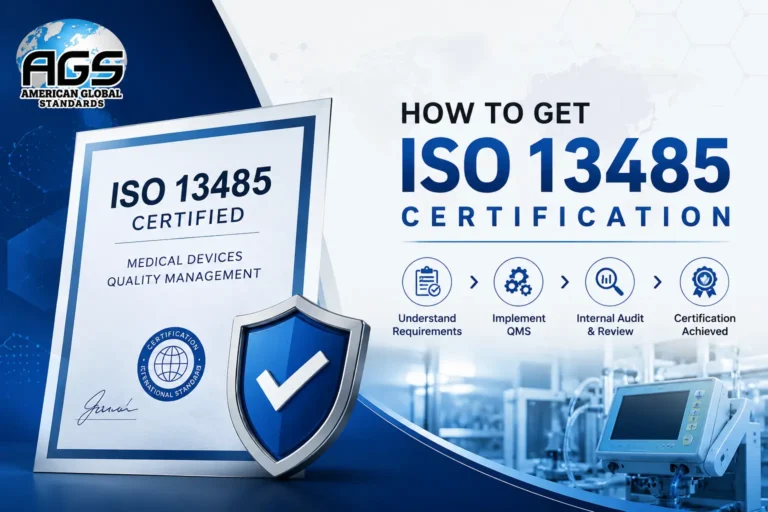
    To achieve ISO 13485 certification, organizations must implement a QMS that meets specific requirements related to quality, safety, and regulatory compliance in the medical devices sector. Key requirements include:

    1. Quality Management System Documentation
      A well-defined documentation structure is essential. This includes a quality manual, documented procedures, and work instructions that outline the processes related to quality management. Documentation should be easily accessible, current, and maintained throughout the organization.
    2. Risk Management Processes
      ISO 13485 requires a proactive approach to risk management. Organizations must identify, assess, and control risks across all stages of the device lifecycle, from design and development to manufacturing, distribution, and post-market activities. Implementing robust risk management protocols is key to achieving compliance.
    3. Product Design and Development Controls
      The standard emphasizes rigorous design and development controls to ensure that medical devices meet quality and regulatory requirements. Organizations must document design inputs, outputs, verification, and validation processes, as well as perform thorough testing and reviews.
    4. Supplier and Vendor Management
      Medical device manufacturers must assess and manage the quality of their suppliers and vendors to ensure they meet ISO 13485 standards. This includes establishing criteria for supplier selection, monitoring supplier performance, and maintaining records of supplier evaluations.
    5. Production and Process Control
      Organizations must implement stringent production and process control procedures. This includes documenting production methods, establishing quality control measures, and monitoring equipment to ensure consistent product quality. Validation of production processes and proper handling of non-conforming products is also required.
    6. Training and Competency Requirements
      Employees involved in the design, manufacture, and servicing of medical devices must be properly trained. ISO 13485 requires organizations to identify necessary competencies, provide adequate training, and maintain records of employee qualifications to ensure compliance.
    7. Internal Audits and Management Reviews
      Conducting regular internal audits is essential to assess the effectiveness of the QMS and identify areas for improvement. Management reviews must also be carried out periodically to ensure top-level oversight, address non-conformities, and support continuous improvement initiatives.
    8. Post-Market Surveillance and Feedback
      ISO 13485 requires organizations to have systems for gathering feedback and monitoring device performance after market release. This post-market surveillance ensures that any issues are promptly addressed, maintaining the safety and efficacy of medical devices in use.


    ISO 13485:2016 is a vital standard for medical device companies seeking to demonstrate their commitment to quality and regulatory compliance. By meeting these rigorous requirements, organizations can reduce risks, improve operational efficiency, and increase customer trust, positioning themselves as leaders in the medical device industry.

    Basra Municipality Requirements for ISO Certification
     

    Industries Sector

    Oil & Gas
    Construction & Infrastructure
    Manufacturing & Industrial Production
    Food, Agriculture & Processing
    Security & Private Protection Services
    Government & Public Sector
    IT & Digital Services
    Healthcare & Medical Services
    Laboratories & Testing Facilities
    Logistics & Transportation
    Energy & Utilities
    Banking, Financial Services & Insurance
    Educational institutions
    Healthcare Organizations

    Trainings

     
    Quality
     
    Environment
     
    Health & Safety
     
    Food Safety
     
    Business Continuity

    Blogs & News

    ISO Certification

    ISO certification

    How Many Types of ISO Certification Are There?

    How Many Types of ISO Certification Are There? ISO certification applies to 4 categories of…
    READ MORE →
    ISO certification

    What Is ISO Certification? Definition, Process, and How to Verify It

    What Is ISO Certification? Definition, Process, and How to Verify It ISO certification is a…
    READ MORE →
    Basra Municipality Requirements for ISO Certification

    Government Procurement & Tender Requirements in Basra

    Government Procurement & Tender Requirements in Basra ISO Certification, Compliance Expectations & Practical Guidance Government…
    READ MORE →
    Basra Municipality Requirements for ISO Certification

    Basra Municipality Requirements for ISO Certification: What Businesses Must Comply With

    Basra Municipality Requirements for ISO Certification: What Businesses Must Comply With Basra Municipality does not…
    READ MORE →
    ISO for Food Businesses in Basra

    ISO for Food Businesses in Basra

    ISO for Food Businesses in Basra: A Complete Guide to Food Safety, Compliance & ISO…
    READ MORE →
    ISO for Manufacturing in Basra

    ISO for Manufacturing in Basra

    ISO for Manufacturing in Basra: How International Standards Strengthen Industrial Performance? Basra’s manufacturing sector is…
    READ MORE →
    ISO for Construction Companies in Basra

    ISO for Construction Companies in Basra

    ISO for Construction Companies in Basra: A Complete Guide for 2026 This is the practical…
    READ MORE →
    ISO for Security Companies in Basra

    ISO for Security Companies in Basra

    ISO for Security & PSC Companies in Basra (2026 Guide) This is the practical guide…
    READ MORE →
    ISO Certification for Oil & Gas Companies in Basra

    ISO Certification for Oil & Gas Companies in Basra

    ISO Certification for Oil & Gas Companies in Basra This is the practical guide for…
    READ MORE →
    Logo
    Logo
    Logo
    Logo
    Logo
    Logo
    Logo
    Logo
    Logo
    Logo
    Logo
    Logo
    Logo
    Logo

    Start Your ISO 13485 Certification Journey with AGS

    Translate »