Home » Erbil
ISO Certification in Erbil helps businesses, contractors, suppliers, and service companies prepare for recognized management system certification needed for tenders, client requirements, supplier approval, audit readiness, and stronger operational control.
AGS Iraq supports Erbil-based organizations through scope review, ISO standard selection, gap assessment, audit planning, documentation support, training, certification audit coordination, surveillance audits, and certificate verification guidance. AGS provides ISO certification, audits and assessments, ISO training, documentation support, surveillance audits, and gap analysis across Iraq, including Erbil.
Request ISO Certification Support in Erbil
Our ISO certification services in Erbil give businesses a structured route to show that their management system has been assessed against a recognized ISO standard.
For many Erbil companies, ISO certification is connected to practical business pressure: a tender asks for it, a buyer requests it, a supplier registration process requires it, or management needs stronger control over quality, safety, environmental, food safety, or information security risks.
AGS supports organizations in Erbil and the Kurdistan Region with certification planning, audit readiness, scope definition, and certificate verification guidance. The goal is not just to “get a certificate.” The goal is to obtain a certificate that matches the company’s real activity, location, standard, and buyer requirements.
AGS supports ISO certification pathways for Erbil-based organizations, such as:
This sector coverage fits Erbil’s business environment. Erbil Chamber references food industry, agriculture, medicine and health, construction and engineering, industrial groups, petrochemical groups, tourism, and related trade activity in its local business announcements.
Erbil businesses often search for ISO certification when they need to satisfy a tender, contractor prequalification, vendor approval, client audit, or supplier onboarding requirement.
This is common for companies working in construction, infrastructure, oil and gas support, industrial services, food supply, logistics, healthcare supply, IT services, and professional services. In these cases, the certificate should match the actual work being offered.
A certificate with the wrong scope can create problems. For example, a certificate covering “general trading” may not satisfy a buyer asking for certification related to construction activity, food handling, information security, or occupational health and safety.
Before starting, AGS can help confirm:
Satisfied Clients
Years of Experience
ISO certifications
ISO certification means a company’s management system has been audited against a specific ISO standard and certification scope.
The certificate should show the organization name, ISO standard, certified scope, location, certification body, certificate number, issue date, expiry date, and accreditation details where applicable.
Correct wording matters.
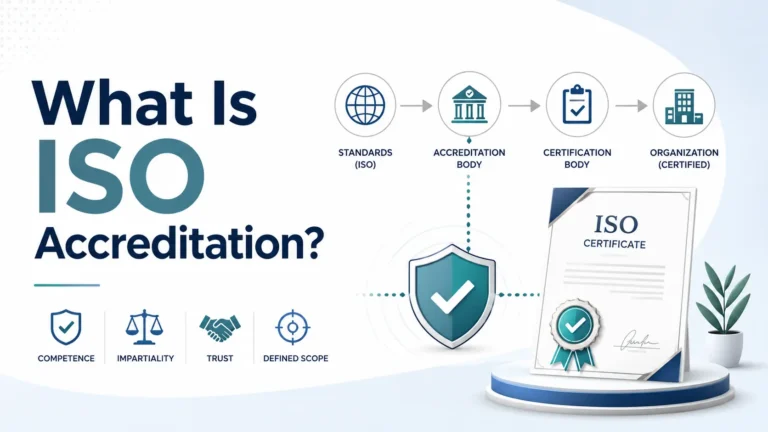
ISO develops international standards, but ISO does not perform certification or issue certificates. Certification is performed by external certification bodies.
ISO certification involves different roles. Confusing these roles can lead to weak certificates, unclear responsibilities, or misleading claims.
AGS is an independent ISO certification and audit provider supporting organizations with certification, audits, assessments, training, documentation support, surveillance audits, and gap analysis.
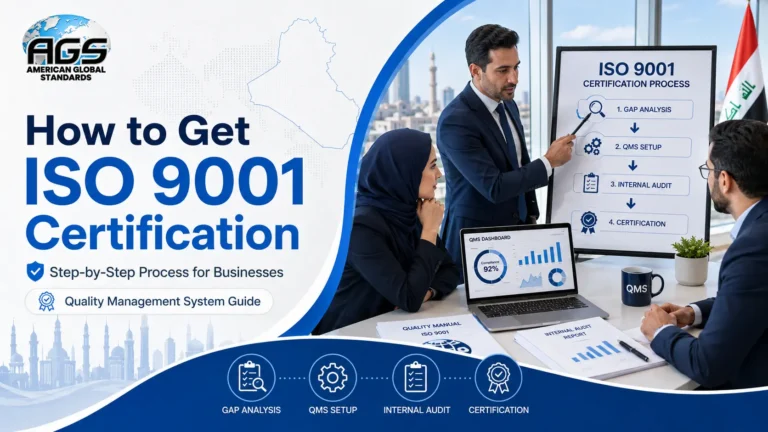
A company in Erbil gets ISO certified by selecting the right standard, defining the certification scope, preparing the management system, completing audit readiness work, passing the external certification audit, correcting nonconformities, and maintaining the certificate through surveillance audits.
The right standard depends on the business activity, buyer requirements, tender conditions, risk profile, and management system goal.
A construction contractor may need ISO 9001, ISO 14001, or ISO 45001. A food business may need ISO 22000 or HACCP-related support. An IT company may need ISO/IEC 27001 for information security. A healthcare supplier may need ISO 9001 or ISO 13485, where medical-device quality requirements apply.
The certification scope explains what the certificate will cover.
Scope may include:
A narrow scope may not satisfy a tender. A broad scope may require more audit time, more records, and more preparation.
A gap assessment compares the company’s current system against the selected ISO standard.
This review may identify missing records, weak process controls, unclear responsibilities, training gaps, incomplete risk controls, or audit-readiness issues.
The point of a gap assessment is not to create paperwork. It is to identify what must be corrected before the certification audit.
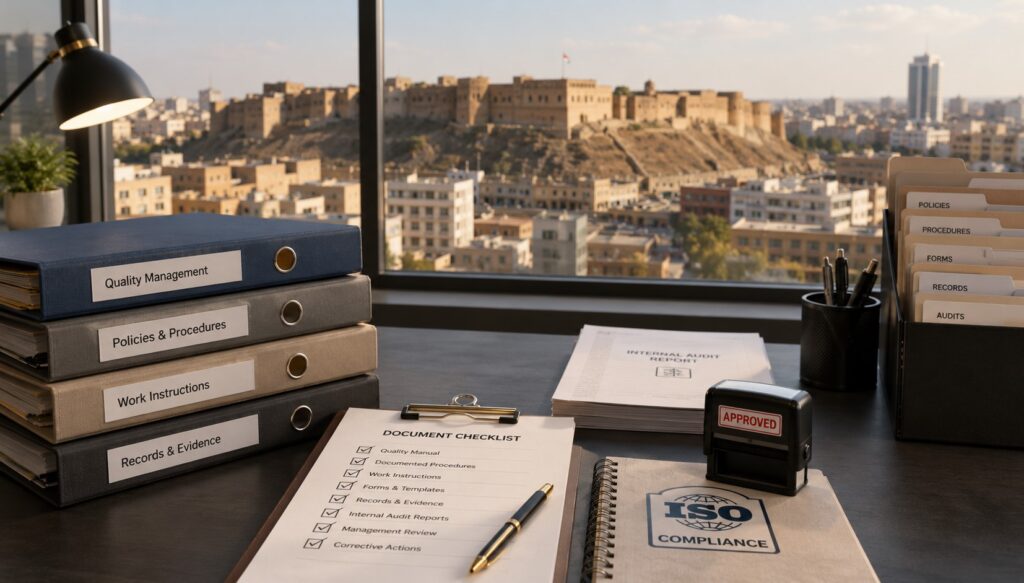
ISO certification requires documented information and evidence that the management system is working.
This may include policies, objectives, procedures, process maps, risk records, responsibility matrices, training records, inspection records, monitoring records, internal audit records, and corrective action evidence.
Documents alone are not enough. The business must show that the system is being followed in real operations.
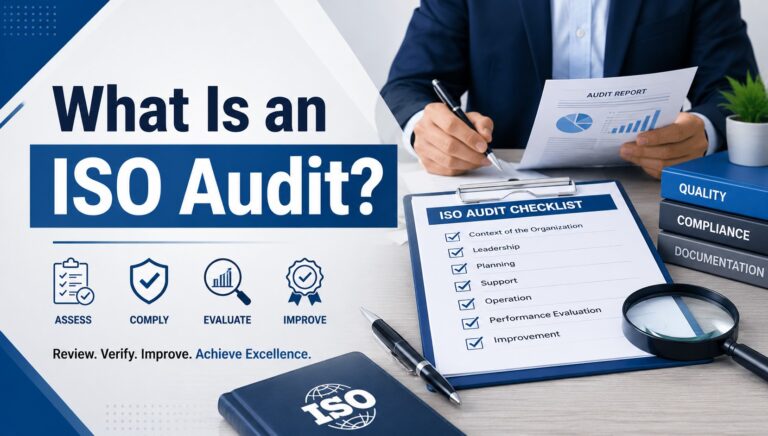
Before the certification audit, the company should complete internal audit activity and management review.
Internal audit checks whether the system is implemented. Management review shows that leadership has reviewed performance, risks, objectives, resources, audit results, customer feedback, and improvement actions.
These steps reduce avoidable findings during certification.
The certification body performs the external audit.
The auditor reviews documents, checks records, interviews employees, samples processes, and evaluates whether the company conforms to the selected ISO standard and defined scope.
Many management system certifications involve Stage 1 and Stage 2 audit activity. Stage 1 usually reviews readiness and documented information. Stage 2 reviews implementation and evidence.
If the audit identifies nonconformities, the company must correct them with root-cause analysis and corrective action evidence.
After certification, the system must be maintained. Surveillance audits help confirm that the management system remains active and effective.
Send Your Certification Requirement
Different ISO standards solve different business problems. The right standard depends on the sector, client requirement, tender condition, and certification scope.
ISO 9001 is commonly used by contractors, manufacturers, service companies, logistics providers, suppliers, and professional firms that need stronger quality control and customer confidence.
It supports defined responsibilities, process consistency, corrective action, supplier control, and customer satisfaction.
ISO 14001 supports environmental management for companies that need to control environmental responsibilities, resource use, waste, emissions, compliance obligations, and environmental objectives.
It is especially relevant for construction, industrial, manufacturing, and operational businesses with environmental impacts.
ISO 45001 supports occupational health and safety management.
It is commonly used by companies with site work, contractor safety obligations, industrial activity, construction operations, warehouses, and worker safety risks.
ISO 22000 supports food safety management for organizations in the food chain.
It may fit food producers, processors, storage businesses, hospitality groups, suppliers, and food-related service providers that need stronger food safety controls.
ISO/IEC 27001 supports information security management.
It is relevant for IT companies, software providers, data-handling businesses, outsourced service providers, and organizations responding to customer security requirements.
Depending on scope and service availability, AGS may support additional standards and programs such as ISO 13485, ISO/IEC 17025, ISO 29001, ISO 22301, ISO 50001, HACCP, Halal, GlobalG.A.P., UL/CE, ISO 15189, and other sector-based standards. These should be selected only when they match the company’s industry, buyer requirements, and certification goals. AGS lists several of these standards and product certification programs on its site.
ISO certification requires documents and records that show the management system is defined, implemented, checked, and improved.
The exact requirements depend on the selected standard and scope, but most ISO projects need practical evidence before the external audit.
Common documents include:
Common records include:
Before starting, prepare:
Clear information at the beginning reduces rework later.
ISO certification time in Erbil depends on management system readiness, documentation status, employee training, internal audit completion, management review, nonconformity closure, and certification body scheduling.
No credible provider should promise certification in a fixed number of days without reviewing the scope and readiness.
Certification may move faster when the company already has documented processes, trained staff, clear responsibilities, and usable records.
It may take longer when:
A readiness review gives the most realistic timeline.
ISO certification matters when Erbil businesses need proof that their operations follow a controlled, auditable management system.
It should not be treated as a guaranteed contract win. It is a credibility and control tool that supports business opportunities when the certificate matches the buyer’s required standard and scope.
Many organizations pursue ISO certification because buyers, tenders, or supplier approval processes request it.
For Erbil contractors, suppliers, and service providers, certification may support prequalification, procurement confidence, vendor onboarding, and client review where the required standard and scope match the work.
ISO certification can help show that a company follows a recognized management system standard.
Recognition depends on the standard, certification scope, certification body, accreditation status, where applicable, and certificate validity. ISO advises users to check certification bodies and accredited certifications through IAF CertSearch or relevant certification/accreditation bodies.
ISO certification can also improve internal discipline.
A management system helps define responsibilities, standardize processes, manage risks, keep records, track corrective actions, and prepare for audits.
For many companies, this internal control is as important as the certificate itself.
Erbil has active business sectors where ISO certification can support tenders, supplier approval, buyer confidence, and operational control. The right standard depends on the industry, buyer expectations, risk profile, and certification scope.
Construction and engineering companies often need ISO certification for quality control, site safety, environmental responsibilities, and tender participation.
ISO 9001, ISO 45001, and ISO 14001 are common starting points.
Oil, gas, industrial, and petrochemical support companies often need stronger process control, safety systems, environmental management, supplier approval, and audit readiness.
The right standards depend on the company’s exact activity and client requirements.
Food, agriculture, and hospitality businesses may need ISO 22000, HACCP, or ISO 9001, depending on their role in the food chain.
Food safety certification support should match the product, process, storage, handling, and buyer expectations.
Healthcare and medical suppliers may need quality management, safety management, or medical-device-related QMS support depending on their work.
ISO 9001 may fit general quality management. ISO 13485 may be relevant when medical-device quality system expectations apply.
IT and service companies may use ISO/IEC 27001 for information security and ISO 9001 for quality management.
This is useful when handling customer data, providing outsourced services, or responding to procurement security requirements.
A reliable ISO certification provider should explain the standard, scope, audit stages, evidence requirements, certification decision, surveillance cycle, and verification process clearly.
The provider should not promise a guaranteed certificate before the audit.
Before starting, ask what the provider will actually deliver.
Useful deliverables may include:
Guaranteed ISO certificate claims are a warning sign.
Certification depends on whether the management system conforms to the selected standard and whether audit findings are resolved. A serious provider should explain audit readiness, not promise an outcome before evidence is reviewed.
A reliable provider should explain how the certificate can be checked.
Ask about:
An ISO certificate is strongest when it is valid, scope-appropriate, and verifiable.
The certificate should match the company’s legal name, Erbil location, or covered site, selected standard, certified activity, and buyer requirement.
A certificate with the wrong scope may not satisfy a tender or buyer, even if the certificate is real.
IAF CertSearch allows users to validate accredited management system certifications issued by certification bodies accredited by IAF signatory accreditation bodies under ISO/IEC 17021-1.
Certificate verification should also include checking the certification body, accreditation body, certificate number, certificate status, validity dates, and scope.
Certificate scope defines what the certificate actually covers.
For example, a certificate for “general trading services” may not prove certification for construction work, food production, logistics operations, or information security services.
The certificate should match the work being offered.
ISO certification support in Erbil may involve onsite, remote, or hybrid work depending on the company’s operations, documentation status, audit requirements, and certification scope.
AGS provides local audit support and audit teams across Iraq, the Middle East, and the USA.
On-site support is useful for:
On-site review helps confirm how the management system works in real conditions.
Remote support can work for:
For many Erbil companies, the practical model is hybrid: remote document work plus onsite review where operations need direct observation.
ISO Certification in Erbil can help your company prepare for tenders, supplier approval, client requirements, audit readiness, and stronger management system control.
AGS supports Erbil businesses with standard selection, scope review, gap assessment, ISO training, documentation support, certification audits, surveillance audits, corrective action review, and certificate verification guidance.
Request ISO Certification Support in Erbil


ISO certification in Erbil is the process of having a company’s management system audited against a selected ISO standard and defined certification scope.
Start by confirming the required ISO standard and certificate scope. Then prepare documents, implement controls, complete internal review, pass the external certification audit, close nonconformities, and maintain certification through surveillance audits.
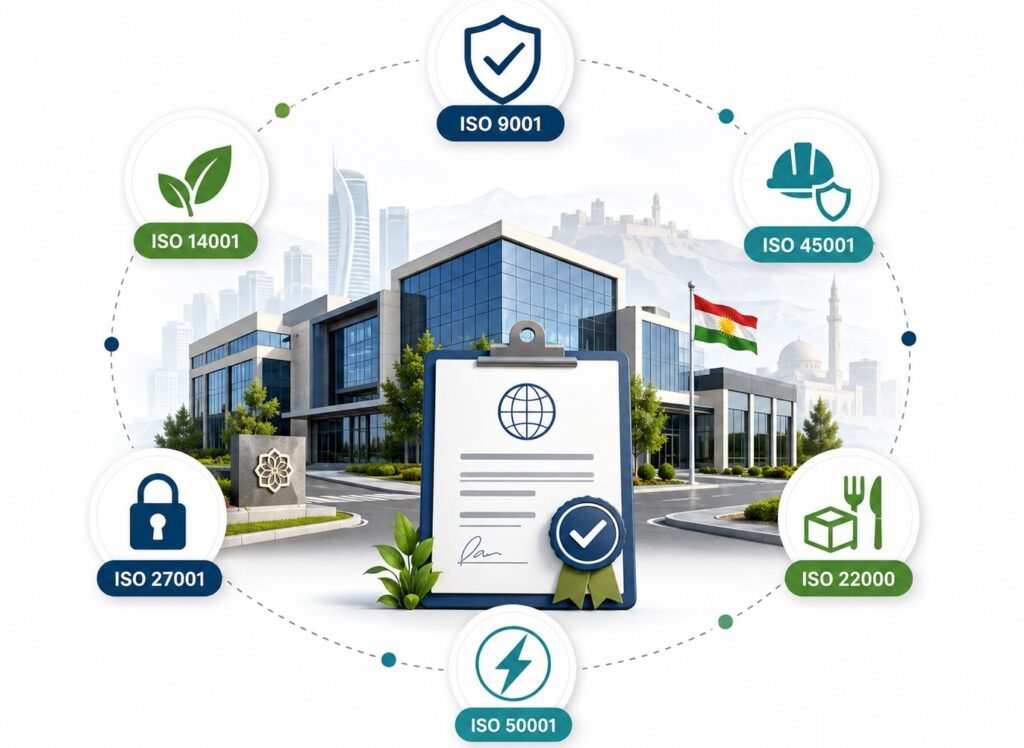
Common standards include ISO 9001 for quality management, ISO 14001 for environmental management, ISO 45001 for occupational health and safety, ISO 22000 for food safety, and ISO/IEC 27001 for information security.
ISO certification cost in Erbil depends on the selected standard, company size, number of sites, process complexity, documentation readiness, audit duration, and certification body fees.
The timeline depends on scope, documentation readiness, employee training, internal audit completion, management review, corrective action closure, and certification body scheduling.
ISO certification can support tender readiness, supplier qualification, client confidence, audit preparation, process control, and international business credibility when the certificate matches the required standard and scope.
ISO certification may be requested by clients, tenders, suppliers, or sector-specific contracts, but it should not be described as mandatory for every Erbil business.
Common documents include the scope statement, policy, objectives, process maps, procedures, risk records, training records, internal audit reports, management review minutes, corrective action records, and operational evidence.
Construction, engineering, oil and gas support, industrial services, food and agriculture, hospitality, healthcare suppliers, IT, logistics, and service companies may use ISO certification depending on client and contract requirements.
Yes. Small businesses and startups can pursue ISO certification if they have a defined scope, an implemented management system, required records, and readiness for an external audit.
Yes. Support may be onsite, remote, or hybrid depending on the company’s scope, site activity, documentation status, and audit preparation needs.
Choose a provider that explains the standard, scope, audit stages, certification body role, documentation evidence, corrective actions, surveillance audits, and certificate verification clearly. Avoid guaranteed-certificate claims.
ISO certification can support international recognition when the certificate is issued by a credible certification body, has the correct scope, remains valid, and can be verified through the relevant certification and accreditation pathway.