ISO 15189 Accreditation Services for Medical Laboratories


    ISO Certification

    ISO 14001 CERTIFICATION
    ISO 18001 CERTIFICATION
    ISO 45001 CERTIFICATION
    ISO 27001 CERTIFICATION
    ISO 22000 CERTIFICATION
    ISO 50001 CERTIFICATION
    ISO 29001 CERTIFICATION
    ISO 18788 CERTIFICATION
    ISO 37001 CERTIFICATION
    ISO 22301 CERTIFICATION
    ISO 13485 CERTIFICATION
    ISO 10002 CERTIFICATION
    ISO 21500 CERTIFICATION
    ISO 17025 CERTIFICATION
    ISO 15189 CERTIFICATION

    Searchers often say ISO 15189 certification. For medical laboratories, the correct conformity route is ISO 15189 accreditation. ISO 15189:2022 is the international standard for quality and competence in medical laboratories. ISO says it applies to medical laboratories, is also applicable to point-of-care testing, and is used by laboratory users, regulators, and accreditation bodies to recognize competence.


    If your laboratory is evaluating ISO 15189, the real questions are practical. Does the standard fit your lab? What will be assessed, what needs to be fixed before application, and which accreditation pathway makes sense for your situation? This page is written for that decision, not for general lab theory.

    What ISO 15189 Accreditation Is And Who It Applies To?

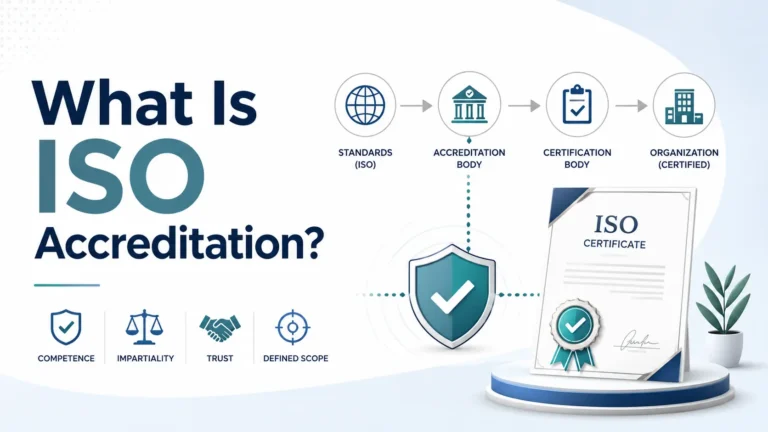
    ISO 15189 accreditation is formal recognition that a medical laboratory meets ISO 15189 requirements for quality and competence within its defined scope. ISO publishes the standard, but ISO does not issue certificates. Accreditation is handled by accreditation bodies operating within the recognized accreditation ecosystem. WHO’s LQSI tool also frames ISO 15189 as the benchmark medical laboratories use when implementing a quality management system for accreditation.


    ISO 15189 applies to medical laboratories and point-of-care testing services. In the provider ecosystem, that scope is often extended into practical medical-testing environments such as clinical testing programs, blood banks, transfusion services, and other healthcare-adjacent diagnostic functions. ANAB explicitly positions its ISO 15189 program around medical testing laboratories and related healthcare services, while A2LA positions its program for clinical testing laboratories.


    ISO 15189 accreditation vs certification


    For medical laboratories, accreditation is the correct term. ISO states that it does not perform certification or issue certificates. In practice, laboratories are assessed by accreditation bodies, and international recognition sits in the ILAC MRA framework. That is why “ISO 15189 certification” is useful as a searcher alias, but weak as the canonical label for the page.


    Medical laboratories and point-of-care testing in scope


    ISO 15189 applies to medical laboratories and to point-of-care testing where the organization is responsible for the quality and competence of the service. That includes central laboratories, hospital labs, diagnostic networks, and point-of-care testing programs that need controlled processes, reliable results, and clear oversight across the testing pathway.


    What accreditation evaluates in a medical laboratory


    ISO 15189 accreditation evaluates both the management system and the laboratory’s technical competence. A2LA says ISO 15189 covers pre-analytical, analytical, and post-analytical functions together with quality management system requirements. CAP says its assessors evaluate both the QMS and technical competency, which is exactly why this route is treated differently from a generic quality registration exercise.

    Why ISO 15189 Accreditation Matters For Laboratory Quality And Competence?

    ISO 15189 accreditation matters because it links laboratory quality systems to recognized technical competence. ISO frames the standard around recognition of competence. ANAB frames its program around quality assurance, improved patient care, and confidence in the quality and competence of medical laboratories.


    The value is not abstract. CAP’s own participant data says 95% of participants felt their laboratory improved quality and patient safety, 87% reported improved operational efficiency, 74% felt more valuable to the larger organization, and 86% reported stronger systems for communication, escalation, and problem solving during the COVID-19 period. Those are CAP program-specific numbers, not universal promises, but they are still strong proof that the commercial case is real.


    Reliable results, risk mitigation, and patient-facing quality


    Medical laboratories pursue ISO 15189 because bad results create real clinical risk. ANAB says the objective of ISO 15189 is to promote patient welfare and satisfaction of laboratory users through confidence in quality and competence. A2LA’s case-study language also ties ISO 15189 accreditation to greater confidence in test quality.


    Operational efficiency, consistency, and continuous improvement


    ISO 15189 is also an operating-system decision. CAP’s program pages and guidance repeatedly tie the standard to structured nonconformity handling, root-cause analysis, inspection readiness, and ongoing improvement. WHO’s LQSI tool takes the same line from an implementation angle and gives laboratories a stepwise route to build the management system needed for accreditation.


    Recognition and confidence for regulators, users, and stakeholders


    Recognition matters because laboratory results move through larger systems. ILAC says the ILAC MRA provides the technical underpinning for confidence in accepted results from accredited medical testing laboratories. ILAC’s signatory search exists so users can identify recognized accreditation bodies and, where available, their accredited facilities.

    Doing the right thing, at the right time.

    300+

    Satisfied Clients

    10+

    Years of Experience

    1700+

    ISO certifications

    What Does ISO 15189 Accreditation Require of Your Laboratory?

    ISO 15189 requires a working quality management system and demonstrable technical competence across the laboratory workflow. That means the page cannot stop at “have procedures.” The real requirement is a functioning system that can withstand document review, assessment, corrective action, and surveillance. ISO sets the core scope. A2LA and CAP show how that becomes real in assessment practice.


    Quality management system and documentation readiness


    Your laboratory needs a QMS that is implemented, not just drafted. WHO’s LQSI tool is explicit that laboratories move toward accreditation through stepwise implementation of a compliant management system. ANAB’s preparation guidance starts with becoming familiar with the standard and related requirements, then reviewing the current system and documents against them.


    Technical competence across the testing workflow


    The technical side is assessed across the workflow, not only at the bench. A2LA makes this clear by highlighting pre-analytical, analytical, and post-analytical functions. That matters because many weak pages still act as if ISO 15189 is just a quality manual issue. It is not. It is a laboratory competence issue.


    Gap analysis, internal audit, and corrective action readiness


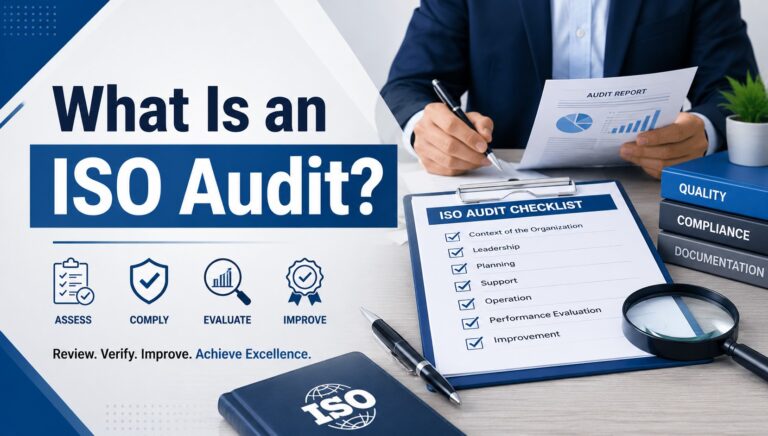
    Readiness work is part of the path, not optional cleanup. WHO’s LQSI guidance ties ISO 15189 progress to internal quality control, internal audits, and a stepwise implementation plan. WHO materials also describe internal audits and management reviews as required components of the monitoring process. ANAB and CAP both place document review, assessment, and corrective-action handling inside the formal route.

    How to get ISO 15189 Accreditation?

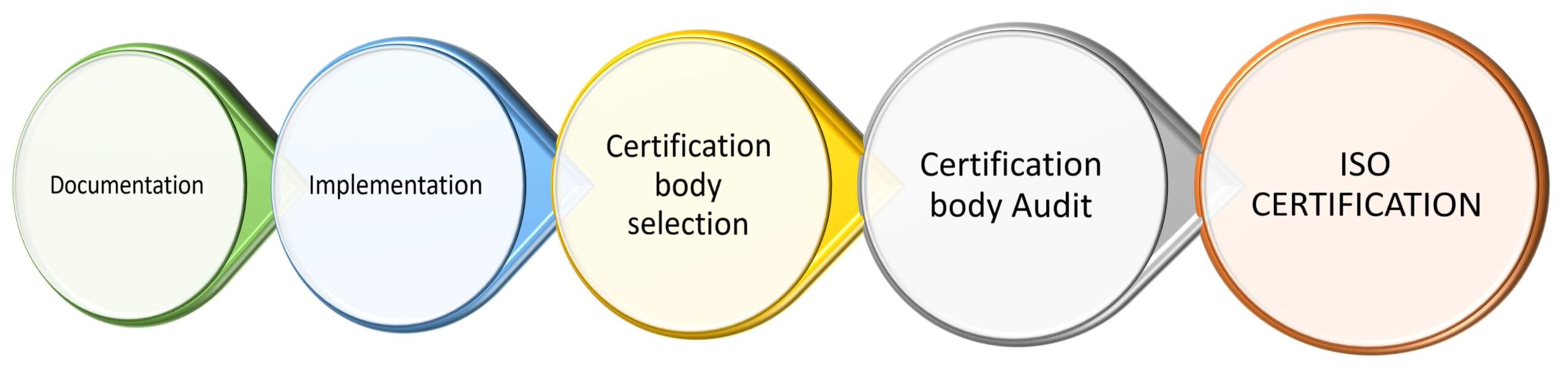
    At a high level, the path is straightforward: understand the requirements, assess readiness, apply, submit documentation, undergo review and assessment, close findings, and receive an accreditation decision. ANAB’s public preparation page is the clearest benchmark here, and CAP follows the same overall logic inside its program structure.


    Quote, application, and document submission


    The process starts with scope, application, and document submission. ANAB’s public pathway begins with a quote and application logic, then moves to documentation review. That is why serious buyers need scope clarity early. If the scope is vague, the whole project gets harder.


    Documentation review, assessment, and corrective actions


    After submission comes review and assessment. ANAB’s published steps include documentation review, optional preliminary assessment, formal accreditation assessment, corrective action if needed, then decision, and certificate issuance. CAP’s process pages also position the system around formal review, assessment, and structured follow-up.


    Decision, certificate, surveillance, and ongoing maintenance


    Accreditation is not one-and-done. CAP describes a three-year accreditation cycle with surveillance and reassessment built into the lifecycle. CAP also publishes an accredited-laboratories directory, which reinforces the fact that recognized status has to be maintained, not just awarded once.

    Basra Municipality Requirements for ISO Certification

    How To Evaluate The Right ISO 15189 Accreditation Pathway For Your Laboratory?

    Do not choose a pathway on branding alone. Compare the fit, prerequisites, service model, recognition logic, and the amount of readiness support your laboratory actually needs. The live provider set is not uniform. Some providers are cleaner for U.S. clinical pathways, some are clearer on process, and some embed prerequisites that make them unsuitable for every lab.


    Accreditation Body Fit, Prerequisites, And Service-Model Differences.


    The pathways are not interchangeable. CAP states that accreditation through the CAP Laboratory Accreditation Program is a prerequisite for its CAP 15189 program. A2LA offers a combined ISO 15189 and CLIA-oriented pathway for clinical testing laboratories. ANAB emphasizes a staged accreditation workflow and a medical-testing-laboratory scope. Those are real commercial differences, not minor details.


    What Proof To Verify Before Choosing A Provider Or Partner


    Ask for four kinds of proof. First, authority proof: what exactly is the provider’s role, and are they an accreditation body, consultant, training provider, or implementation partner? Second, process proof: can they show the real path from readiness to decision? Third, recognition proof: can they connect the route to ILAC-recognized accreditation logic or official accredited-lab directories? Fourth, real-world proof: case studies, client categories, or measurable outcomes. CAP’s directory and participant data are strong examples of this kind of proof.


    When To Add Country Or CLIA-Specific Considerations


    Country and regulatory nuance matters, but it should stay in its lane on a global page. In the U.S., CLIA can become relevant in provider-path comparisons, which is why A2LA’s combined positioning shows up so strongly in the SERP. But CLIA is not the global center of ISO 15189 accreditation. It is a pathway nuance.


    Industries Sector

    Oil & Gas
    Construction & Infrastructure
    Manufacturing & Industrial Production
    Food, Agriculture & Processing
    Security & Private Protection Services
    Government & Public Sector
    IT & Digital Services
    Healthcare & Medical Services
    Laboratories & Testing Facilities
    Logistics & Transportation
    Energy & Utilities
    Banking, Financial Services & Insurance
    Educational institutions
    Healthcare Organizations

    Trainings

     
    Quality
     
    Environment
     
    Health & Safety
     
    Food Safety
     
    Business Continuity

    Other ISO Certifications We Provide in Iraq

    As an accredited body, we issue certificates for the most sought-after management system standards:

    How Our Iso 15189 Accreditation Support Helps Your Laboratory?

    We help laboratories get ready for accreditation. We do not present ourselves as the accreditor unless that is actually true. The accreditor evaluates and grants the accreditation. Our role is to help your laboratory define scope, assess gaps, strengthen the quality management system, prepare documentation, organize readiness evidence, and move through the accreditation path with fewer surprises.

    Gap Assessment And Accreditation Roadmap

    We start by identifying what your laboratory already has, what the chosen accreditation pathway expects, and where the real gaps are. That turns the project from a vague compliance target into a sequence of actions.

    Documentation, Implementation, And Training Support

    We help organize the working system behind the standard. That includes controlled documents, records, internal responsibilities, evidence trails, staff preparation, and the support needed to turn procedures into actual practice.

    Technical Workflow And Readiness Support

    We help connect the QMS to the real laboratory workflow. That means pre-analytical, analytical, and post-analytical control, corrective-action structure, internal-audit readiness, and preparation for external review.

    Pre-Assessment, Corrective Action, And Maintenance Support

    We help laboratories prepare for assessment, respond to findings, and strengthen the system for surveillance and ongoing maintenance. The goal is not just to pass a first review. The goal is to build a laboratory system that holds up.

    Blogs & News

    ISO Certification

    ISO certification

    How Many Types of ISO Certification Are There?

    How Many Types of ISO Certification Are There? ISO certification applies to 4 categories of…
    READ MORE →
    ISO certification

    What Is ISO Certification? Definition, Process, and How to Verify It

    What Is ISO Certification? Definition, Process, and How to Verify It ISO certification is a…
    READ MORE →
    Basra Municipality Requirements for ISO Certification

    Government Procurement & Tender Requirements in Basra

    Government Procurement & Tender Requirements in Basra ISO Certification, Compliance Expectations & Practical Guidance Government…
    READ MORE →
    Basra Municipality Requirements for ISO Certification

    Basra Municipality Requirements for ISO Certification: What Businesses Must Comply With

    Basra Municipality Requirements for ISO Certification: What Businesses Must Comply With Basra Municipality does not…
    READ MORE →
    ISO for Food Businesses in Basra

    ISO for Food Businesses in Basra

    ISO for Food Businesses in Basra: A Complete Guide to Food Safety, Compliance & ISO…
    READ MORE →
    ISO for Manufacturing in Basra

    ISO for Manufacturing in Basra

    ISO for Manufacturing in Basra: How International Standards Strengthen Industrial Performance? Basra’s manufacturing sector is…
    READ MORE →
    ISO for Construction Companies in Basra

    ISO for Construction Companies in Basra

    ISO for Construction Companies in Basra: A Complete Guide for 2026 This is the practical…
    READ MORE →
    ISO for Security Companies in Basra

    ISO for Security Companies in Basra

    ISO for Security & PSC Companies in Basra (2026 Guide) This is the practical guide…
    READ MORE →
    ISO Certification for Oil & Gas Companies in Basra

    ISO Certification for Oil & Gas Companies in Basra

    ISO Certification for Oil & Gas Companies in Basra This is the practical guide for…
    READ MORE →
    Logo
    Logo
    Logo
    Logo
    Logo
    Logo
    Logo
    Logo
    Logo
    Logo
    Logo
    Logo
    Logo
    Logo

    Frequently Asked Questions About ISO 15189 Accreditation

    What is the difference between accredited and non-accredited ISO 9001 certification?

    Accredited ISO 9001 certification is issued by a certification body formally evaluated by a recognized accreditation body (like IAS or UAF), while non-accredited certification carries no independent verification of the certifier's competence. Non-accredited certificates are often not accepted for government tenders, international contracts, or by multinational companies, and cannot be verified through IAF CertSearch.

    How do I verify if an ISO 9001 certificate from Iraq is genuine?

    You can verify an ISO 9001 certificate's authenticity through the IAF CertSearch global database by entering the certificate number or organization name. AGS also provides a dedicated certificate verification tool for quick status checks. Certificates from accredited bodies are registered in IAF CertSearch, where you can check current status, scope, and accreditation details.

    Can a USA-headquartered certification body certify my company in Iraq?

    Yes. AGS is headquartered in the USA with a regional office in Basra, Iraq, and provides on-site audits across Baghdad, Erbil, and other Iraqi cities by locally based auditors. International certification bodies routinely operate across borders through local offices or qualified representatives. AGS's structure ensures both global standards and local presence.

    What are surveillance audits and why are they required?

    Surveillance audits are annual assessments performed in years 1 and 2 of your 3-year certification cycle to verify that your quality management system continues to conform to ISO 9001 requirements. These audits ensure your QMS remains effective and continuously improves, rather than being a one-time effort. They are mandatory to maintain certification.

    Is ISO 9001 certification required for Iraqi government tenders?

    Yes, ISO 9001 certification is increasingly listed as a mandatory requirement or a significant evaluation criterion in Iraqi government tenders, particularly for construction, services, and supply contracts. This is common in tenders issued by the Oil Ministry, Ministry of Construction and Housing, and Ministry of Electricity. Accredited certification carries more weight in tender evaluations than non-accredited alternatives.

    Do you offer Arabic-language documentation support?

    Yes. Auditors review in Arabic or English, conduct interviews in Arabic, and deliver bilingual reports.

    There is no universal global yes-or-no answer. ISO says the standard is used by laboratory users, regulators, and accreditation bodies to confirm or recognize competence, which means local regulation, customer requirements, or program rules can make it necessary in some settings. But the official ISO standard page does not establish one universal global mandate.

    ISO 15189 is the medical-laboratory standard. ISO/IEC 17025 is the general testing and calibration laboratory standard. CAP’s FAQ says ISO 15189 is the medical laboratory version of ISO/IEC 17025 and explains that ISO 15189 incorporates the essential elements of ISO 9001 while adding technical competency factors relevant to medical laboratories.

    No. ISO states that it does not perform certification or issue certificates. For laboratories, the recognized route is accreditation through accreditation bodies operating in the relevant recognition framework.

    Request An ISO 15189 Readiness Assessment

    If your laboratory is evaluating ISO 15189 accreditation, the first useful step is not a generic sales call. It is a scope and readiness review.


    We can help you clarify the pathway, define the workload, identify the gaps, and decide what has to be in place before application, review, assessment, and corrective action. That is the point where the project becomes manageable.


      ISO Certification

      ISO 9001 CERTIFICATION
      ISO 14001 CERTIFICATION
      OHSAS 18001 CERTIFICATION
      ISO 45001 CERTIFICATION
      ISO 27001 CERTIFICATION
      ISO 22000 CERTIFICATION
      ISO 50001 CERTIFICATION
      ISO 29001 CERTIFICATION
      ISO 18788 CERTIFICATION
      ISO 37001 CERTIFICATION
      ISO 22301 CERTIFICATION
      ISO 13485 CERTIFICATION
      ISO 10002 CERTIFICATION
      ISO 21500 CERTIFICATION
      ISO 17025 CERTIFICATION
      ISO 15189 CERTIFICATION
       

      Industries Sector

      Oil & Gas
      Construction & Infrastructure
      Manufacturing & Industrial Production
      Food, Agriculture & Processing
      Security & Private Protection Services
      Government & Public Sector
      IT & Digital Services
      Healthcare & Medical Services
      Laboratories & Testing Facilities
      Logistics & Transportation
      Energy & Utilities
      Banking, Financial Services & Insurance
      Educational institutions
      Healthcare Organizations

      Trainings

      Quality
      Environment
      Health & Safety
      Food Safety
      Business Continuity
      Translate »