Home » ISO 21500
ISO 21500 certification is not a clean, single official product. Today, the term is mostly a market label people still search for when they want project management training, person certification, or implementation support tied to the ISO 21500 family. The official standards picture changed years ago: ISO 21500:2012 was replaced by ISO 21500:2021, which covers context and concepts, and ISO 21502:2020, which gives guidance on project management. ISO also states that it does not perform certification or issue certificates.
That is why this page exists. The first job is to clear up the confusion. The second job is to help you choose the right path: individual training or personal certification, or organizational implementation support for a PMO, a department, or the wider business.
ISO 21500 is part of the ISO 21500 family of project, programme, and portfolio management standards. In its current form, ISO 21500:2021 sets the organizational context and underlying concepts, while ISO 21502:2020 gives the project management guidance that organizations and professionals actually use in practice.
ISO 21500:2021 is the context-and-concepts layer. ISO says it provides the organizational context and underlying concepts for project, programme, and portfolio management, and helps organizations adopt or improve the standards prepared by ISO/TC 258. The same standards family now includes ISO 21502 for project management, ISO 21503 for programme management, ISO 21504 for portfolio management, and ISO 21505 for governance.
In the market, “ISO 21500 certification” usually means one of three things. It can mean a legacy person credential built around ISO 21500 wording, a current ISO 21502 training and person-certification path, or consulting and implementation support for organizations that want more standardized project practices. GAQM still markets an ISO 21500 – Certified Lead Project Manager credential, while PECB moved its project-management certification path to ISO 21502 and published a migration notice saying its ISO 21500 certifications became obsolete.
ISO 21500:2021 explains the framework. ISO 21502:2020 explains project management guidance in practice. That is the cleanest way to separate them. ISO 21500:2021 sits higher in the family and covers organizational context and concepts. ISO 21502:2020 is the project-management guidance standard and applies to any organization and any type of project.
The big change is that ISO 21500:2012 is no longer the current anchor document. ISO’s online catalogue shows the 2012 standard as withdrawn, while ISO’s official text says the current edition of ISO 21500, together with ISO 21502:2020, cancels and replaces the first edition. PECB’s migration document then shows how this played out commercially: it stopped offering ISO 21500 training and certification and moved candidates to ISO 21502 routes.
If you want current project-management guidance, look at ISO 21502. That is the safer rule. ISO 21502:2020 is the guidance document for project management itself, and ISO says it applies to any organization and any type of project, including predictive, incremental, iterative, adaptive, hybrid, and agile approaches. Legacy ISO 21500 wording still appears in the market because users keep searching for it, and some providers still sell credentials under that name.
Satisfied Clients
Years of Experience
ISO certifications
There are two main paths: one for individual professionals and one for organizations. If you want a personal credential, you are comparing training providers, exams, and person-certification schemes. If you want better project delivery across a team, PMO, or organization, you are really looking for implementation support, internal capability building, and a standards-aligned operating model.
The individual path is training plus personal certification. Providers in this market package the offer around a course, an exam, and a credential. GAQM’s current ISO 21500 Lead Project Manager page lists a 40-question exam, 60-minute duration, and 70% pass score. PECB’s current ISO 21502 Lead Project Manager page lists a five-day course with the exam on Day 5 and sets experience and activity-hour requirements for the Lead level.
The organizational path is implementation support, not a simple off-the-shelf certificate. In practice, organizations use the ISO 21500 family to standardize governance, lifecycle practices, stakeholder control, risk handling, reporting, and decision-making across projects. The current ISO documents support that use case: ISO 21500:2021 gives the conceptual structure, and ISO 21502:2020 gives the project-management guidance.
These are not the same thing. Training proves you attended and learned. Person certification is a separate claim about competence. Implementation support helps a team or organization adopt the practices. IAF’s personnel-certification guidance is blunt on this point: a credential based only on education, training, or work experience is not the same as certification of persons, which requires assessment of competence. ISO/IEC 17024 is the standard that sets requirements for bodies certifying persons against specific requirements.
The main benefits are standardized project practices, stronger governance, and better delivery control. ISO 21500:2021 and ISO 21502:2020 are built to help organizations improve how projects are structured, directed, monitored, and closed. Provider pages then translate that into business language: better stakeholder engagement, more consistent project control, stronger communication, better risk handling, and clearer roles.
ISO alignment helps organizations stop running every project differently. The standards family covers context, governance, lifecycle thinking, and management practices. That gives leaders a more stable way to define roles, controls, reporting, and decisions across projects instead of letting each team improvise its own playbook.
ISO-aligned project management improves control where projects usually drift: stakeholders, risks, scope, schedule, cost, quality, procurement, and communication. Those practice areas repeat across provider outlines because they are the real operating levers in project delivery, not just training buzzwords. GAQM and PECB both make them explicit in course outlines and competency domains.
A credible route helps people and organizations signal seriousness. For professionals, that means a clearer competence story. For leaders and PMOs, it means a stronger internal structure for sponsor decisions, governance, and performance reviews. That is one reason the audience across current provider pages keeps repeating the same roles: project managers, sponsors, team members, advisers, executives, and directors.
Judge the provider on clarity, scope, proof, and verification. If a provider cannot explain the difference between ISO 21500:2021, ISO 21502:2020, training, person certification, and implementation support, that is a bad sign. The keyword is messy. A credible provider should make it less messy, not more.
Ask for hard proof, not polished marketing. Good proof includes the exact course or scheme basis, exam or assessment mechanics, certification rules, policy documents, sample materials, verification paths, and real examples of what the provider helps clients achieve. The strongest provider pages in this space expose exam structure, prerequisites, rules, policies, and downloadable resources.
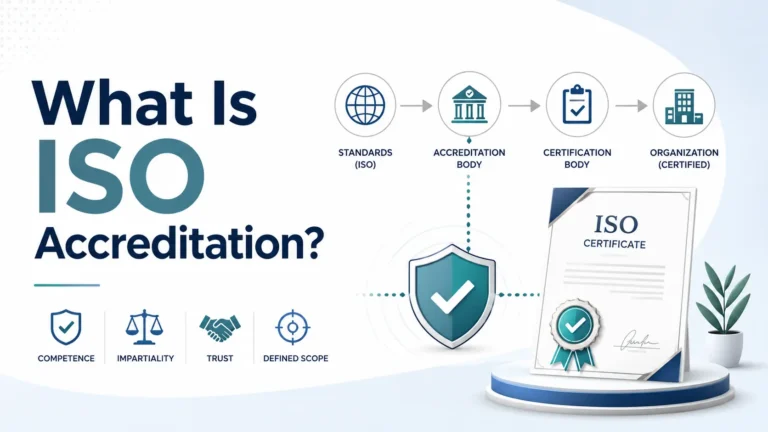
Start by checking who actually issues the credential. ISO says it does not perform certification or issue certificates. For accredited management-system certificates, ISO points buyers to certification bodies, accreditation bodies, and IAF CertSearch. For person certification, the credibility question is different: ask whether the credential sits under a real certification-of-persons scheme aligned with ISO/IEC 17024 rather than being only a course-completion badge.
Be cautious when a provider blurs everything together. Red flags include:
ISO’s own certification page rules out the first claim. IAF’s personnel-certification guidance rules out the second. ISO’s current standards catalogue rules out the third.
As an accredited body, we issue certificates for the most sought-after management system standards:
The next step is not to buy the first badge you see. The next step is to decide what you are actually trying to solve. Do you need a personal credential, a current ISO 21502-based training route, or organizational implementation support for a PMO or project-delivery environment? Once that is clear, the provider decision gets much easier.
We help teams and decision-makers sort that out before money gets wasted. The real value is clarity first, route selection second, and only then provider choice.


Yes. The current guidance supports agile and hybrid approaches. ISO 21502:2020 states that delivery approaches can be predictive, incremental, iterative, adaptive, hybrid, including agile approaches. So the better question is not “waterfall or agile.” The better question is whether your provider understands how to apply the ISO guidance in the delivery model you actually use.
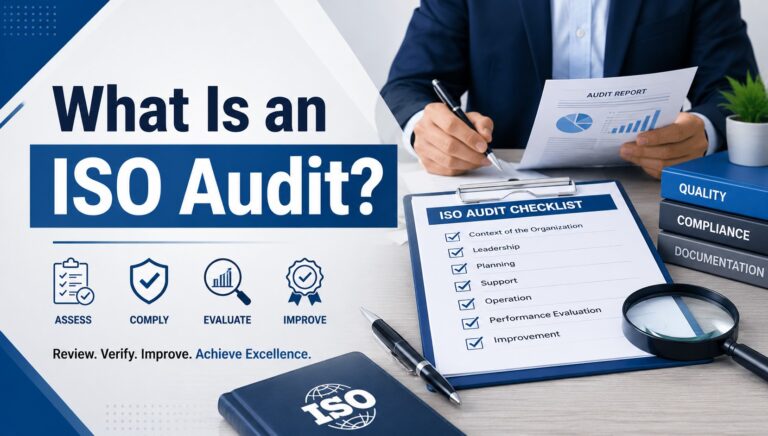
That depends on the route. In-person certification, the core function is usually assessment and exam-based verification of competence, not a management-system auditor auditing an organization against a requirements standard. In organizational implementation support, an auditor or assessor may review practices and evidence, but ISO’s own rules still matter: certification only takes place against a document with requirements, and ISO itself does not issue the certificate.