Halal Certification Services for Products and Facilities
ISO Certification
ISO 14001 CERTIFICATION
ISO 18001 CERTIFICATION
ISO 45001 CERTIFICATION
ISO 27001 CERTIFICATION
ISO 22000 CERTIFICATION
ISO 50001 CERTIFICATION
ISO 29001 CERTIFICATION
ISO 18788 CERTIFICATION
ISO 37001 CERTIFICATION
ISO 22301 CERTIFICATION
ISO 13485 CERTIFICATION
ISO 10002 CERTIFICATION
ISO 21500 CERTIFICATION
ISO 17025 CERTIFICATION
ISO 15189 CERTIFICATION
Halal certification helps businesses verify that products, ingredients, processes, facilities, and supply chains meet halal requirements within a defined certificate scope.
AGS provides halal certification services through independent assessment and audit of products, ingredients, suppliers, production processes, facility controls, labeling, and traceability systems against applicable halal requirements. After successful completion of the certification process, AGS issues halal certification and performs ongoing surveillance activities to support continued certification validity. That may include ingredient and supplier review, document preparation, facility-audit readiness, market-recognition checks, and support before initial application, renewal, or expansion of scope.
What Does Halal Certification Service Include?
Halal certification service usually includes product scope review, ingredient verification, supplier document checks, contamination-risk controls, facility audit preparation, label review, corrective-action planning, and certification-body coordination based on the target market.
AGS halal certification support usually covers:
Product and ingredient scope review
Supplier and raw material document checks
Facility hygiene and cross-contamination review
Halal audit preparation and gap analysis
Label, traceability, and process documentation
Certification-body and target-market recognition guidance
What Does Halal Certification Mean?
Halal certification means that a product, process, or facility has been assessed against halal requirements by a certification body and found compliant within a defined scope. That scope can cover specific products, a particular plant, a service operation, or a combination of those, depending on the certifier and the market involved.
The basic structure is simple:
A Halal certification is the compliance-verification process
A halal certificate is a document issued
A halal certification body is an organization that performs the review and issues the certificate
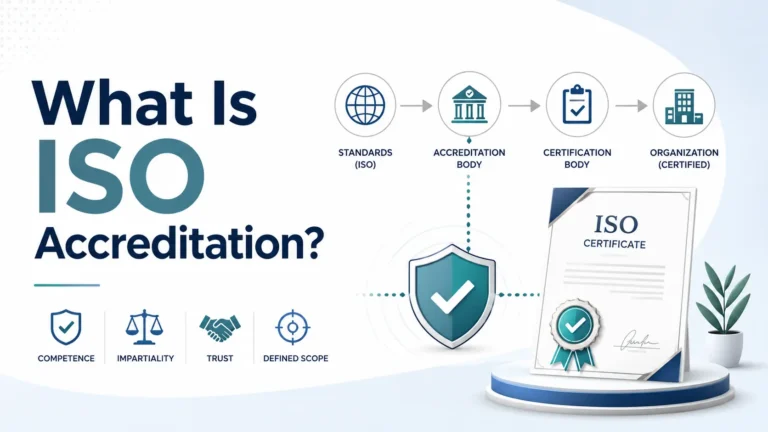
Accreditation is oversight of the certifier, not the same thing as product certification
That distinction matters because buyers often mix them up. A product can be halal certified. A certification body can be accredited. Those are different layers of trust.
What Products And Industries Can Be Halal Certified?
Halal certification is not limited to one narrow category. It is used across food production, processing, service, and consumer-goods sectors where ingredient origin, processing controls, contamination prevention, and religious compliance matter.
The main categories commonly covered include:
food and beverage
meat and poultry
processed foods
cosmetics
pharmaceuticals
supplements and nutraceuticals
chemicals
packaging
restaurants and food services
slaughterhouses and meat facilities
That broader scope matters for exporters and multi-category manufacturers. A food plant may need certification for ingredients and production lines. A cosmetics business may need it for formulation, processing, storage, and labeling. A restaurant may need it for sourcing, separation, preparation, and service controls. Indonesia’s halal regime has also stated that cosmetic products must have halal certification after October 17, 2026, which makes the category fit a live issue, not a future possibility.
Is Halal Certification Only For Meat?
No. Meat is one important category, but it is nowhere near the whole market.
Food, cosmetics, pharmaceuticals, chemicals, packaging, restaurants, and food-service operations all sit inside the active halal certification ecosystem. Accreditation and certification scopes already reflect that wider reality.
What Are The Main Halal Certification Requirements?
Most halal certification decisions come down to one thing: can the business prove that the product and process stay within halal requirements from input to output?
At a business level, the main checks usually include:
That means the review usually goes far beyond the final product label. Certifiers often want to see formulas, specifications, supplier documents, raw-material details, labels, flow of goods, sanitation controls, and evidence that halal and non-halal risks are being managed in the real process, not just in policy language. Codex sets the baseline around lawful and unlawful substances, and certifier application requirements often ask directly about animal-derived ingredients, alcohol use, and supporting supplier certificates.
Do You Allow Alcohol In Products That You Certify?
That cannot be answered honestly with one universal yes or no.
Alcohol treatment depends on the certifier’s rules, the product category, the function of the alcohol, the concentration, and the target-market acceptance requirements. Some markets and certifiers apply stricter rules than others. That is exactly why businesses need to disclose alcohol use, source, type, and level at the start instead of treating it like a minor technical note. Application guidance from certifiers commonly asks for the type and amount of alcohol used, where relevant.
What Is The Halal Verification And Certification Process?
The process is usually structured, even when the product category changes.
Initial enquiry and scope qualification AGS reviews the business type, product category, plant scope, and target market before confirming the halal certification route.
Application and document collection The business submits product lists, ingredient details, labels, process information, and supporting records.
Ingredient and supplier review High-risk materials, animal-derived inputs, processing aids, alcohol use, and supplier evidence are examined.
Gap analysis or pre-assessment, where applicable Weak points are identified before the formal audit.
On-site audit or facility inspection The certifier reviews the site, process flow, segregation controls, hygiene, storage, documentation, and staff practices.
Corrective actions if needed Findings are closed before the final decision.
Shariah and technical review with certification decision The decision is made on the documented file and audit outcome.
Certificate issuance The certificate is issued for the approved scope.
Logo-use rules and ongoing surveillance or renewal Renewal, follow-up, and logo-use controls apply based on the certifier’s rules.
A product may look simple, but if the file is disorganized, incomplete, or inconsistent, certification is where it usually stalls.
AGS helps you fix the gaps before the certifier starts asking difficult questions.
We support you by:
cleaning and structuring ingredient and formulation files
verifying supplier documents and halal declarations
organizing process flow and production mapping
preparing a clear, audit-ready documentation pack
identifying weak points that typically trigger certification delays
The result is a cleaner submission, fewer back-and-forth queries, and a smoother path to halal certification.
How Do You Choose A Trusted Halal Certification Body?
A trusted halal certification body is not just one with a logo and a website. The real test is whether the body is credible in the category you operate in and recognized in the market you want to sell into.
The short list should always include:
recognition in target markets
accreditation or conformity-assessment status
experience in the right product category
audit depth and clarity
certificate verification tools
scope limitations
export relevance and geography fit
Recognition can change. JAKIM maintains recognized foreign halal certification body lists and also publishes withdrawal notices when recognition status changes. That means yesterday’s accepted route is not automatically tomorrow’s accepted route. EIAC also accredits halal certification bodies against named standards, which adds another layer of structure, but accreditation alone is still not the same thing as universal market acceptance everywhere.
Industries Sector
Oil & Gas
Construction & Infrastructure
Manufacturing & Industrial Production
Food, Agriculture & Processing
Security & Private Protection Services
Government & Public Sector
IT & Digital Services
Healthcare & Medical Services
Laboratories & Testing Facilities
Logistics & Transportation
Energy & Utilities
Banking, Financial Services & Insurance
Educational institutions
Healthcare Organizations
Trainings
Quality
Environment
Health & Safety
Food Safety
Business Continuity
Blogs & News
ISO Certification
Is ISO Certification Worth It? A Cost-Benefit Guide for Businesses
ISO certification is worth it when it helps a business win contracts, meet customer requirements,…
Market acceptance depends on more than having a certificate in hand.
It usually comes down to:
the target country’s rules
whether the certifier is recognized by the importing-market authority
whether the product scope matches the certificate scope
whether post-certification registration is required
whether the plant or product named on the certificate is the one actually being sold
Indonesia is a good example. A foreign halal certificate recognized through BPJPH cooperation does not require a new Indonesian halal application, but it still must be registered with BPJPH before the product is distributed in Indonesia. Malaysia shows the same principle from a different angle: recognition is tied to JAKIM’s recognized foreign body list, and that list can change.
So the real question is not “Do I have a halal certificate?” It is “Will this certificate be accepted for this product, from this plant, in this market?”
If A Company Is Certified, Are All Its Products Halal Certified?
No. Certification can be limited by plant, location, product line, ingredient set, or certificate scope. A company may have only certain products certified, only certain facilities certified, or both. That is why certificate scope matters so much and why buyers should verify the exact products or plants covered rather than assuming brand-wide approval.
This is one of the biggest mistakes in halal purchasing and supplier review. A company-level claim without scope verification is not enough.
Get Started With Halal Certification
The first useful step is not chasing the fastest certifier. It is getting clear on scope, product risk, market requirements, and document readiness.
That first review should usually cover:
product categories
ingredient and supplier risk
plant or multi-plant scope
alcohol, gelatin, enzymes, and other high-friction inputs
target-market recognition needs
current labels, records, and process controls
whether the business needs application prep, plant-audit prep, or renewal support
AGS helps businesses prepare the commercial side and the technical side at the same time: scope fit, application readiness, ingredient review, plant-audit preparation, recognition checks, and renewal planning.
Show AGS the products you want certified, the markets you want to sell into, and the ingredients that make the file complicated.
Frequently Asked Questions About Halal Certification
Use the certifier’s verification route and the certificate itself. Check the issuer, certificate number, product or plant scope, and current status. A logo alone is not enough.
That depends on the certifier and the market. Some certifiers allow stunning under their own rules if the animal is not killed by stunning and would be revivable, but that is certifier-specific policy, not a universal rule for all halal systems.
That is also certifier-specific and market-specific. Businesses dealing with meat and poultry should confirm the exact method rules with the certifier they plan to use.
That depends on the source, processing, supplier evidence, and the applicable certifier’s standard. Gelatin is a scope-and-origin question, not something that can be answered honestly with a blanket yes or no.
No single government-issued U.S. halal certificate is the normal model. In the U.S. market, halal certification is generally provided by private certification bodies rather than the government.