Many businesses in Iraq seek ISO certification to meet tender conditions, client requirements, supplier approval checks, regulatory confidence needs, or internal management goals. ISO Certification in Iraq gives organizations a structured path for choosing the right ISO standard, preparing documents, building working procedures, completing internal checks, and getting ready for an external certification audit.
AGS supports businesses, contractors, suppliers, manufacturers, food operators, healthcare organizations, laboratories, construction firms, oil and gas service providers, logistics companies, IT businesses, and professional service firms across Iraq.
The work begins with the real business requirement: which standard is needed, what scope should be certified, what evidence must be prepared, which sites are included, and how the certificate can be verified.
Organizations can use this guide to understand the ISO certification process in Iraq, common ISO standards, required documents, audit readiness steps, cost and timeline factors, Iraq service coverage, and the difference between ISO, consultants, certification bodies, and accreditation bodies.
Request ISO Certification Support in Iraq
Send your required ISO standard, business activity, number of sites, current documentation status, and tender or client deadline. AGS can help confirm the right standard, scope, certification path, audit readiness steps, and documents your organization needs.
ISO certification services help an organization prepare its management system for assessment against a selected ISO standard. The work may include standard selection, scope definition, gap analysis, documentation review, implementation readiness, staff awareness, internal audit preparation, management review support, certification audit coordination, corrective action handling, and certificate verification guidance.
Certification should be based on real operations, not only a folder of documents. A contractor preparing for ISO 9001 and ISO 45001 needs different records from a food company preparing for ISO 22000 or an IT company preparing for ISO/IEC 27001.
AGS focuses on a scope-based pathway. The goal is to help the organization understand what is ready, what is missing, what must be corrected, and what evidence will be reviewed during the certification process.
ISO certification support is useful for organizations that need formal management system evidence for tenders, client approval, supplier qualification, operational control, risk reduction, or market credibility.
This may include:
ISO certification should match the organization’s activity, location, scope, and buyer requirement. A vague certificate may not satisfy a client or tender reviewer if the certified scope does not match the work being offered.
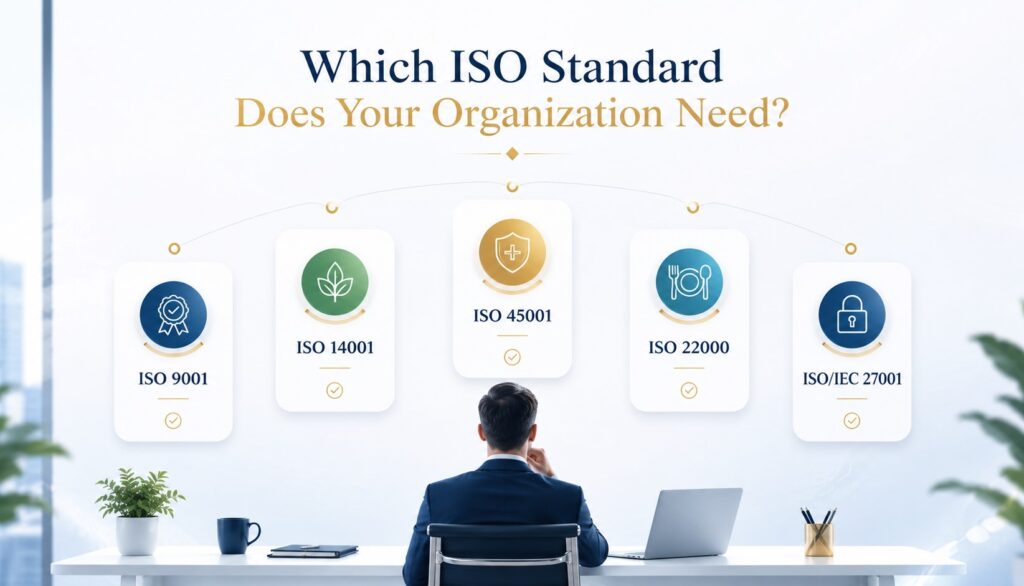
The right ISO standard depends on the business activity, tender wording, client requirement, operational risk, and certificate scope.
Standard | Main focus | Common fit in Iraq |
Quality management | Contractors, suppliers, manufacturers, service providers, healthcare administration, education, and professional services | |
Environmental management | Construction, industrial operations, oil and gas suppliers, manufacturers, waste-producing operations, and facilities | |
Occupational health and safety management | Construction, logistics, oil and gas services, manufacturing, facility operators, and site-based teams | |
Information security management | IT firms, telecom providers, software companies, data-handling businesses, and professional services | |
Food safety management | Food processors, restaurants, catering companies, hotels, food storage, food transport, and food suppliers | |
Energy management | Energy-intensive operations, industrial sites, facilities, and utilities where energy performance is part of the requirement | |
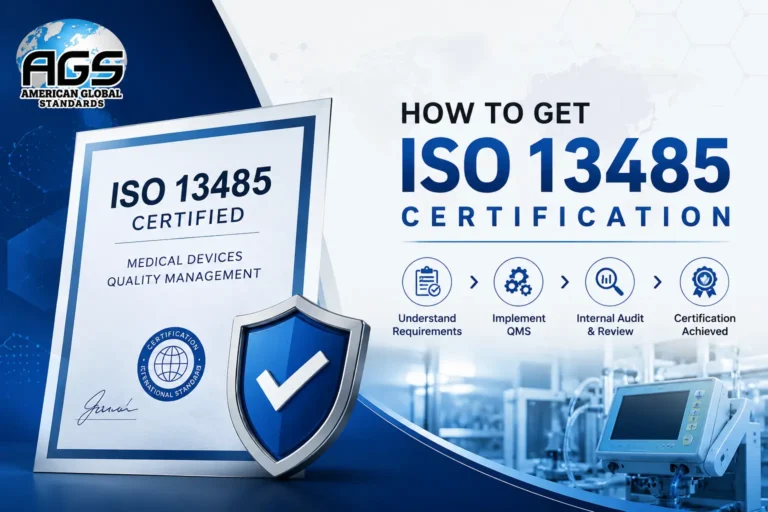
Medical device quality management | Medical device suppliers, distributors, and organizations working under medical device quality requirements | |
Laboratory competence | Testing and calibration laboratories; this should be scoped as laboratory accreditation readiness, not ordinary company certification |
Standard editions, transition rules, accreditation scope, and certificate wording should be confirmed before the project starts. Some standards may have updated editions or transition periods, and the certificate should use the correct standard reference.
Many Iraq-based businesses look for ISO certification because a tender, client, contractor, buyer, or supplier qualification process asks for it. The certificate may support quality, safety, environmental, food safety, information security, or operational control expectations.
The first step is to read the requirement carefully. A tender may ask for ISO 9001 only, or it may ask for a combination such as ISO 9001, ISO 14001, and ISO 45001. A food-related contract may ask for ISO 22000. A data-handling or IT service contract may ask for ISO/IEC 27001.
AGS can help review the stated requirement and match it to the right standard, scope, documents, audit readiness plan, and certificate verification route.
ISO certification support should not be presented as a guarantee of tender approval. Final acceptance depends on the buyer, client, ministry, tender authority, certification body, and the evidence being reviewed.
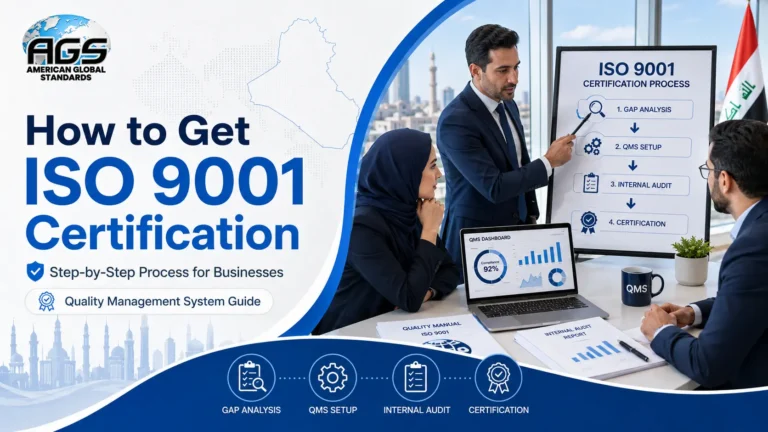
A credible ISO certification pathway should move from business requirement to verified certificate through a clear process.
The first step is to confirm why certification is needed. The reason may be a tender, supplier approval, client request, regulatory confidence, internal system improvement, export support, or risk control.
The selected standard must match the business activity and buyer requirement. ISO 9001 supports quality management, ISO 14001 supports environmental management, ISO 45001 supports occupational health and safety, ISO/IEC 27001 supports information security, and ISO 22000 supports food safety.
The scope explains which activities, services, sites, departments, or processes will be covered by the certificate. A weak scope can reduce the value of the certificate if it does not match the work being submitted to a client or tender reviewer.
A gap analysis compares current practices against the selected ISO standard. It may identify missing procedures, weak records, unclear responsibilities, incomplete training evidence, missing risk controls, open corrective actions, or weak management review evidence.
Documentation should reflect the organization’s real work. Common documents include policies, objectives, procedures, process maps, risk records, legal or contractual registers, training records, inspection records, internal audit reports, management review records, and corrective action logs.
Implementation means the system is being used in daily operations. Staff should understand their roles, records should be maintained, risks should be reviewed, and management should monitor performance.
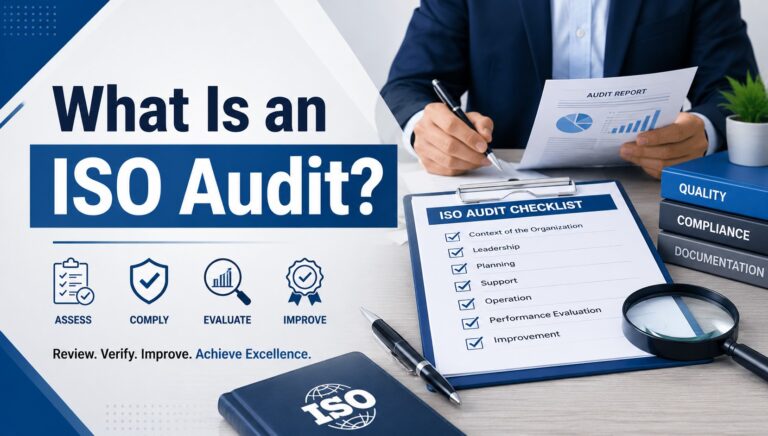
Internal audit checks whether the management system is ready before the external audit. Management review shows that leadership has reviewed performance, risks, resources, objectives, audit results, and corrective actions.
A certification body performs the external certification audit and makes the certification decision. ISO develops standards, but ISO itself does not perform certification audits or issue certificates.
The external certification audit usually includes a Stage 1 audit to review readiness and documented information, followed by a Stage 2 audit to evaluate implementation and effectiveness. If nonconformities are found, corrective action evidence must be submitted before certification can proceed.
If the audit identifies nonconformities, the organization must correct them and provide evidence. Corrective action should address the cause of the issue, not only the immediate symptom.
Certification is not finished after the first certificate is issued. Organizations usually need ongoing records, internal audits, management reviews, corrective action tracking, surveillance audits, and recertification planning.
Satisfied Clients
Years of Experience
ISO certifications
The required documents depend on the selected standard, scope, company size, business activity, number of sites, and audit readiness level.
Evidence area | Examples auditors may review |
Scope and policy | Certification scope, management system policy, responsibilities, interested parties |
Objectives | Quality, safety, environmental, food safety, energy, or information security objectives |
Procedures | Process controls, document control, operational controls, supplier control, incident handling |
Risk records | Business risks, safety hazards, environmental aspects, food safety hazards, information security risks |
Training evidence | Training plans, attendance records, competence records, awareness records |
Internal audit | Audit programme, audit plan, audit report, findings, corrective actions |
Management review | Meeting records, performance review, decisions, resources, risks, improvement actions |
Corrective actions | Nonconformity records, root cause review, correction, action taken, closure evidence |
Operational records | Inspection records, monitoring logs, service delivery records, supplier records, calibration records where applicable |
Compliance evidence | Legal, regulatory, contract, client, tender, or buyer-related records where applicable |
A good documentation set should prove that the system works. Documents that do not match daily operations usually create problems during the audit.
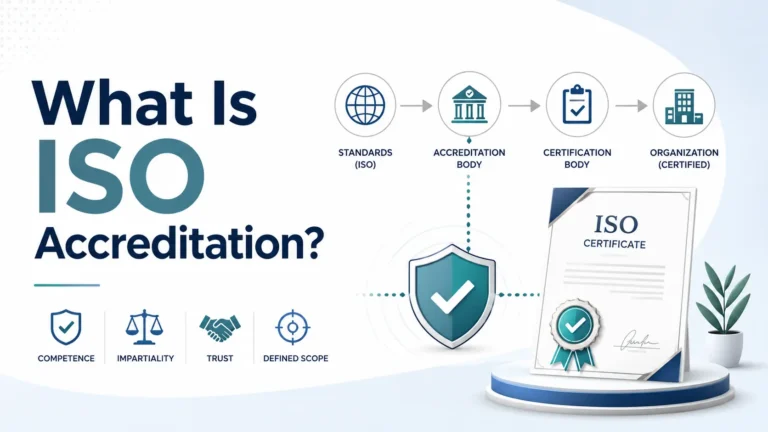
These roles must be separated clearly.
Term | Correct role |
ISO | Develops international standards; it does not certify organizations |
Consultant or support provider | Helps prepare documents, implementation readiness, training, internal audit readiness, and corrective actions |
Certification body | Performs third-party certification audits and makes certification decisions |
Accreditation body | Recognizes the competence of certification bodies within a defined scope |
Accredited certificate | Certificate issued through an accredited certification process for the relevant standard and scope |
This distinction protects the buyer from misleading claims. Be cautious with wording such as “certified by ISO,” “ISO-issued certificate,” or “globally accredited for every standard.” ISO does not issue certificates, and accreditation is always scope-dependent.
Certificate verification matters because an expired, unsupported, poorly scoped, or non-verifiable certificate may fail a client review, tender review, supplier qualification check, or audit review.
Verification should check:
IAF CertSearch may be used to validate accredited management system certifications where applicable. Verification may also require checking directly with the issuing certification body or the relevant accreditation body.
ISO certification cost in Iraq depends on the selected standard, number of employees, number of sites, business activity, process complexity, risk level, current documentation, internal readiness, audit days, travel requirements, and certification body scope.
A small service company seeking ISO 9001 for one office will not have the same workload as a contractor seeking ISO 9001, ISO 14001, and ISO 45001 for multiple project sites. A food business preparing for ISO 22000 may need deeper food safety records. An IT company preparing for ISO/IEC 27001 may need information risk records, access controls, asset records, and incident handling evidence.
Timeline also depends on readiness. A company with existing procedures, records, trained staff, internal audits, and management reviews can usually move faster than a company starting from a blank document set.
A responsible quote should be based on:
ISO certification is useful only when the standard, scope, documents, audit path, and certificate verification match the organization’s real business need. Iraqi businesses preparing for tenders, client approval, supplier qualification, or internal management improvement need a structured path that can stand up to review.
Contact AGS to request ISO certification support in Iraq and confirm the right standard, scope, documents, audit readiness steps, and verification route for your organization.
AGS supports ISO certification preparation for organizations operating across Iraq. The right approach depends on the city, sector, business activity, tender requirement, number of sites, audit risk, and documentation readiness.
ISO certification needs in Iraq are not the same for every location. A contractor in Baghdad, an oil and gas supplier in Basra, a food business in Erbil, and a hospitality supplier in Karbala may all need ISO certification, but the required standard, evidence, scope, and audit preparation will be different.
Baghdad organizations may need ISO certification for government contracting, private-sector tenders, commercial services, construction projects, healthcare administration, education, IT services, logistics, engineering support, and supplier approval.
As Iraq’s administrative and political capital, Baghdad often creates certification demand around procurement, contracting, public-sector supply chains, professional services, and project-based work. Baghdad is also Iraq’s largest city, which makes scope clarity important for companies with more than one office, department, service line, or project site.
Common ISO certification needs in Baghdad may include:
For Baghdad-based organizations, AGS can help review tender wording, define the certification scope, prepare documents, check internal audit readiness, support management review preparation, and coordinate the certification audit pathway.
Organizations often need ISO certification in Basra because of oil and gas services, ports, logistics, industrial supply, construction, environmental controls, contractor safety, manufacturing, energy projects, and supplier qualification.
Basra has strong oil, gas, port, and industrial relevance. Iraq’s National Investment Commission identifies Basra opportunities across oil and gas, electricity, communication, health, housing, and infrastructure, while official investment material also describes Basra as Iraq’s only port and main sea outlet.
Common ISO certification needs in Basra may include:
For Basra-based companies, the certification scope should clearly reflect the real activity being offered to clients. A supplier, inspection company, logistics provider, fabrication contractor, or oilfield service company may need different records, procedures, legal registers, training evidence, equipment records, and operational controls.
Organizations in Erbil and the Kurdistan Region may need ISO certification for construction, trading, real estate development, tourism, hospitality, food supply, logistics, healthcare, education, professional services, manufacturing, agriculture, and regional supplier qualification.
Kurdistan Region investment sources identify priority sectors such as agriculture, tourism, industry, energy, and infrastructure-related investment, and recent KRG investment material highlights continuing construction and building-material demand in the region.
Common ISO certification needs in Erbil and the Kurdistan Region may include:
For Erbil and Kurdistan Region organizations, AGS can help confirm whether certification should cover one office, multiple branches, warehouses, project sites, or regional operations. This is important because the certificate scope should match the activity being submitted for client approval, tender qualification, or supplier registration.
Najaf and Karbala organizations may need ISO certification for hospitality, food service, catering, healthcare support, cleaning services, transport, retail supply, construction, education, procurement, trading, and service operations.
Religious tourism and pilgrimage activity create strong demand for hospitality, food handling, transport, healthcare support, cleaning, retail, accommodation, and crowd-service operations in Najaf and Karbala. Public reporting and research consistently connect these cities with religious tourism, hotels, restaurants, transport, retail, healthcare, and temporary service activity.
Common ISO certification needs in Najaf and Karbala may include:
For Najaf and Karbala businesses, documentation should not be generic. Food businesses may need supplier approval records, hygiene controls, traceability records, temperature records, hazard controls, and corrective action logs. Contractors and service providers may need safety procedures, training records, incident records, inspection evidence, and supplier controls.
AGS also supports organizations in Mosul, Kirkuk, Sulaymaniyah, Duhok, Anbar, Diwaniya, Maysan, Thi Qar, Babil, Hillah, and other Iraqi governorates depending on the standard, audit objective, site risk, records, and certification body requirements.
Organizations outside Baghdad, Basra, Erbil, Najaf, and Karbala may need ISO certification for construction, manufacturing, logistics, agriculture, food supply, healthcare, education, oil and gas support, public procurement, private-sector supplier approval, and internal management system improvement.
Support may be remote, onsite, or mixed depending on the organization’s location, number of sites, documentation status, audit risk, and certification timeline.

As an accredited body, we issue certificates for the most sought-after management system standards:
The standard should match the sector and requirement. One ISO certificate does not solve every buyer or tender condition.
Sector | Common certification need | Relevant standards may include |
Oil and gas services | Supplier qualification, quality control, safety, environment, energy, continuity | ISO 9001, ISO 14001, ISO 45001, ISO 50001, ISO 22301 |
Construction and infrastructure | Site quality, subcontractor control, safety, environmental controls | ISO 9001, ISO 14001, ISO 45001 |
Manufacturing | Process control, product conformity, inspection, supplier controls | ISO 9001, ISO 14001, ISO 45001 |
Food and catering | Food safety hazards, supplier controls, traceability, monitoring records | ISO 22000, HACCP-related systems |
IT and telecom | Information security, asset control, access controls, incident response | ISO/IEC 27001 |
Healthcare and medical suppliers | Quality, supplier controls, safety, medical device-related requirements | ISO 9001, ISO 13485 where applicable |
Laboratories | Testing and calibration competence | ISO/IEC 17025 accreditation readiness |
Logistics and warehousing | Process control, safety, environmental controls, supplier records | ISO 9001, ISO 14001, ISO 45001 |
ISO certification must stay connected to daily operations after the first certificate is issued.
Organizations usually need to maintain records, complete internal audits, hold management reviews, close corrective actions, monitor objectives, prepare for surveillance audits, and plan recertification before certificate expiry.
AGS can help organizations stay ready after certification by reviewing records, tracking corrective actions, checking internal audit status, supporting management review preparation, and helping teams prepare for surveillance or recertification audits.
AGS does not present ISO certification as a guaranteed tender win. AGS does not claim that ISO itself issues certificates. AGS does not recommend generic certificates without reviewing the required standard, scope, business activity, locations, documentation status, and verification route.
The purpose of proper ISO certification support is to make the process clearer, more evidence-based, and more aligned with the organization’s actual operations.
AGS supports organizations through a structured certification readiness path. The focus is on standard selection, scope clarity, document preparation, implementation readiness, internal audit preparation, certification body coordination, corrective action handling, and certificate verification guidance.
AGS can help your organization:
The right certification support should give your team a clear view of what is ready, what is missing, and what must be corrected before the external audit.
AGS can review your requirement and help define the next step based on your standard, scope, documentation status, locations, and deadline.

Before requesting a quote, prepare these details:
A proper certification plan should be based on the real scope, not a generic certificate offer.


No. ISO develops standards but does not perform certification or issue certificates. Certification is provided by an external certification body, and accreditation may apply to the certification body within a defined scope.

Yes, ISO certification can support tender readiness, client approval, and supplier qualification when the certificate matches the requested standard, scope, certification body, and verification requirements. It should not be presented as a guarantee of tender approval.

'Certification' involves an independent, accredited body (like AGS Iraq) auditing and approving your system. 'Registration' is an older term, they now mean the same thing. We provide official certification.
Accreditation evaluates a conformity assessment body's competence to perform certification or testing. Certification evaluates an organization's management system conformity to an ISO standard through audits and a certification decision, followed by surveillance and recertification in a defined cycle.
You can verify an ISO certificate by checking the certificate number, organization name, standard, scope, certification body, issue date, expiry date, covered sites, and accreditation status where applicable. IAF CertSearch, the issuing certification body, or the relevant accreditation body may be used for verification where applicable.
ISO 9001 (Quality Management), ISO 14001 (Environmental Management), ISO 45001 (Occupational Health and Safety), ISO/IEC 27001 (Information Security), ISO 22000 (Food Safety), and ISO 13485 (Medical Devices) are commonly certified standards in Iraq across industries.
A consultant or support provider helps prepare the organization for certification. A certification body performs the third-party audit and makes the certification decision. An accreditation body recognizes certification body competence within a defined scope.
After certification, the organization must maintain records, complete internal audits, hold management reviews, close corrective actions, monitor objectives, and prepare for surveillance or recertification audits. Certification should remain connected to daily operations.