Home » ISO 37001
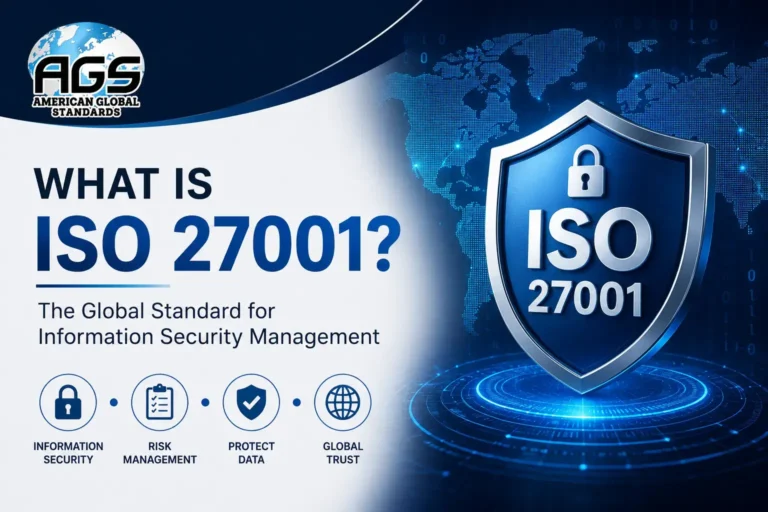
ISO 37001 certification is independent confirmation that an organization’s anti-bribery management system meets ISO 37001 requirements. ISO 37001:2025 is the current edition. ISO says the standard applies to public, private, and not-for-profit organizations and addresses direct and indirect bribery. This page explains who ISO 37001 certification fits, what ISO 37001 certification requires, why organizations buy ISO 37001 certification, and how ISO 37001 certification works in practice.
ISO 37001 certification belongs on a service page, not a training page. ISO says certification is performed by independent certification bodies, not by ISO itself. That distinction matters because buyers are evaluating a certification route, not buying the standard document and not enrolling in a lead auditor course.
Any organization can get ISO 37001 certification if it builds and runs an anti-bribery management system that meets the standard. ISO says ISO 37001 applies to organizations of any size and sector, including public bodies, private companies, and not-for-profit entities.
ISO 37001 certification usually becomes relevant when an organization needs stronger third-party due diligence, cleaner procurement credibility, better control over business associates, or clearer anti-bribery governance across operations. Kiwa and DNV both frame the certification around those same buyer triggers.
ISO 37001 certification requires a working anti-bribery management system, not a policy on a shelf. ISO says the key components include anti-bribery policies, due diligence procedures, financial and non-financial controls, training programs, and mechanisms for monitoring, reporting, and improving anti-bribery measures.
ISO 37001 requirements usually break into five control groups:
DNV lists the same operational structure in its certification guidance, including leadership responsibility, due diligence, controls, reporting, investigation, and continual improvement.
ISO 37001 certification also requires evidence. DNV says the audit looks for controls that are addressed, proportionate, and operating across the organization and its value chain. That means documented procedures, assigned responsibilities, records, and review activity, not just a statement of intent.
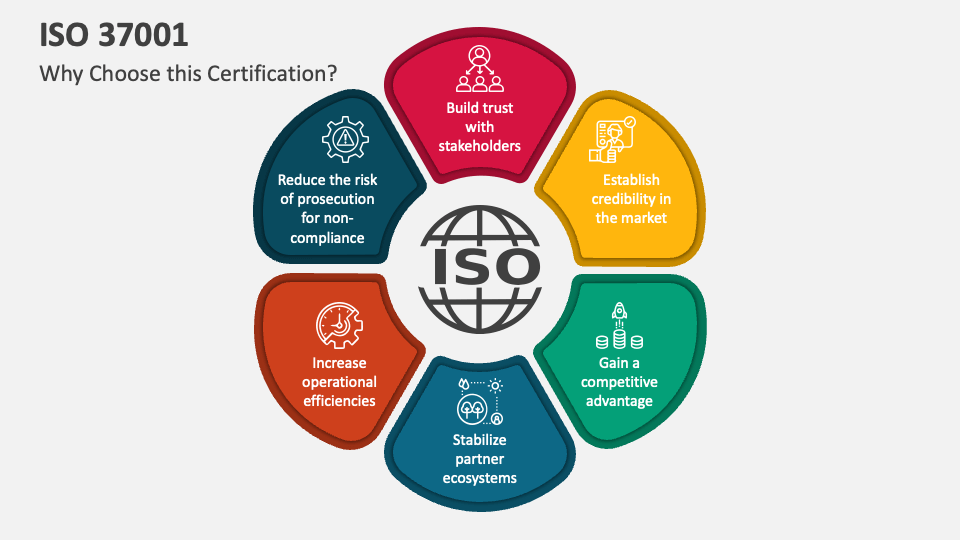
ISO 37001 certification helps organizations pass supplier due diligence more easily, strengthen tender and procurement credibility, reduce gaps in third-party controls, and give customers, partners, and boards clearer proof that anti-bribery controls are in place. It turns anti-bribery from a policy claim into independently audited evidence that supports bids, partner reviews, and governance oversight.
ISO 37001 certification proves that an anti-bribery management system has been independently audited against the standard. It does not prove that bribery never occurs. DNV states that point directly. DNV says certification cannot guarantee that bribery will not occur, but it does verify that a structured management system is in place to prevent such situations.
ISO 37001 certification, therefore, works as evidence of structured control, not as a legal shield. That is the honest boundary, and it makes the claim stronger because it is real.
ISO 37001 certification fits with existing management systems because ISO 37001 uses the common management system structure. ISO’s FAQ says organizations do not need a completely separate anti-bribery program and can integrate new or enhanced measures into existing processes and controls.
ISO 37001:2025 also aligns more closely with related standards. DNV’s 2025 transition page says the revision is harmonized with ISO 37301, ISO 37000, and ISO/TS 37008, which makes integration cleaner for organizations that already run broader compliance or governance systems.
Satisfied Clients
Years of Experience
ISO certifications
Organizations pursue ISO 37001 certification for four main reasons: lower bribery risk, stronger compliance support, higher stakeholder trust, and tighter governance discipline. ISO’s 2025 standard page lists reduced bribery risk, stronger compliance with anti-bribery laws, stronger stakeholder confidence, and stronger reputation and integrity among the core benefits.
ISO 37001 certification also gives counterparties a cleaner signal. DNV says certification assures internal and external stakeholders that effective anti-bribery measures are in place, maintained, and continually improved. That matters in procurement, partner screening, and board-level governance review.
ISO 37001:2025 adds a sharper cultural layer. ISO’s 2025 guidance says the new edition puts more weight on anti-bribery culture, leadership, and ethical behaviour across the organization. DNV’s transition page says the revision also strengthens the role of top management, awareness, training, and conflict-of-interest treatment.
To get ISO 37001 certification, an organization implements an anti-bribery management system, runs it long enough to produce evidence, and then passes an independent certification audit. ISO says an organization may invite an independent certification body to verify conformity to ISO 37001, and ISO says certification is generally voluntary.
The ISO 37001 certification process starts with scope and readiness, moves through Stage 1 and Stage 2 audits, and then continues through surveillance and recertification. NQA says the initial certification audit includes two mandatory visits. NQA also says certification is valid for three years, with surveillance audits in years one and two and recertification in year three.
ISO 37001 certification also needs operating evidence before the audit. NQA says the management system should be operational for a minimum of three months and should already have gone through a management review and a full cycle of internal audits before the initial certification audit.
ISO’s own FAQ gives the broader timing frame. ISO says a small organization may put the requirements in place in a matter of months, while a large organization may need one or two years, depending on size, structure, spread, complexity, and resources.
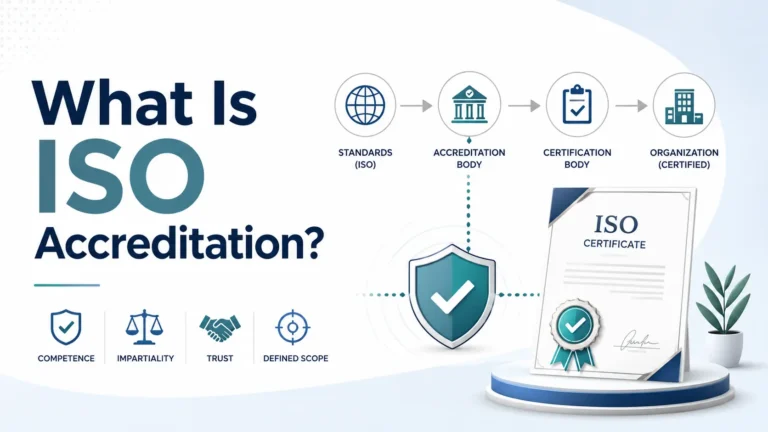
Choose an accredited certification body when you need stronger third-party proof of competence. ISO says buyers should evaluate several certification bodies, check whether they use the relevant CASCO standards, and check accreditation. ISO adds that accreditation is not compulsory, but it does provide independent confirmation of competence.
ANAB adds the accreditation side of the picture. ANAB’s ISO 37001 accreditation page ties anti-bribery certification-body accreditation to ISO/IEC 17021-1 and ISO/IEC TS 17021-9, and ANAB says IAF documents support accreditation for ABMS. That is why certification body choice is not a price-only decision.
Prepare the evidence before the audit, not during it. NQA says the system should be operational for at least three months and should already include management review and a full internal audit cycle before the initial certification audit.
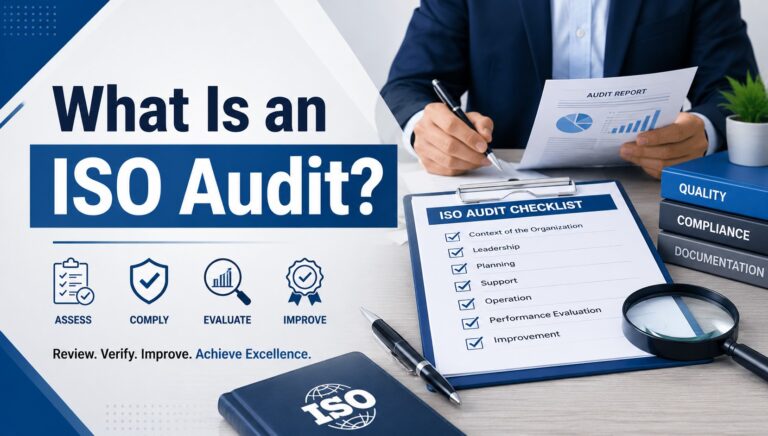
ISO 37001 audit preparation usually includes an anti-bribery policy, risk assessments, due diligence records, financial and non-financial controls, reporting procedures, investigation records, training records, and management review evidence. ISO and DNV specify the same control set in their current materials.
No. ISO’s FAQ says ISO 37001 certification is generally voluntary. ISO also says some industries or procurement settings treat certification as a legal or contractual requirement. That makes ISO 37001 certification optional in general, but commercially necessary in some real buying environments.
ISO 37001 certification is typically valid for three years. NQA says the cycle includes surveillance audits in years one and two and a recertification audit in year three. That three-year cycle is one of the clearest hard facts in the certification journey, so it belongs on the page early enough to remove doubt.
The latest version is ISO 37001:2025. ISO says Edition 2 was published in 2025 and replaced ISO 37001:2016. DNV says the February 2025 revision adds stronger emphasis on anti-bribery culture, leadership, training, conflict of interest, and integration with related standards.
To start ISO 37001 certification the right way, define the scope first, test readiness second, and choose the certification route third. That order keeps the project grounded in evidence instead of vague ambition. ISO says certification comes through an independent certification body, not through ISO itself.
ISO 37001 certification works best when the route stays clean. We review fit, map ABMS scope, identify missing controls, separate documentation support from certification audit activity, and keep the process clear from readiness to audit.