

How Many Types of ISO Certification Are There?
ISO certification applies to 4 categories of conformity assessment objects management systems, products, services, and persons across more than 80 management system standards published by ISO. The phrase “types of ISO certification” carries 3 distinct meanings depending on the user’s intent: the object being certified (system, product, or person), the specific ISO standard family (ISO 9001, ISO 14001, ISO 27001, etc.), or the total number of certifiable ISO standards in the ISO catalogue. This article addresses all 3 interpretations.
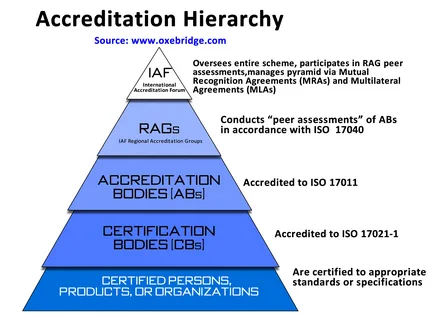
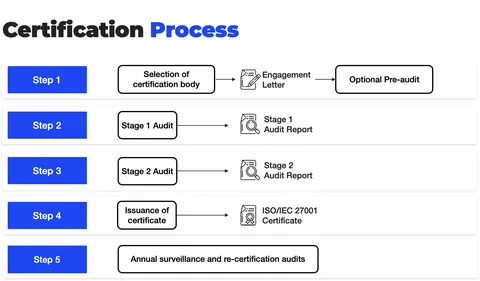
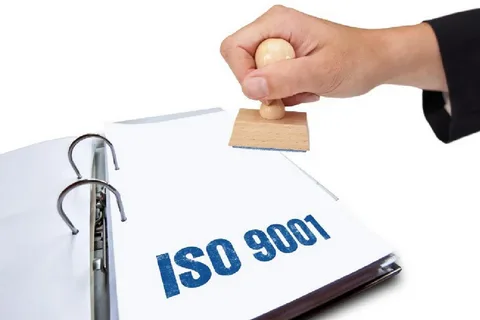
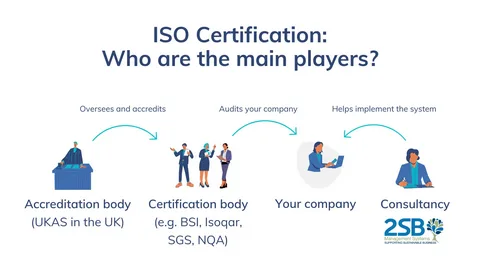
A critical clarification before proceeding: ISO develops and publishes international standards but does not perform certification or issue certificates. Certification is performed by independent certification bodies (also called registrars) that audit organizations against ISO standard requirements and make certification decisions based on objective evidence. Accreditation bodies such as IAS, EGAC, and EIAC evaluate and recognize the competence of certification bodies.
Two Fundamental Ways to Classify ISO Certification Types
ISO certification types can be classified using 2 frameworks: by the object of conformity assessment (what gets certified) and by the ISO standard family (which standard the certification is issued against). Understanding both classification methods prevents the common error of mixing certifiable management system standards with non-certifiable reference standards.
Classification 1: By Object of Conformity Assessment
ISO’s conformity assessment framework defines 4 categories of objects that can be certified. Each category has its own governing standard for the certification body performing the assessment:
Certification Object: Management system
- What Gets Certified: Organization’s processes, policies, and controls against an ISO management system standard
- Governing Standard for CBs: ISO/IEC 17021-1 (management system certification bodies)
- Who Needs It: Any organization seeking ISO 9001, 14001, 45001, 27001 certification
Certification Object: Product / process / service
- What Gets Certified: A specific product, process, or service against defined requirements
- Governing Standard for CBs: ISO/IEC 17065 (product certification bodies)
- Who Needs It: Manufacturers, exporters, service providers requiring product-level assurance
Certification Object: Person
- What Gets Certified: Individual competence in a specific discipline
- Governing Standard for CBs: ISO/IEC 17024 (personnel certification bodies)
- Who Needs It: Professionals seeking credentials (auditors, welding inspectors, IT security specialists)
Certification Object: Inspection results
- What Gets Certified: Results of inspection activities against specified requirements
- Governing Standard for CBs: ISO/IEC 17020 (inspection bodies)
- Who Needs It: Organizations requiring independent inspection of products, installations, or processes
When business owners ask “how many types of ISO certification are there,” they most commonly mean management system certification the category governed by ISO/IEC 17021-1, where a certification body audits an organization’s management system against a specific ISO standard (such as ISO 9001 or ISO 14001) and issues a scope-bound certificate.
Classification 2: By ISO Standard Family
The second classification method groups ISO certification types by the standard family the organization certifies against. ISO organizes related standards into numbered families the ISO 9000 family for quality management, the ISO 14000 family for environmental management, the ISO/IEC 27000 family for information security, and the ISO 45000 family for occupational health and safety. Each family contains a certifiable requirements standard (the one organizations certify against) alongside supporting guidance, vocabulary, and implementation standards that are not certifiable.
The Major Certifiable ISO Management System Standards
The 3 most widely adopted management system certification standards worldwide often called the “Big Three” account for the majority of ISO certificates in circulation globally according to the ISO Survey:
The Big Three: ISO 9001, ISO 14001, and ISO 45001
Standard: ISO 9001:2015
- Management System: Quality Management System (QMS)
- Focus: Customer satisfaction, consistent product/service quality, process improvement
- Global Certificates: Over 800,000
- Key Industries: Manufacturing, services, construction, healthcare, aerospace, defense
Standard: ISO 14001:2015
- Management System: Environmental Management System (EMS)
- Focus: Environmental impact reduction, compliance with environmental obligations, pollution prevention
- Global Certificates: Over 300,000
- Key Industries: Manufacturing, energy, construction, logistics, waste management
Standard: ISO 45001:2018
- Management System: Occupational Health & Safety Management System (OH&S)
- Focus: Worker safety, hazard identification, occupational risk reduction
- Global Certificates: Over 185,000
- Key Industries: Construction, oil and gas, mining, manufacturing, logistics
Beyond the Big Three, organizations pursue certification to standards covering information security, food safety, energy management, anti-bribery, and sector-specific quality disciplines.
The Complete Picture: Certifiable ISO Standards by Category
Information Security and Technology
Standard: ISO/IEC 27001:2022
- Full Name: Information Security Management System (ISMS)
- Primary Focus: Confidentiality, integrity, and availability of information assets; risk-based security controls
- Typical Users: IT companies, financial institutions, healthcare organizations, government contractors, SaaS providers
Standard: ISO/IEC 27701:2019
- Full Name: Privacy Information Management System (PIMS)
- Primary Focus: Privacy governance for personally identifiable information (PII); extends ISO/IEC 27001
- Typical Users: Data processors, cloud providers, organizations subject to GDPR or privacy regulations
Standard: ISO/IEC 20000-1:2018
- Full Name: IT Service Management System
- Primary Focus: IT service delivery quality, service level management, capacity planning
- Typical Users: Managed service providers, IT departments, data center operators
Standard: ISO/IEC 42001:2023
- Full Name: Artificial Intelligence Management System
- Primary Focus: AI governance, responsible AI development and deployment
- Typical Users: Technology companies developing or deploying AI systems
Industry-Specific Quality Standards
Standard: ISO/IEC 27001:2022
- Full Name: Information Security Management System (ISMS)
- Primary Focus: Confidentiality, integrity, and availability of information assets; risk-based security controls
- Typical Users: IT companies, financial institutions, healthcare organizations, government contractors, SaaS providers
Standard: ISO/IEC 27701:2019
- Full Name: Privacy Information Management System (PIMS)
- Primary Focus: Privacy governance for personally identifiable information (PII); extends ISO/IEC 27001
- Typical Users: Data processors, cloud providers, organizations subject to GDPR or privacy regulations
Standard: ISO/IEC 20000-1:2018
- Full Name: IT Service Management System
- Primary Focus: IT service delivery quality, service level management, capacity planning
- Typical Users: Managed service providers, IT departments, data center operators
Standard: ISO/IEC 42001:2023
- Full Name: Artificial Intelligence Management System
- Primary Focus: AI governance, responsible AI development and deployment
- Typical Users: Technology companies developing or deploying AI systems
Industry-Specific Quality Standards
Standard: ISO 13485:2016
- Full Name: Medical Devices Quality Management System
- Industry Sector: Healthcare, medical device manufacturing
- Relevance: FDA alignment, CE marking, regulatory submissions for medical devices
Standard: ISO 22000:2018
- Full Name: Food Safety Management System
- Industry Sector: Food production, catering, hospitality, agriculture
- Relevance: HACCP integration, GFSI benchmarking, food supply chain assurance
Standard: IATF 16949:2016
- Full Name: Automotive Quality Management System
- Industry Sector: Automotive supply chain
- Relevance: Based on ISO 9001 with automotive-specific requirements; mandatory for automotive OEM suppliers
Standard: ISO 29001:2020
- Full Name: Petroleum, Petrochemical, and Natural Gas
- Industry Sector: Oil and gas sector
- Relevance: Sector-specific QMS requirements; high relevance for Iraq and Middle East operations
Standard: ISO 15378:2017
- Full Name: Primary Packaging Materials for Medicinal Products
- Industry Sector: Pharmaceutical packaging
- Relevance: GMP-aligned quality management for pharmaceutical primary packaging
Social Responsibility, Anti-Bribery, and Compliance
Standard: ISO 37001:2016
- Full Name: Anti-Bribery Management System (ABMS)
- Purpose: Prevent, detect, and respond to bribery; support ethics compliance commitments
- Certifiable?: Yes certifiable requirements standard
Standard: ISO 37301:2021
- Full Name: Compliance Management System (CMS)
- Purpose: Establish, implement, and maintain organizational compliance with legal and regulatory obligations
- Certifiable?: Yes certifiable requirements standard
Standard: ISO 26000:2010
- Full Name: Social Responsibility Guidance
- Purpose: Guidance on integrating social responsibility into organizational strategy
- Certifiable?: No guidance standard only; cannot be certified to
Important: ISO 26000 is a guidance standard, not a requirements standard. Organizations claiming “ISO 26000 certification” are misrepresenting ISO 26000 does not contain “shall” statements and was explicitly designed as non-certifiable. This distinction between certifiable requirements standards and non-certifiable guidance standards is critical for understanding the true number of ISO certification types.
Energy, Sustainability, and Emerging Standards
Standard: ISO 50001:2018
- Full Name: Energy Management System (EnMS)
- Focus Area: Energy performance improvement, consumption reduction, cost savings
- Typical Users: Large-facility manufacturers, utilities, data centers, institutional campuses
Standard: ISO 14064-1:2018
- Full Name: GHG Emissions Quantification and Reporting
- Focus Area: Greenhouse gas inventory, carbon footprint quantification
- Typical Users: Organizations with ESG reporting obligations, climate disclosure requirements
Standard: ISO 20121:2024
- Full Name: Event Sustainability Management System
- Focus Area: Social, economic, and environmental impacts of events
- Typical Users: Event organizers, venues, hospitality companies
Standard: ISO 22301:2019
- Full Name: Business Continuity Management System (BCMS)
- Focus Area: Organizational resilience, disruption preparedness, continuity planning
- Typical Users: Financial services, critical infrastructure, IT, healthcare
Standard: ISO 55001:2024
- Full Name: Asset Management System (AMS)
- Focus Area: Asset lifecycle optimization, infrastructure performance
- Typical Users: Utilities, transportation, government infrastructure, mining
Standard: ISO 21001:2018
- Full Name: Educational Organizations Management System (EOMS)
- Focus Area: Educational service quality, learner outcomes
- Typical Users: Universities, training providers, educational institutions
Standard: ISO 41001:2018
- Full Name: Facility Management System (FMS)
- Focus Area: Effective facility management delivery, operational efficiency
- Typical Users: FM service providers, corporate real estate, building operations
Standard: ISO 39001:2012
- Full Name: Road Traffic Safety Management System (RTSMS)
- Focus Area: Road traffic safety, crash prevention, fleet safety
- Typical Users: Transport companies, fleet operators, logistics providers

What About the Other 25,000+ ISO Standards?
As of December 2025, ISO has published 26,116 International Standards and standards-type documents. This number frequently surprises organizations asking “how many types of ISO certification are there” but the vast majority of these 26,116 standards are not certifiable. ISO standards fall into 4 functional categories:
Standard Category: Requirements standards
- Description: Contain “shall” statements that define mandatory requirements an organization’s system must meet. These are the standards organizations certify against.
- Certifiable?: Yes
Standard Category: Guidance standards
- Description: Provide recommendations and best practices using “should” language. Useful for implementation but not auditable for certification.
- Certifiable?: No
Standard Category: Terminology standards
- Description: Define terms and vocabulary for a specific domain (e.g., ISO 9000 defines QMS terms).
- Certifiable?: No
Standard Category: Reference / specification standards
- Description: Define technical specifications, codes, formats, or naming conventions (e.g., ISO 3166 for country codes, ISO 639 for language codes, ISO 8601 for date formats).
- Certifiable?: No
Some online sources list “16 types of ISO certification” and include standards like ISO 3166 (country codes), ISO 639 (language codes), and ISO 4217 (currency codes). These are reference standards, not certifiable management system standards. An organization cannot become “certified to ISO 3166” it is a naming convention, not a set of auditable requirements. Conflating certifiable and non-certifiable standards produces misleading information. Within the management system category alone, ISO publishes more than 80 management system standards. The ISO catalogue and ISO Online Browsing Platform (OBP) provide complete, current listings.
How to Choose the Right ISO Certification for Your Business?
Selecting the right ISO certification type depends on 4 factors: customer and contract requirements, industry norms and competitor certifications, operational risks (quality failures, safety incidents, environmental impact, cyber threats), and strategic objectives (export readiness, cost reduction, market credibility).
Industry Mapping: Priority Standards by Sector
Industry Sector: Oil and gas
- Priority Standards: ISO 45001, ISO 14001, ISO 29001
- Business Drivers: Worker safety compliance, environmental impact management, tender requirements, sector-specific quality for petroleum operations
Industry Sector: Construction
- Priority Standards: ISO 9001, ISO 45001
- Business Drivers: Contract qualification, worker safety, project quality management
Industry Sector: Manufacturing
- Priority Standards: ISO 9001, ISO 14001, ISO 50001
- Business Drivers: Product quality consistency, environmental compliance, energy cost reduction, export readiness
Industry Sector: IT and technology
- Priority Standards: ISO/IEC 27001, ISO/IEC 20000-1, ISO/IEC 42001
- Business Drivers: Client data protection, IT service quality, AI governance, tender requirements
Industry Sector: Food and beverage
- Priority Standards: ISO 22000, ISO 9001
- Business Drivers: Food safety assurance, HACCP integration, export certification, retail and foodservice supplier qualification
Industry Sector: Healthcare and medical devices
- Priority Standards: ISO 13485, ISO 9001
- Business Drivers: Medical device regulatory compliance, patient safety, quality system requirements for FDA and CE marking
Industry Sector: Financial services
- Priority Standards: ISO/IEC 27001, ISO 22301, ISO 37001
- Business Drivers: Information security, business continuity, anti-bribery compliance, regulatory expectations
Organizations frequently hold multiple ISO certifications simultaneously. An integrated management system (IMS) combines 2 or more management system standards for example, ISO 9001 + ISO 14001 + ISO 45001 into a single documentation and audit framework. The ISO Harmonized Structure (HLS / Annex SL) enables this integration by providing a consistent clause layout across all management system standards, reducing documentation overlap and allowing combined audit schedules.
Accredited vs Non-Accredited Certification: Why It Matters?
Regardless of which type of ISO certification an organization pursues, the accreditation status of the certification body determines the credibility, international recognition, and verification capability of the resulting certificate.
Aspect: Credibility
- Accredited Certification: Globally recognized; CB competence independently verified by an accreditation body operating under ISO/IEC 17011
- Non-Accredited Certification: Limited recognition; no independent oversight of CB competence
Aspect: Verification
- Accredited Certification: Certificate searchable via IAF CertSearch global database
- Non-Accredited Certification: Difficult to verify; not listed in IAF CertSearch
Aspect: Tender and procurement acceptance
- Accredited Certification: Widely accepted for government tenders, supply-chain qualification, and regulatory expectations
- Non-Accredited Certification: Often rejected by procurement processes requiring accredited certification
Aspect: Oversight of CB
- Accredited Certification: Accreditation body conducts regular assessments of the CB for competence, impartiality, and consistency
- Non-Accredited Certification: No external assessment of CB operations
Aspect: International recognition
- Accredited Certification: Certificates carry mutual recognition across all IAF MLA member economies
- Non-Accredited Certification: Recognition limited to the CB’s direct relationships
Aspect: Cost
- Accredited Certification: Higher (reflects the cost of accreditation oversight)
- Non-Accredited Certification: Lower (no accreditation oversight cost)
Accreditation is scope-bound: an accreditation body recognizes a certification body for specific standards and industry sectors. A CB accredited for ISO 9001 audits is not automatically accredited for ISO 27001 audits. Organizations should verify that their chosen certification body holds accreditation for the specific standard and sector relevant to their certification scope.
How to Verify an Accredited ISO Certification?
The IAF CertSearch global database (iafcertsearch.org) contains certificates from over 2,500 certification bodies covering approximately 2 million accredited management system certifications worldwide. Verification confirms 3 elements:
- Certificate status: Active, suspended, or withdrawn confirms the certificate is currently valid.
- Certification body accreditation: Confirms the CB is accredited for the relevant standard and sector.
- Accreditation body IAF MLA status: Confirms the AB is an IAF MLA signatory, providing international recognition.
For certificates not found in IAF CertSearch, contact the certification body directly and verify its accreditation status with the relevant accreditation body. ISO also accepts complaints about false certification claims and ISO logo misuse through iso.org.
Common Misconceptions About ISO Certification Types
Misconception | Fact |
“ISO issues certificates.” | ISO develops and publishes international standards. ISO does not perform certification or issue certificates. Certification is performed by independent certification bodies. |
“There are 16 types of ISO certification.” | Lists citing “16 types” frequently include non-certifiable reference standards (country codes, currency codes, date formats). Management system standards alone number over 80. The actual count of certifiable ISO standards depends on the object of certification. |
“All ISO standards can be certified to.” | Only requirements standards containing “shall” statements are certifiable. Guidance standards (like ISO 26000 and ISO 31000), terminology standards (like ISO 9000), and reference standards (like ISO 3166) are not certifiable. |
“ISO certification is mandatory.” | ISO management system certification is generally voluntary. However, certification may be contractually required by customers, specified in government tender conditions, or expected by regulators in specific industries. |
“Accreditation means global acceptance for everything.” | Accreditation is scope-bound — limited by standard, industry sector, and activity. A CB’s accreditation for one standard does not extend to all standards. |
Why Work with AGS Iraq for ISO Certification?
AGS Iraq supports Globle companies through:
- Local regulatory understanding
- Tender-focused ISO consulting
- Documentation aligned with government expectations
- Auditing, training, and certification coordination
- Support during evaluations and site audits
Our local presence ensures practical compliance, not just certification.
Contact AGS Iraq for ISO consultation:
We’ll review your current situation and give you a clear, practical roadmap.
- Phone: +964 7721202253
- Email: info@agsiraq.com
- Office: American Global Standards. Al Jazair Street, Basrah- Iraq