Home » ISO 9001
ISO 9001 certification is a third-party confirmation that an organization’s quality management system meets the requirements of ISO 9001:2015. The certification applies to the organization’s QMS within a defined scope. It does not apply to an individual, and it is not issued by ISO itself. ISO develops the standard. An independent certification body performs the audit and makes the certification decision.
Organizations pursue ISO 9001 certification because it gives customers, procurement teams, and other stakeholders an audited way to assess process control, consistency, and commitment to quality. ISO says the standard is suitable for organizations of any size and sector, and that certification can add credibility and may be a legal or contractual requirement in some industries.
At AGS, we support organizations that need a clear, low-friction route to ISO 9001 certification through an independent third-party audit path. AGS is headquartered in the USA, has an office in Iraq, and supports organizations across the Middle East.
ISO 9001 is the standard. ISO 9001 certification is the independent written assurance that an organization’s QMS conforms to that standard. The object of certification is the management system used to control and improve how the organization delivers products or services. ISO 9001 defines requirements for a QMS. The organization implements and maintains the QMS. The certification body audits it.
ISO 9001 certification is for organizations that need stronger process discipline, more reliable delivery, and better evidence of control. That includes manufacturers, service providers, healthcare organizations, education providers, public-sector entities, logistics firms, contractors, and multi-site companies. ISO states that the standard applies to organizations of all sizes and across sectors.
This matters because the page is about organizational QMS certification, not auditor training, not product certification, and not accreditation. An individual cannot be certified to ISO 9001. A person can complete internal auditor or lead auditor training, but that is a different intent and a different service.
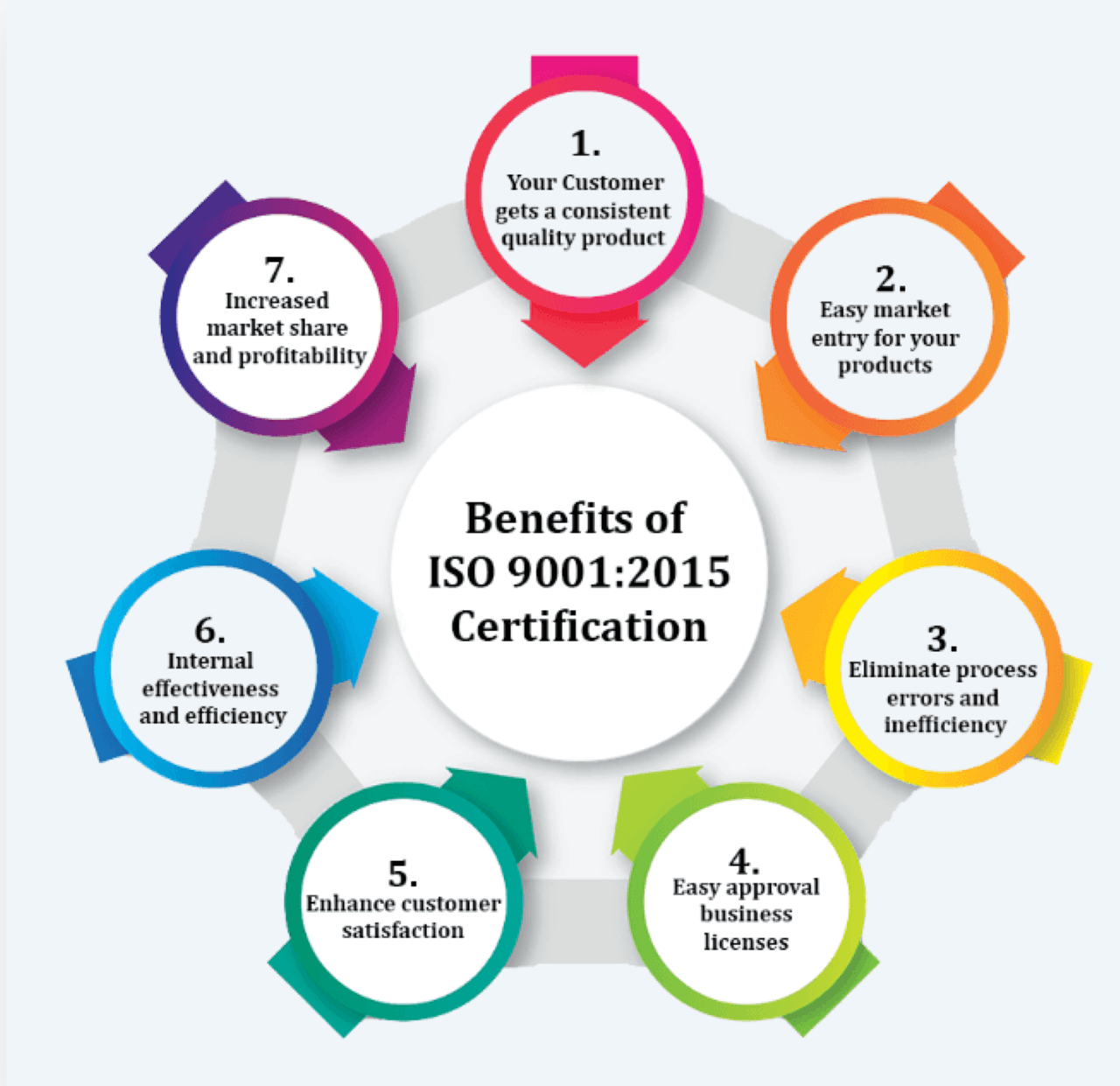
Organizations pursue ISO 9001 certification to improve consistency, strengthen customer confidence, and show that quality management is controlled rather than improvised. The value is practical. A certified QMS helps decision-makers show that processes are defined, monitored, reviewed, and improved over time. ISO ties the standard to performance improvement, customer expectations, customer satisfaction, and continual improvement. Certification adds external credibility and may also matter in contracts, tenders, and supplier approval.
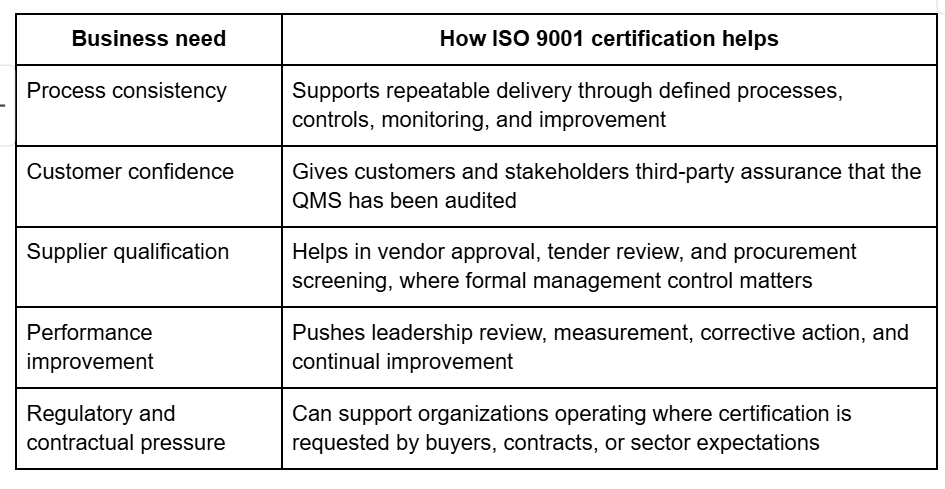
That value usually becomes obvious when an organization is being evaluated by someone outside the business. A certificate does not replace operational performance, but it can reduce doubt in supply-chain, prequalification, and customer-review settings.
Satisfied Clients
Years of Experience
ISO certifications
ISO 9001 certification is not just about passing an audit—it’s about building a system that actually works. AGS focuses on audit readiness, clarity, and long-term system performance.
Organizations choose AGS because:
👉 Talk to a certification specialist about your situation
ISO 9001 requires a functioning quality management system, not a stack of template documents. At a high level, a company needs leadership direction, a defined scope, controlled processes, risk-based planning, competent people, operational controls, performance monitoring, internal review, and continual improvement. The standard is built around establishing, implementing, maintaining, and improving the QMS.
At a practical level, most organizations need to have these elements in place:
ISO 9001 sits within the ISO 9000 family and is based on quality management principles such as customer focus, process approach, leadership, and continual improvement. That is why the standard is about how the organization is managed, not just whether the final output looks acceptable.
ISO 9001:2015 does not require an old fixed set of six procedures or six mandatory documents. ISO guidance is explicit on this point. The organization decides what documented information is needed to operate its processes effectively and to provide evidence of conformity. ISO also states that the requirement is a documented quality management system, not a system of documents.
In practice, documented information often includes:
The right question is not “How many documents are mandatory?” The right question is “What documented information does this organization need to control work, prove conformity, and run an effective QMS?” That is the standard’s logic.
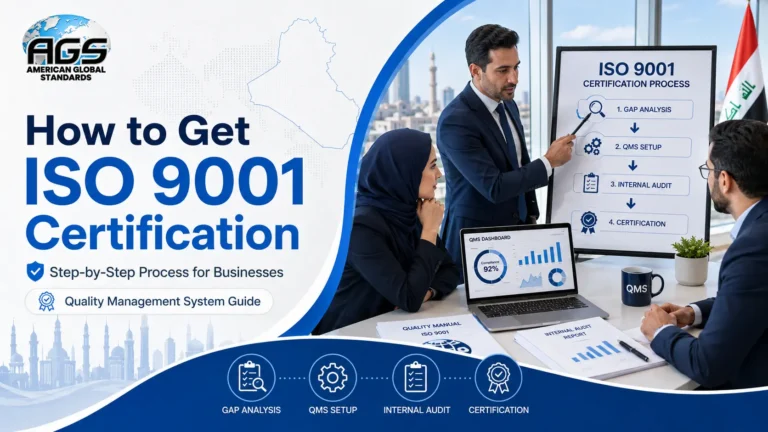
ISO 9001 certification follows QMS implementation and an independent third-party audit. It is a staged process. It is not a one-form application, and it is not a self-declared badge.
Good support reduces delay, but it does not replace system maturity. The fastest route is usually not the one with the fewest meetings. It is the one where scope, process ownership, evidence, and audit readiness are clear from the start.

If you are considering ISO 9001 certification, the next step is not a quote—it’s understanding your readiness.
AGS helps you define:
Get a readiness assessment before starting certification
ISO 9001 certification is maintained through ongoing conformity, surveillance audits, corrective action, and recertification. Certification is not a one-time event that stays valid by itself. It depends on continued control of the QMS.
A typical maintenance cycle looks like this:
Certification bodies commonly run a three-year certificate cycle with at least one periodic audit each year, followed by recertification. If the system is not maintained, certification can be suspended or withdrawn.
What the organization must keep doing is simple to say and hard to fake: run the QMS, monitor results, close nonconformities, review performance, and keep improving the system. That is where long-term credibility comes from.
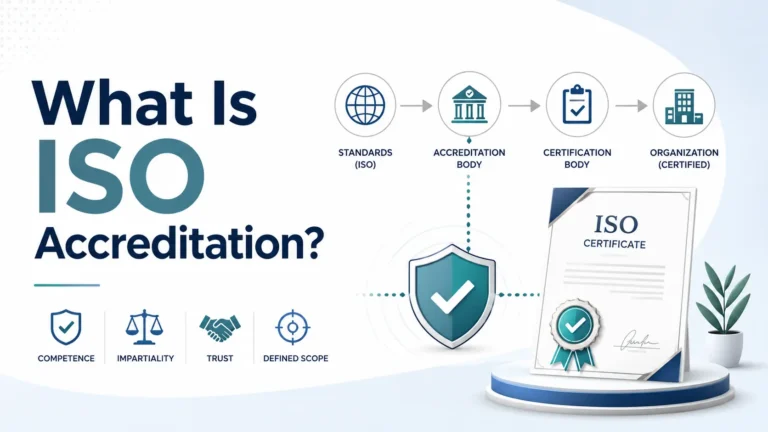
The right route starts with understanding the certification ecosystem. Most confusion happens because organizations mix up ISO, the certification body, and the accreditation body. Those are not the same thing.
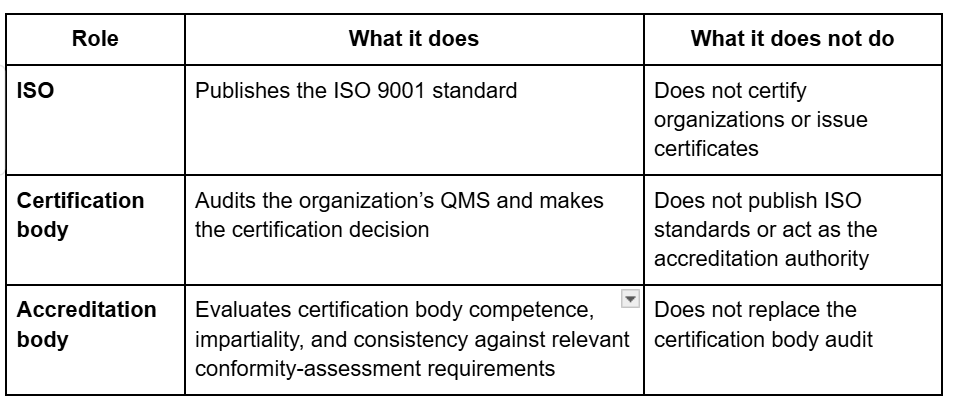
Accreditation matters because it adds an extra layer of confidence. IAF explains accreditation as the independent evaluation of certification bodies to ensure competence, impartiality, and consistent operation. ISO also states that a certificate issued by an accredited conformity assessment body may provide added confidence.
That does not mean every accreditation route is globally identical or universally applicable. Scope matters. Program matters. Sector matters. The route needs to match the standard, the organization’s activity, and the market expectation around recognition and verification.
Before choosing a certification partner or support provider, ask:
Where the relevant accreditation route participates, and certificate data is listed, accredited certificates can be checked in IAF CertSearch, which positions itself as the official global database for accredited certificates.
For AGS specifically, the value is not vague “consulting support.” It is a structured, independent third-party route focused on audit readiness, certification clarity, and ongoing maintenance, backed by U.S. headquarters, an Iraq office, and Middle East coverage.

If your organization is evaluating ISO 9001 certification now, the next step should be a readiness discussion, not a rushed quote request with no context. The right starting point is to confirm scope, current QMS maturity, number of sites, process complexity, and what level of support you actually need.
AGS is a fit for organizations that need:
When you contact AGS, the goal is straightforward: you get a scoped discussion around readiness, audit route, likely effort drivers, and what needs to happen next. No inflated promises. No fake fixed price. No confusion about what ISO 9001 certification actually covers.
Request an ISO 9001 readiness discussion.


No. Organizations can certify their quality management systems to ISO 9001. Individuals can complete auditor or lead auditor training, but that is different from ISO 9001 certification itself.
An organization can declare that its system conforms, but formal certification is a third-party written assurance from an independent body. ISO defines certification as written assurance by an independent body that specified requirements are met.
Usually no. ISO says certification is not mandatory, but it can add credibility and may be a legal or contractual requirement in some industries.
ISO 9001:2015 is the current certifiable edition. ISO says the next edition is expected in September 2026, with a transition period for certified organizations after publication.