Home » ISO 45001
ISO 45001 certification is for organization-level certification of an occupational health and safety management system, not individual training, and not a generic standards explainer. It helps organizations show that their OH&S management system has been independently audited against ISO 45001:2018 through a third-party certification process. This page explains what ISO 45001 certification covers, who it fits, what auditors review, what affects time and cost, and how to move toward a readiness review, quote, or consultation with an accredited certification body.
ISO 45001 certification is a third-party conformity assessment of an organization’s occupational health and safety management system against ISO 45001:2018. The certification applies to the organization’s OH&S management system, not to an individual employee, and ISO itself does not perform certification or issue certificates. The standard applies to organizations of all sizes and is especially valuable where workplace risk, client expectations, contractor control, or supply-chain requirements are serious decision factors.
ISO 45001:2018 specifies requirements for an OH&S management system. The certifiable object is the system your organization uses to identify hazards, assess risks, control operations, involve workers, meet legal and other requirements, monitor performance, and improve over time. It is not a product mark, and it is not a short training credential.
Organizations usually pursue ISO 45001 certification when they need stronger control of workplace risk, better tender positioning, cleaner contractor and supplier oversight, or more credible assurance for clients, workers, and regulators. It is relevant to organizations such as manufacturers, construction firms, logistics providers, healthcare operators, food businesses, utilities, oil and gas contractors, and multisite service companies.
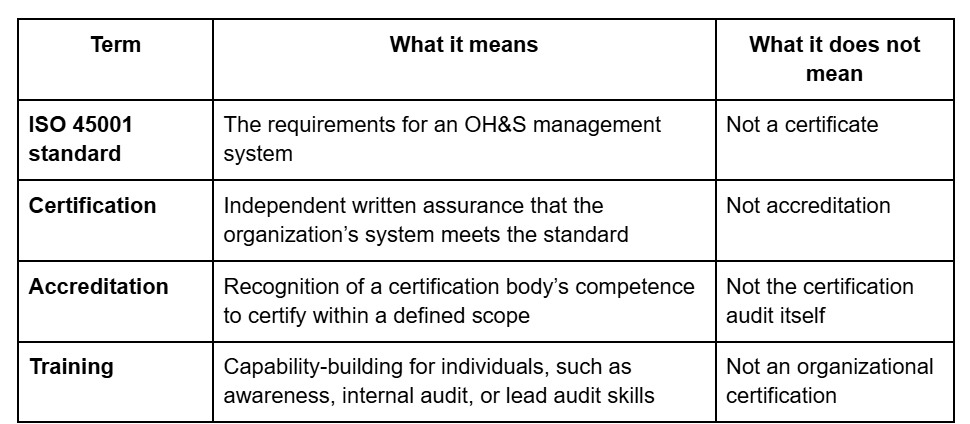
Company certification and individual training are not the same thing. Certification is an audit and certification-body process for the organization’s management system. Training builds staff knowledge for roles such as awareness, internal audit, lead audit, or implementation support. This page is for company certification. Training belongs on a separate page.
This fit pattern reflects ISO’s position that ISO 45001 applies to organizations of all sizes and sectors, with especially strong relevance in higher-risk environments.
The Certification is voluntary. Organizations can implement ISO 45001 without being certified. In practice, certification is often requested by customers, procurement teams, major contractors, or supply chains that want independent proof rather than a self-declared system.
ISO 45001 replaced OHSAS 18001. If your organization still thinks in OHSAS 18001 terms, the current global reference point is ISO 45001:2018.
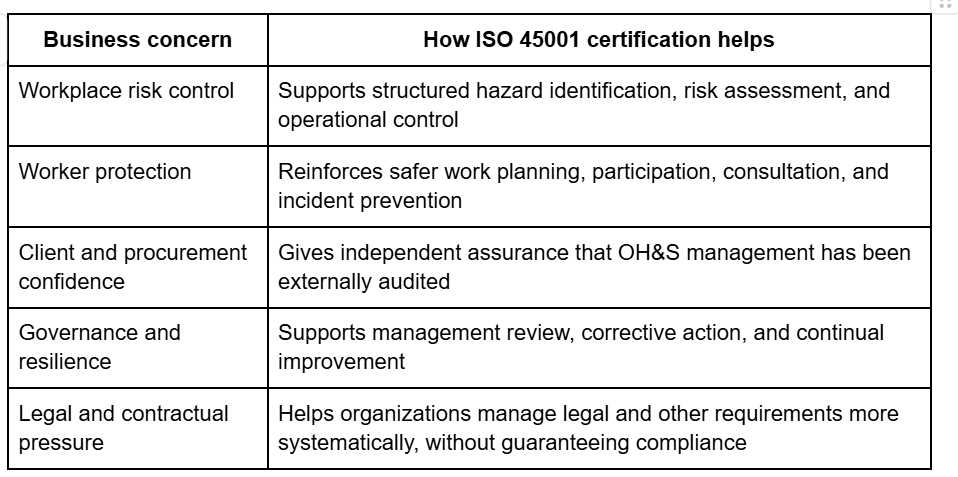
ISO 45001 matters because it helps organizations control OH&S risks, prevent incidents, and show independent commitment to safe and responsible operations. ISO frames the standard around risk control, worker participation, legal and regulatory compliance, emergency planning, incident investigation, and continual improvement. That makes the certification useful not only for safety performance, but also for commercial trust and operational discipline.
ISO’s own material links ISO 45001 to reduced incidents, stronger worker confidence, legal and regulatory attention, resilience, and continual improvement of OH&S performance.
ISO 45001 gives organizations a structured way to identify hazards, assess risks and opportunities, implement controls, investigate incidents, and improve performance. That matters most when the business has multiple work areas, changing site conditions, contractor exposure, machinery, transport risk, or other operational hazards that cannot be managed well through informal safety practices alone.
ISO 45001 is not the law, but it helps organizations structure how they identify and manage legal and other requirements. HSE is explicit on the point that implementing ISO 45001 may help demonstrate compliance, while also going beyond what the law requires in some respects. That makes certification commercially useful in sectors where procurement teams and major clients want evidence of a mature safety system.
Certification does not remove the need for real performance, but it does show that the management system has gone through an independent third-party review. That matters when workers want confidence in safety controls, when customers want lower supply-chain risk, and when regulators or contracting bodies want to see a disciplined approach rather than broad safety claims.
Satisfied Clients
Years of Experience
ISO certifications
ISO 45001 has 10 clauses, but the main operational requirements sit in Clauses 4 to 10. The first three clauses set the document framework. The real workload starts with context, leadership, planning, support, operation, performance evaluation, and improvement. This section explains those requirements at a decision-making level, not as a training manual.
The clause logic, clause titles, and emphasis on leadership, worker participation, planning, support, operation, evaluation, and improvement reflect ISO’s official structure and guidance material.
In practice, auditors want to see that the OH&S management system is real, not decorative. That means evidence of leadership, worker consultation, legal and other requirement controls, hazard identification, risk treatment, competence, operational planning, emergency preparedness, internal audit, management review, incident handling, and continual improvement. A clause-by-clause document library is not enough without a working implementation.
Yes. ISO 45001 follows the High Level Structure, which makes it easier to integrate with other management system standards. In plain English, that means organizations already using ISO 9001 or ISO 14001 usually have some of the system backbone in place, such as context, competence, documented information, internal audit, corrective action, and management review.
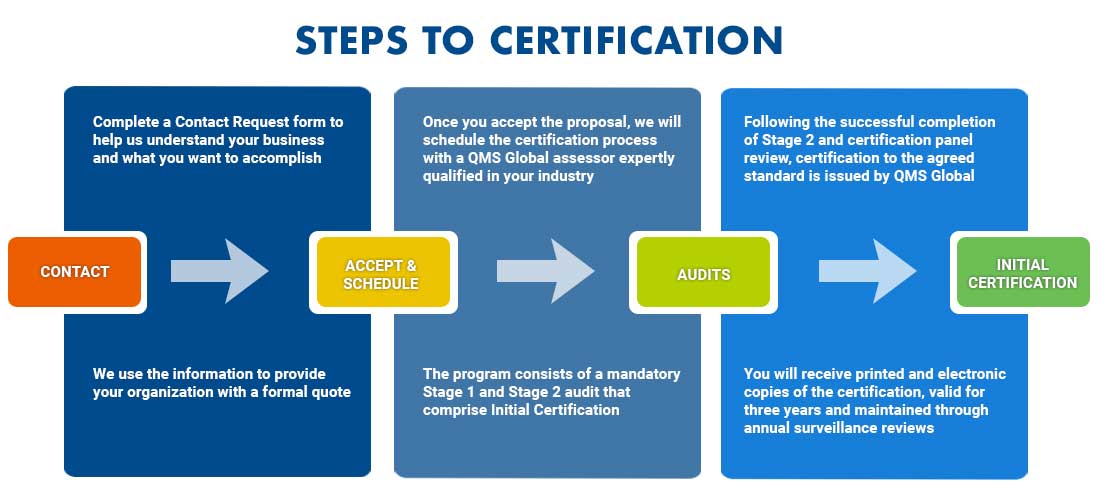
ISO 45001 certification is a third-party audit process. The usual path is readiness work, certification-body selection, Stage 1, Stage 2, corrective actions, certification decision, and then ongoing surveillance and recertification. ISO is clear that certification is performed by external certification bodies, and IAF’s mandatory guidance treats the initial certification audit as Stage 1 plus Stage 2.
The first step is checking whether your occupational health and safety management system is ready for an external audit. That usually includes scope review, hazard and risk methods, legal and other requirement controls, worker participation, internal audit, management review, and documented information. Weak readiness slows the project and increases correction work later.
The second step is choosing the certification body, not just accepting the cheapest quote. The right checks are accreditation status, scope coverage, sector competence, audit method, surveillance structure, and certificate verification route. ISO explicitly advises organizations to evaluate certification bodies and check accreditation before they commit.
Stage 1 is the preparedness review. The certification body checks the system at a high level, confirms scope and site conditions, reviews whether the management system framework is in place, and decides whether the organization is ready for the main certification audit. Issues found here normally need closure before Stage 2 moves ahead.
Stage 2 is the main certification audit. Auditors review implementation in practice, including operational controls, worker participation, hazard and risk management, internal audit, management review, records, and site performance. For OH&S certification, IAF guidance is explicit that the body must assess real implementation and not rely too heavily on office review alone.
If nonconformities are raised, the organization normally has to correct them before the certification decision. This is not a pay-and-print process. IAF’s OH&SMS guidance says certification shall not be granted until conformity with the relevant system requirements, including legal-compliance-related requirements within the management system, can be demonstrated.
After certification, the cycle continues through surveillance and later recertification. That is why ISO 45001 certification should be treated as an ongoing management commitment, not a one-time paperwork event.
Timing depends on organization size, scope, complexity, readiness, site count, risk profile, and the audit time the certification body determines for that specific client. IAF’s audit-time document is clear that the body identifies audit time for each applicant and certified client.
IAF MD 5 says annual surveillance time is about one-third of the initial Stage 1 plus Stage 2 audit time, and recertification time is normally about two-thirds of the audit time that would be needed for an initial certification audit at that point. IAF MD 22 also says conformity should be maintained through the certification cycle, normally three years.
The biggest timeline drivers are scope clarity, system maturity, number of work sites, operational complexity, hazard profile, contractor exposure, evidence quality, internal audit status, management-review completion, and how quickly the organization closes nonconformities. HSE also stresses that ISO 45001 should be applied in a way that is proportionate to the organization’s size, complexity, and risk profile.
Certification is maintained, not parked. Surveillance audits check whether the system still conforms and still works in practice. Recertification is a deeper review before the next cycle. If the system weakens or if serious failures appear, certification status can be affected.
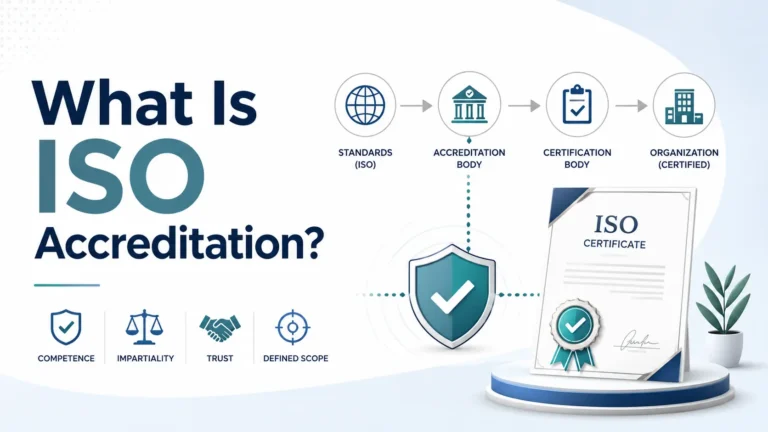
Not all providers play the same role. ISO does not certify organizations. Certification is performed by external certification bodies, and accredited certification adds a stronger layer of confidence because the certification body itself has been independently evaluated for competence, impartiality, and consistency.
Accreditation is not a marketing word. In the management systems context, it is the independent evaluation of the certification body. IAF explains that accredited certification under the IAF framework gives users a more reliable way to judge certificate validity and recognition.
Use a verification checklist before you buy:
Ask for accreditation details, audit process clarity, sector competence, auditor competence, certificate-verification route, and examples of industries served. If the provider also offers training or awareness support, ask how certification decisions are kept independent from those supporting activities. AGS says it operates as an independent, third-party certification and auditing organization and that impartiality is maintained by separating certification decisions from supporting activities such as training.
When your organization needs ISO 45001 certification, you need more than generic guidance. You need an independent third-party audit process that is credible, structured, and built for real operational risk. AGS supports that process with international reach, a U.S. head office, an active Iraq presence, and sector experience across oil and gas, construction, engineering, manufacturing, healthcare, food and beverage, and logistics.
AGS works with organizations that need certification to stand up to client scrutiny, procurement requirements, and ongoing surveillance, not just look good on paper. If your goal is stronger audit readiness, cleaner risk control, and a certification path that supports business growth and license-to-operate confidence, AGS is ready to help. Start with a readiness review, gap assessment, or a scoped certification quote built around your actual operations.
Your organization is usually closer to ISO 45001 certification when these basics already exist:
That checklist follows the standard’s core themes of leadership, worker participation, risk control, legal requirements, operation, evaluation, and improvement.