Home » ISO 14001
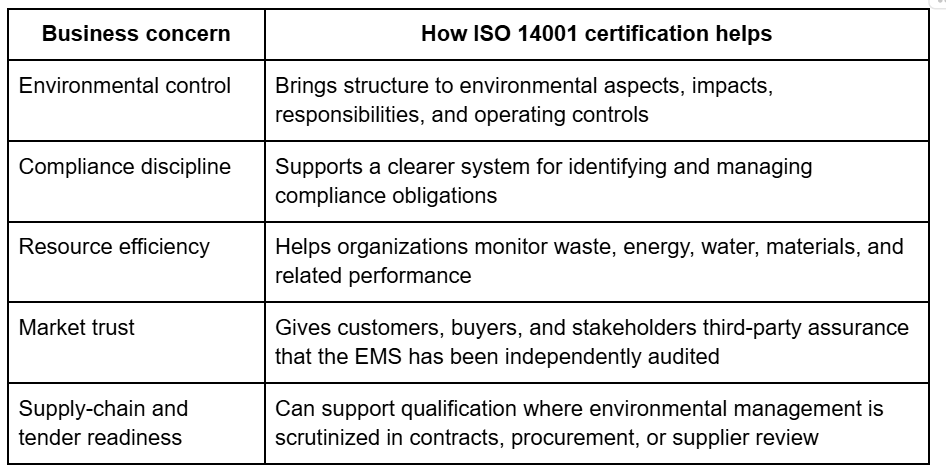
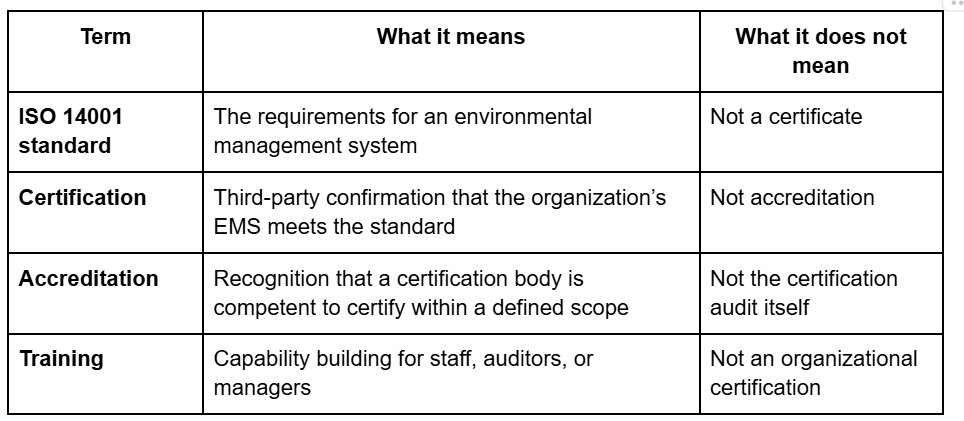
ISO 14001 Certification is an independent third-party confirmation that an organization’s Environmental Management System conforms to ISO 14001. It gives organizations a recognized route to support environmental control, strengthen compliance discipline, and present credible certification in customer, supply-chain, and tender reviews.
ISO 14001 is the internationally recognized standard for Environmental Management Systems, and the current edition is ISO 14001:2026. An Environmental Management System is the framework an organization uses to manage environmental aspects, set objectives, monitor performance, and drive continual improvement. ISO does not perform certification or issue certificates. Certification is performed by external certification bodies.
ISO 14001 certification is for organizations that need stronger environmental control, clearer compliance discipline, better operational consistency, and more credible external proof. It helps organizations improve environmental performance, reduce waste and resource loss, strengthen trust with customers and stakeholders, and support participation in international markets and supply chains.
ISO 14001 applies to organizations of all sizes and across all sectors. The standard is widely used in manufacturing, energy, transport, construction, waste management, public administration, and service sectors. In practice, demand is strongest where environmental impacts are visible, compliance obligations are material, or supplier qualification matters.
Yes. ISO 14001 works for small businesses as well as complex multi-site organizations. The requirements stay the same, but the way the system is implemented should match the size, sector, risk profile, and operating context of the business. Small and medium-sized enterprises can implement an effective EMS when the scope is defined properly and the controls are proportionate.
ISO 14001 certification requires a functioning Environmental Management System, not a binder of documents and not a one-time clean-up exercise. The system has to be established, implemented, maintained, and improved in a way that can stand up to independent audit evidence.
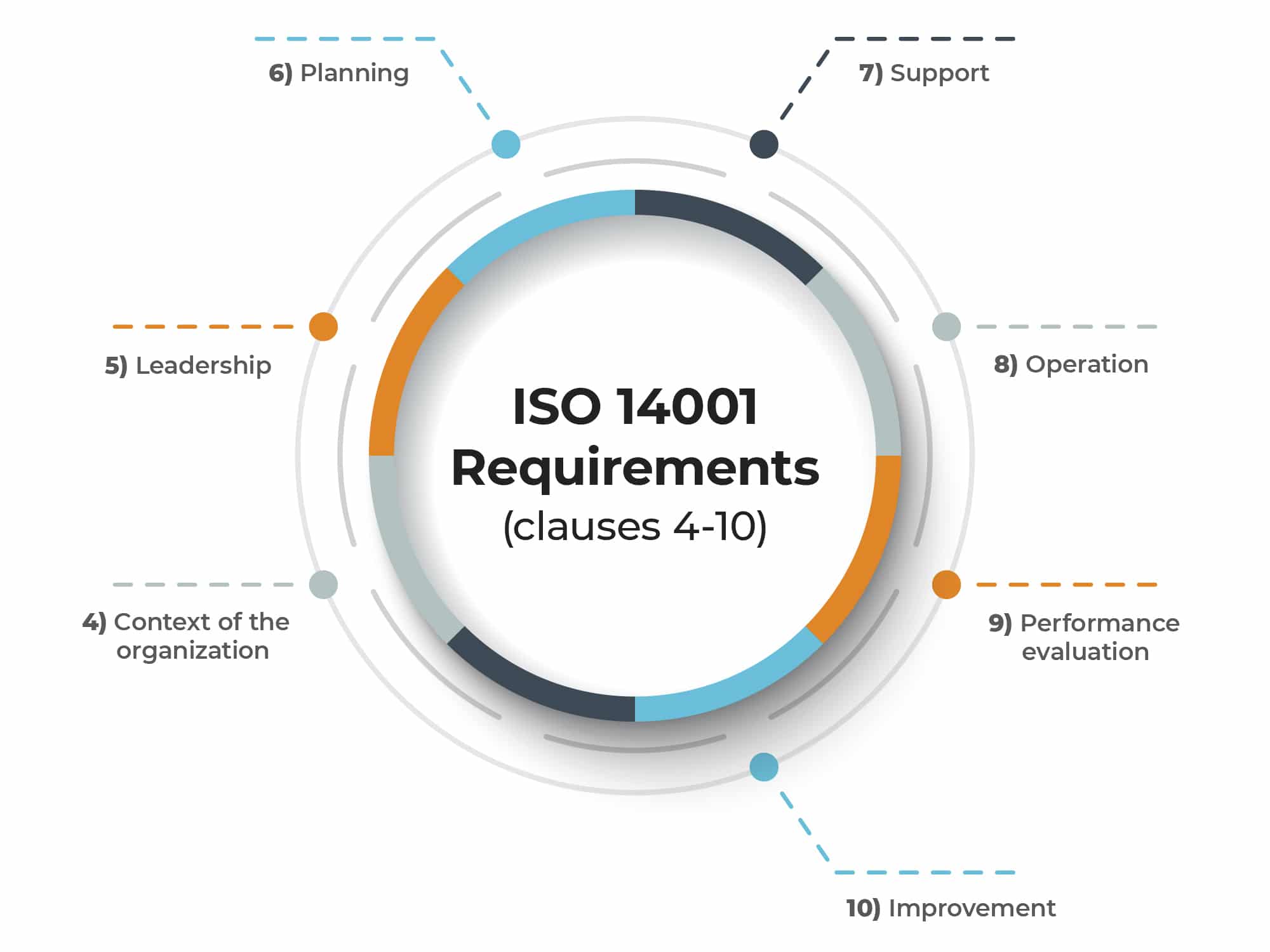
Your Environmental Management System must cover the operational issues that actually drive environmental performance and auditability. In practice, that means:
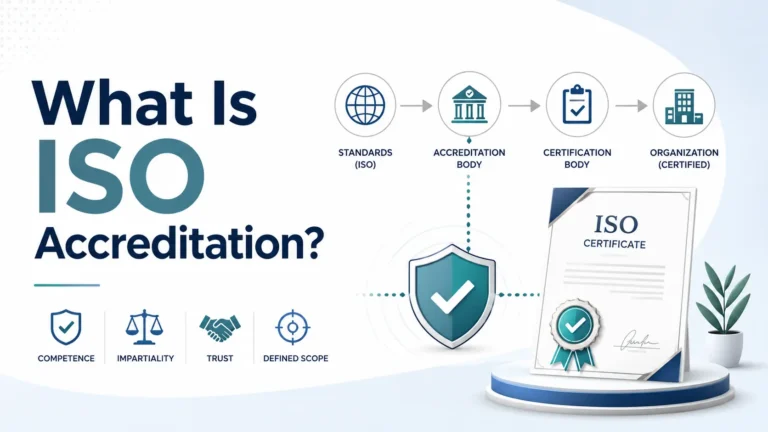
You can self-declare conformity, but that is not the same as recognized third-party certification. ISO makes the distinction clear: ISO does not certify organizations, and formal certification is performed by external certification bodies. Where accredited recognition matters, buyers and counterparties typically expect third-party certification rather than an internal declaration alone.
ISO 14001 certification follows a structured audit path. ISO describes the route in clear stages: gap analysis, implementation, internal audits, management review, and a certification audit by an external body. AGS applies that path in a practical certification workflow that keeps scope, readiness, and audit evidence aligned from the start.
AGS starts with scope and readiness. That means defining the activities, locations, and environmental risks inside the certification boundary, then reviewing how far the current system is from audit-ready conformity. A readiness review reduces audit surprises and helps you focus effort where the certification decision will actually be won or lost.
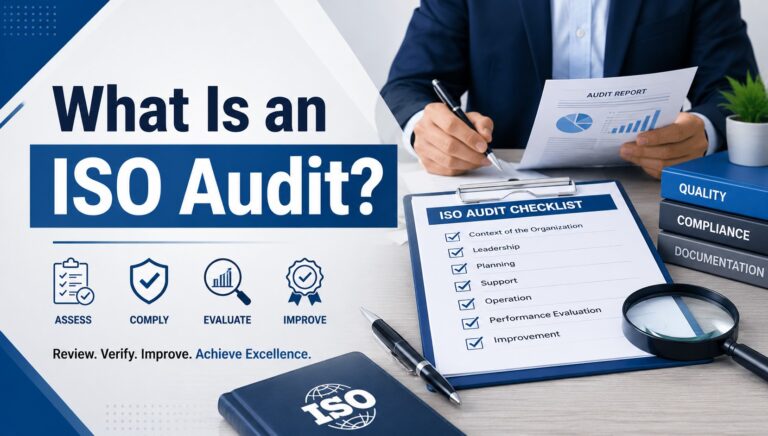
Before a certification audit, the system needs an internal challenge. Internal audits test whether the EMS works in practice, and management review tests whether leadership is actually controlling the system, the objectives, the risks, and the improvement actions. Certification without that internal evidence is weak and usually exposed fast in an audit.
Stage 1 reviews system readiness, scope, and documented control. Stage 2 tests implementation and effectiveness in practice. That includes evidence, interviews, operational control, monitoring, and how the organization manages environmental aspects, compliance obligations, and corrective action.
Certified organizations usually undergo annual surveillance audits and a recertification audit every three years. This is not an optional maintenance theatre. It is the mechanism that keeps the certificate tied to current performance, current scope, and continued conformity.
Certification time depends on the size of the organization, number of sites, industry sector, operational complexity, and how much work remains after readiness review, internal audit, and management review. There is no single official global fixed timeframe for every organization. Fast claims without scope detail are usually sales talk, not certification reality.
Satisfied Clients
Years of Experience
ISO certifications
ISO 14001 certification is commercially useful because it turns environmental management into an auditable operating system. Done properly, it supports environmental performance, regulatory discipline, risk control, operational consistency, and stakeholder trust. With more than 670,000 ISO 14001 certifications worldwide, it is also one of the most recognized environmental management certifications in the market.
Organizations pursue ISO 14001 certification to control environmental aspects with more discipline, reduce waste and resource loss, strengthen supply-chain credibility, improve tender readiness, and show customers and stakeholders that environmental responsibilities are managed through a structured system rather than ad hoc promises.
ISO 14001 certification is voluntary. That does not make it optional in commercial reality. Customer requirements, procurement filters, investor reviews, regulated projects, and global supply chains often push certification from “nice to have” into “required to compete.”
ISO 14001 integrates well with ISO 9001 and ISO 45001 because these management system standards follow a common structure. That makes it easier to build one management system that covers quality, environment, and occupational health and safety without running three disconnected control models.
AGS operates as an independent third-party certification body, not a consultancy. AGS audits organizations against applicable ISO standards, makes certification decisions based on evidence and conformity, and manages surveillance and recertification within the certification cycle. That is the right model for organizations that need a certification authority, not generic advisory noise.
AGS provides a scoped certification quote, pre-assessment gap analysis, certification audit planning, surveillance audits, recertification audits, and certificate verification guidance through IAF CertSearch. AGS also publishes its contact points, office locations, and certification-body FAQ structure openly, which matters when buyers are checking credibility before they enquire.
AGS supports audit readiness by defining certification scope early, identifying readiness gaps before the audit, structuring the audit program, and keeping the certification path tied to evidence rather than assumptions. The goal is straightforward: reduce avoidable nonconformities, protect audit time, and move the organization into Stage 1 and Stage 2 with a system that can stand up under review.
AGS uses the accreditation and verification model that serious buyers expect. ISO directs users to IAF CertSearch for accredited certification checks, and AGS explicitly positions certificate verification through that route. That matters where supplier qualification, tender review, or external due diligence depends on more than a PDF certificate alone.
Request a scoped ISO 14001 certification quote with your industry, employee count, number of sites, and target scope. AGS provides scoped proposals with audit timelines, certification-cycle planning, and surveillance requirements, and the site states that certification quotes are issued within 48 hours when the scope data is complete.


ISO 14001 can cover carbon emissions and greenhouse-gas-related controls where they are part of the organization’s material environmental aspects and impacts. The standard supports climate action and mitigation within the EMS, but it is not a standalone carbon accounting standard.
No. ISO 14001 certification applies to an organization’s Environmental Management System, not to an individual person. Individuals can take ISO 14001 awareness, internal auditor, or lead auditor training, but that is training and competence development, not organizational certification.
Common ISO 14001 mistakes include weak aspect-impact analysis, incomplete compliance-obligation tracking, poor operational controls, and treating internal audit as paperwork instead of a real readiness test. These failures usually show up in certification audits long before they show up in marketing copy.