














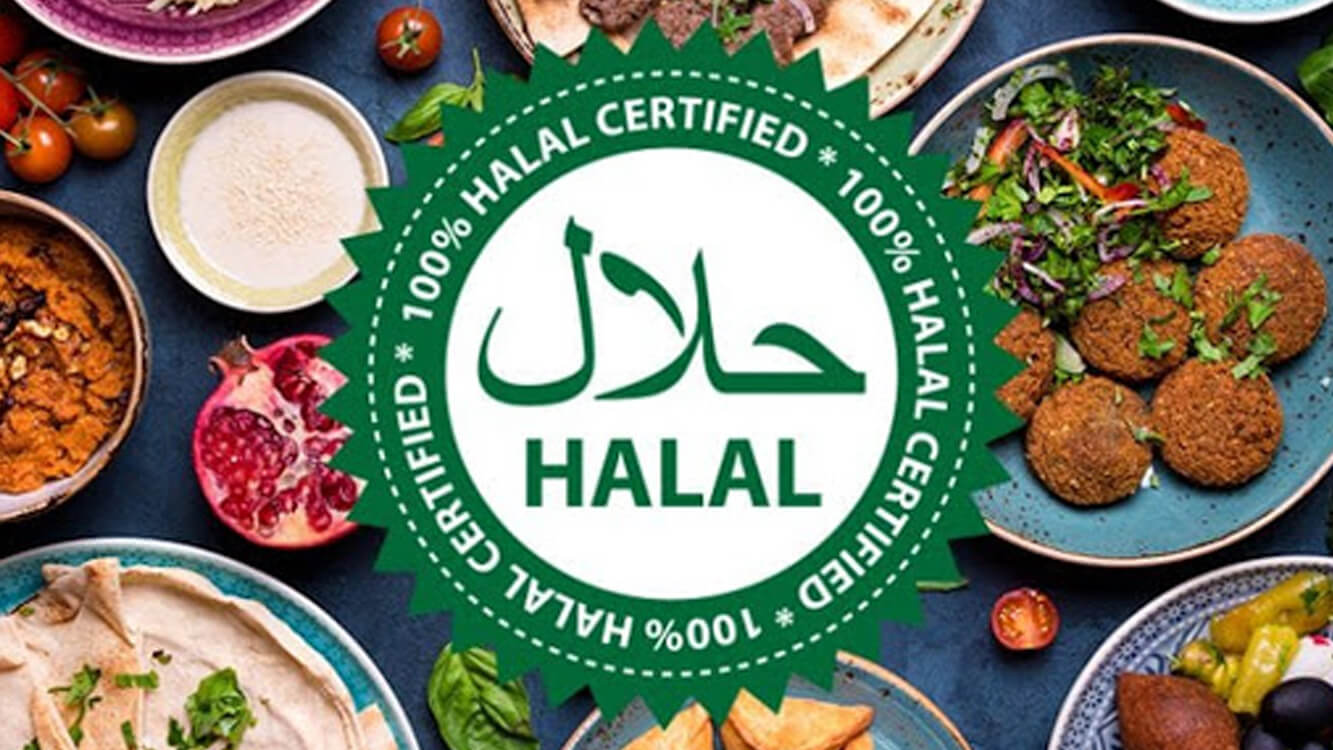




ISO 22000 Certification Services in the USA


    ISO Certification

    ISO 14001 CERTIFICATION
    ISO 18001 CERTIFICATION
    ISO 45001 CERTIFICATION
    ISO 27001 CERTIFICATION
    ISO 22000 CERTIFICATION
    ISO 50001 CERTIFICATION
    ISO 29001 CERTIFICATION
    ISO 18788 CERTIFICATION
    ISO 37001 CERTIFICATION
    ISO 22301 CERTIFICATION
    ISO 13485 CERTIFICATION
    ISO 10002 CERTIFICATION
    ISO 21500 CERTIFICATION
    ISO 17025 CERTIFICATION
    ISO 15189 CERTIFICATION

    ISO 22000 certification services in the USA give food-chain organizations independent confirmation that the food safety management system meets ISO 22000:2018 requirements. AGS positions this service for food manufacturers, packaging sites, storage and transport providers, catering operations, ingredient suppliers, and feed businesses that need stronger food safety control, buyer confidence, and accredited third-party certification. ISO describes ISO 22000 as the international standard for food safety management systems, applicable across the food chain, and AGS states that AGS is an accredited ISO certification body headquartered in the USA.

    ISO 22000 certification is a commercial and operational decision, not a generic paperwork exercise. ISO states that organizations choose certification when they need independent confirmation that the FSMS meets ISO 22000:2018, and that this is often requested by major retailers, manufacturers with strict supplier approval processes, international buyers, and public procurement tenders. That search intent is exactly where this page sits: mid-journey, provider-validation, audit-readiness, and certification-body selection.

    What ISO 22000 certification means

    ISO 22000 certification means an accredited third party has audited the organization’s food safety management system against ISO 22000:2018. ISO states that ISO 22000 is the international standard for food safety management systems and that certification is voluntary. ISO also states that ISO itself does not certify organizations; independent certification bodies perform certification, and those bodies can be accredited.


    ISO 22000:2018 and the FSMS it validates

    ISO 22000:2018 validates a Food Safety Management System, not a single product or a single inspection event. ISO states that the standard specifies requirements for an FSMS that helps organizations identify hazards, manage risks, and consistently provide safe products and services. ISO also states that the standard integrates HACCP principles and application steps developed by the Codex Alimentarius Commission.


    ISO 22000 applies across the food chain. ISO names primary production, food manufacturing, distribution, food service, packaging, equipment, and feed production as covered areas. ISO also states that the standard applies regardless of organizational size or complexity.


    Certification, accreditation, and schemes are not the same

    Certification, accreditation, and schemes are different conformity concepts. Certification is the written assurance from a certification body that the management system conforms to the standard. Accreditation is the formal recognition that the certification body is competent to certify within a defined scope. ANAB states that ISO 22000 accreditation for certification bodies sits inside the ISO/IEC 17021-1 management systems framework and uses ISO/IEC 22003-1 requirements for FSMS certification activities.


    FSSC 22000 is also different from ISO 22000 certification. ISO explains that many recognized food safety schemes build on ISO 22000 and ISO 22002, and ANAB describes FSSC 22000 as a separate GFSI-benchmarked certification scheme. That means ISO 22000 is the standard, while FSSC 22000 is a broader scheme built on that foundation.


    Why organizations pursue ISO 22000 certification

    Organizations pursue ISO 22000 certification to strengthen food safety discipline, improve buyer confidence, support legal compliance, and strengthen market access. ISO lists enhanced food safety, regulatory compliance, improved customer confidence, operational efficiency, and market access among the core benefits of the standard. IAF also states that accredited management system certification is frequently specified in the global marketplace and can support internal business improvement, procurement confidence, and overseas market access.

    Who needs ISO 22000 certification

    ISO 22000 certification is for organizations that are directly or indirectly involved in the food chain. ISO names primary producers, food manufacturers, transport and storage operators, caterers, retailers, subcontractors, food service providers, packaging operations, equipment-related businesses, and feed production as relevant user groups.


    Food-chain sectors that commonly pursue certification

    Food-chain organizations that commonly pursue ISO 22000 certification include:

    • Food manufacturers, such as ready-to-eat processors, beverage plants, bakery operations, dairy facilities, frozen food plants
    • Food packaging sites, such as primary packaging manufacturers and food-contact material suppliers
    • Storage and transport providers, such as cold-chain warehouses, distribution centers, and transport operators
    • Catering and food service businesses, such as institutional kitchens, commissaries, and meal-service operations
    • Ingredient and feed suppliers, such as spice processors, additive suppliers, and animal feed operations


    ISO identifies the food chain as the core scope, and ANAB points to sector-specific ISO 22002 prerequisite programme standards for food manufacturing, catering, farming, food packaging, transport and storage, and food and animal food production.


    When certification becomes commercially necessary

    ISO 22000 certification becomes commercially necessary when buyers, retailers, procurement teams, or export-facing supply chains ask for independent food safety assurance. ISO states that certification is often requested by major retailers, manufacturers with strict supplier approval processes, international buyers, and public procurement tenders. IAF also states that accredited certification increasingly becomes a requirement in both public and private sector specification and procurement.


    Why ISO 22000 certification is not for individuals

    ISO 22000 certification is not for individuals. ISO 22000 certification applies to an organization’s management system. Individuals can take lead auditor or internal auditor training, but that training is not the same as organizational certification. ISO describes certification as independent confirmation that an organization’s FSMS meets ISO 22000:2018.

    Doing the right thing, at the right time.

    300+

    Satisfied Clients

    10+

    Years of Experience

    1700+

    ISO certifications

    What the requirements for ISO 22000 certification include

    ISO 22000 certification requires a functioning FSMS built around management-system control, hazard control, communication, monitoring, and improvement. ISO states that the standard integrates HACCP principles and Codex application steps. ANAB states that the standard combines interactive communication, system management, prerequisite programmes, and HACCP principles to ensure food safety along the food chain.


    Clauses, leadership, operations, evaluation, and improvement

    ISO 22000:2018 follows a management-system structure that includes context, leadership, planning, support, operation, performance evaluation, and improvement. The ANSI preview of ISO 22000:2018 shows Clause 4 as context of the organization and explains that the PDCA cycle covers the management-system framework from Clauses 4 to 7 and Clauses 9 to 10, while Clause 8 covers operational planning and control. An ISO expert-panel FAQ also describes ISO 22000 as containing requirements for policy, objectives, leadership, planning, implementation and operation, performance evaluation, management review, and continual improvement.


    HACCP, PRPs, and ISO 22002 support

    HACCP and PRPs sit inside the ISO 22000 architecture, but HACCP and ISO 22000 are not the same thing. ISO states that ISO 22000 integrates HACCP principles and Codex application steps. ISO also explains that ISO 22002 provides the prerequisite programmes that support safe food production, and that ISO 22000 plus ISO 22002 together create a complete system: ISO 22000 provides the management framework and ISO 22002 provides the operational foundations. Codex describes the General Principles of Food Hygiene as the fundamental food hygiene document and explains that the revised text places HACCP inside the main body while also emphasizing the role of Good Hygiene Practices.


    Documented information, verification, corrective action, and monitoring

    Auditable ISO 22000 systems rely on controlled documented information and verifiable operating evidence. FDA’s preventive controls rule for human food requires covered food facilities to maintain a food safety plan that includes hazard analysis and risk-based preventive controls. The ANSI preview of ISO 22000:2018 states that the “Check” stage covers monitoring, measurement where relevant, analysis, evaluation, and reporting of verification activities, and that the “Act” stage covers action to improve performance.

    ISO, ANAB, Codex, and FDA all support this basic structure from different angles: standard requirements, FSMS accreditation context, HACCP and hygiene foundations, and U.S. food safety plan expectations.

    What the ISO 22000 certification process looks like

    The ISO 22000 certification process moves through scope definition, readiness review, certification audit, decision, and surveillance. The standard does not certify itself. An accredited certification body performs the audit and certification decision. AGS also states that certification proposals are scoped around organization size, industry sector, target standard, and number of locations.


    1. Define scope and review readiness
      The organization defines the site scope, products, processes, supporting functions, and food-chain role covered by certification. Readiness review checks whether the FSMS already has the required system structure, hazard controls, PRPs, documented information, and internal review discipline. AGS states that a pre-assessment gap analysis can be scheduled before the certification audit.
    2. Complete implementation and internal review
      The organization runs the FSMS in practice, not only on paper. Internal review confirms that controls, monitoring, verification, corrective action, and management review work across the defined scope. FDA’s preventive controls framework also reinforces the need for hazard analysis, preventive controls, monitoring, corrective action, and verification in covered food facilities.
    3. Stage 1 audit
      Stage 1 reviews the management-system design, documented information, scope definition, and audit readiness. Stage 1 determines whether the organization is ready for the full conformity assessment. ISO/IEC 17021-1 is the management systems certification framework used for certification bodies, and ANAB places ISO 22000 certification-body accreditation inside that structure.
    4. Stage 2 audit
      Stage 2 evaluates implementation and effectiveness across the site or sites in scope. Stage 2 focuses on operational evidence, interviews, records, monitoring, verification, and control effectiveness. An effective FSMS demonstrates more than documented intent. An effective FSMS shows operating control.
    5. Certification decision, surveillance, and maintenance
      After a successful certification decision, the certificate enters a three-year cycle with surveillance audits. AGS states that ISO certification is typically valid for three years, that annual surveillance audits are required in years 1 and 2, and that recertification starts a new three-year cycle.
    Basra Municipality Requirements for ISO Certification

    How long ISO 22000 certification takes

    The certification timeline depends on scope, system maturity, and audit readiness. No credible certification body can publish one fixed schedule for every food-chain organization because the audit plan depends on real operating conditions and real certification scope. AGS states that scoped proposals are built from industry, target standard, employee count, and number of locations, and that the proposal covers audit timelines as well as cost and surveillance schedules.


    Main timeline drivers

    The main timeline drivers usually include:

    • site count
    • employee count
    • product and process complexity
    • existing FSMS maturity
    • completeness of PRPs and HACCP logic
    • documentation readiness
    • integration with other management systems


    ANAB’s ISO 22000 accreditation framework also shows that scoping and sector-specific FSMS requirements matter in certification activity.


    What speeds up or slows down certification

    Strong readiness speeds certification up. Weak readiness slows certification down. Clean scope boundaries, controlled documents, complete hazard analysis, working PRPs, trained personnel, internal audit discipline, and management review evidence reduce audit friction. Missing operational evidence, weak monitoring records, incomplete corrective actions, and unstable site controls extend the path to certification. FDA’s food safety plan logic reinforces the same discipline around hazard analysis, preventive controls, monitoring, corrective action, and verification.

    ISO 22000 certification and the U.S. regulatory bridge

    ISO 22000 certification supports disciplined food safety management in the USA, but ISO 22000 does not replace FDA or FSMA obligations. FDA states that the Preventive Controls for Human Food rule requires covered food facilities to have a food safety plan that includes hazard analysis and risk-based preventive controls. ISO 22000 can strengthen system structure, hazard management, communication, verification, and continual improvement, while FDA rules remain the legal requirement for covered U.S. operations.


    The U.S. bridge matters because many American food businesses manage both compliance and buyer expectations at the same time. FDA rules govern legal obligations. ISO 22000 certification supports private-market trust, supplier approval, retailer review, and global customer confidence. ISO states that certification is often requested by buyers such as retailers, strict manufacturer approval systems, international buyers, and public tenders.


    Industries Sector

    Oil & Gas
    Construction & Infrastructure
    Manufacturing & Industrial Production
    Food, Agriculture & Processing
    Security & Private Protection Services
    Government & Public Sector
    IT & Digital Services
    Healthcare & Medical Services
    Laboratories & Testing Facilities
    Logistics & Transportation
    Energy & Utilities
    Banking, Financial Services & Insurance
    Educational institutions
    Healthcare Organizations

    Trainings

     
    Quality
     
    Environment
     
    Health & Safety
     
    Food Safety
     
    Business Continuity

    Other ISO Certifications We Provide in Iraq

    As an accredited body, we issue certificates for the most sought-after management system standards:

    How to choose an ISO 22000 certification body

    Choose a certification body that is accredited, competent for the sector, and clear about certification scope. IAF states that accreditation is the independent evaluation of certification bodies against ISO/IEC 17021-1 to ensure impartiality, competence, and consistency. IAF also states that the buyer should check whether the accreditation scope includes the standard or scheme in question and whether the accreditation body is an IAF MLA signatory.

    How to verify accredited certification

    Verify accredited certification through recognized accreditation directories and IAF CertSearch. ANAB provides a directory of accredited organizations. IAF states that IAF CertSearch is the global database where users can validate the status of accredited certification issued by certification bodies accredited by IAF signatory member accreditation bodies under ISO/IEC 17021-1.

    What sector competence and audit scope matter

    Food safety certification depends on sector competence and correct scoping. IAF states that accredited certification bodies are monitored for competence and that technically competent people with relevant sector knowledge and skills are required to carry out satisfactory audits. ANAB’s FSMS materials also point to sector-specific prerequisite programme standards and ISO 22003-1 requirements, which reinforces that food manufacturing, catering, food packaging, transport and storage, and feed-related activities are not identical audit contexts.

    How accredited certification supports acceptance in many markets

    Accredited certification supports acceptance in many markets because the IAF MLA is designed for mutual recognition. IAF states that the purpose of the MLA is to ensure mutual recognition of accredited certification between signatories and subsequent acceptance of accredited certification in many markets based on one accreditation. IAF also states that certificates issued by bodies accredited by an IAF MLA signatory are recognized and accepted throughout the world by IAF MLA signatories.

    Why Choose AGS for ISO 22000 Certification in Iraq?

    IAS-Accredited

    International recognition through IAF MLA, rigorous audit processes.

    Local Presence

    Baghdad HQ, Basra field teams, Erbil coverage. On‑site across Iraq.

    Arabic‑Speaking Auditors

    Documentation review in Arabic/English, interviews in Arabic, bilingual reports.

    Ministry-Recognized

    Ministry of Oil approved, IQAS recognized, security‑cleared auditors.

    IAF CertSearch Verified

    QR‑code enabled certificates, globally accepted.

    Post-Certification Support

    Surveillance scheduling, updates, recertification planning.

    Blogs & News

    ISO Certification

    ISO certification

    How Many Types of ISO Certification Are There?

    How Many Types of ISO Certification Are There? ISO certification applies to 4 categories of…

    READ MORE →
    ISO certification

    What Is ISO Certification? Definition, Process, and How to Verify It

    What Is ISO Certification? Definition, Process, and How to Verify It ISO certification is a…
    READ MORE →
    Basra Municipality Requirements for ISO Certification

    Government Procurement & Tender Requirements in Basra

    Government Procurement & Tender Requirements in Basra ISO Certification, Compliance Expectations & Practical Guidance Government…
    READ MORE →
    Basra Municipality Requirements for ISO Certification

    Basra Municipality Requirements for ISO Certification: What Businesses Must Comply With

    Basra Municipality Requirements for ISO Certification: What Businesses Must Comply With Basra Municipality does not…
    READ MORE →
    ISO for Food Businesses in Basra

    ISO for Food Businesses in Basra

    ISO for Food Businesses in Basra: A Complete Guide to Food Safety, Compliance & ISO…
    READ MORE →
    ISO for Manufacturing in Basra

    ISO for Manufacturing in Basra

    ISO for Manufacturing in Basra: How International Standards Strengthen Industrial Performance? Basra’s manufacturing sector is…
    READ MORE →
    ISO for Construction Companies in Basra

    ISO for Construction Companies in Basra

    ISO for Construction Companies in Basra: A Complete Guide for 2026 This is the practical…
    READ MORE →
    ISO for Security Companies in Basra

    ISO for Security Companies in Basra

    ISO for Security & PSC Companies in Basra (2026 Guide) This is the practical guide…
    READ MORE →
    ISO Certification for Oil & Gas Companies in Basra

    ISO Certification for Oil & Gas Companies in Basra

    ISO Certification for Oil & Gas Companies in Basra This is the practical guide for…
    READ MORE →
    Logo
    Logo
    Logo
    Logo
    Logo
    Logo
    Logo
    Logo
    Logo
    Logo
    Logo
    Logo
    Logo
    Logo

    ISO 22000 Certification FAQ

    What is the difference between accredited and non-accredited ISO 9001 certification?

    Accredited ISO 9001 certification is issued by a certification body formally evaluated by a recognized accreditation body (like IAS or UAF), while non-accredited certification carries no independent verification of the certifier's competence. Non-accredited certificates are often not accepted for government tenders, international contracts, or by multinational companies, and cannot be verified through IAF CertSearch.

    How do I verify if an ISO 9001 certificate from Iraq is genuine?

    You can verify an ISO 9001 certificate's authenticity through the IAF CertSearch global database by entering the certificate number or organization name. AGS also provides a dedicated certificate verification tool for quick status checks. Certificates from accredited bodies are registered in IAF CertSearch, where you can check current status, scope, and accreditation details.

    Can a USA-headquartered certification body certify my company in Iraq?

    Yes. AGS is headquartered in the USA with a regional office in Basra, Iraq, and provides on-site audits across Baghdad, Erbil, and other Iraqi cities by locally based auditors. International certification bodies routinely operate across borders through local offices or qualified representatives. AGS's structure ensures both global standards and local presence.

    What are surveillance audits and why are they required?

    Surveillance audits are annual assessments performed in years 1 and 2 of your 3-year certification cycle to verify that your quality management system continues to conform to ISO 9001 requirements. These audits ensure your QMS remains effective and continuously improves, rather than being a one-time effort. They are mandatory to maintain certification.

    Is ISO 9001 certification required for Iraqi government tenders?

    Yes, ISO 9001 certification is increasingly listed as a mandatory requirement or a significant evaluation criterion in Iraqi government tenders, particularly for construction, services, and supply contracts. This is common in tenders issued by the Oil Ministry, Ministry of Construction and Housing, and Ministry of Electricity. Accredited certification carries more weight in tender evaluations than non-accredited alternatives.

    Do you offer Arabic-language documentation support?

    Yes. Auditors review in Arabic or English, conduct interviews in Arabic, and deliver bilingual reports.

    No. HACCP and ISO 22000 are not the same. ISO states that ISO 22000 integrates HACCP principles and Codex application steps, while ANAB states that ISO 22000 combines system management, interactive communication, prerequisite programmes, and HACCP principles. HACCP is a hazard-control methodology. ISO 22000 is a full management-system standard.

    Yes, ISO 22000 certification is used and recognized in the USA as a voluntary food safety management certification. ISO describes the standard as international and applicable across the food chain. ANAB operates ISO 22000 accreditation in the United States, and FDA rules remain the legal food safety obligation for covered U.S. food facilities.

    No. ISO 22000 certification is for an organization’s FSMS. Individuals can complete training or auditor qualification programs, but organizational certification is issued against the company’s food safety management system after third-party audit.

    The better choice depends on the market requirement. ISO explains that FSSC 22000 is a recognized scheme built on ISO 22000 and ISO 22002. ANAB describes FSSC 22000 as a GFSI-benchmarked certification scheme. ISO 22000 is often a strong route when the buyer requirement is ISO 22000 certification. FSSC 22000 is often selected when the customer or supply chain specifically asks for that scheme.

    Request an ISO 22000 certification quote

    ISO 22000 certification becomes easier to manage when the scope is defined correctly from the start. AGS states that AGS is an accredited ISO certification body headquartered in the USA and that organizations can request a scoped proposal by sharing industry, target ISO standard, number of sites, and employee count. AGS also states that the proposal covers audit timelines, certification costs, and surveillance schedules, and that a pre-assessment gap analysis can be scheduled before the certification audit.


    Request an ISO 22000 certification quote from AGS for your U.S. operations, sector, and site scope. A scoped quote gives the decision-maker the right next step: audit readiness, sector fit, accredited certification logic, and a clear certification path.

    Start Your ISO 9001 Certification Journey with AGS


      ISO Certification

      ISO 9001 CERTIFICATION
      ISO 14001 CERTIFICATION
      OHSAS 18001 CERTIFICATION
      ISO 45001 CERTIFICATION
      ISO 27001 CERTIFICATION
      ISO 22000 CERTIFICATION
      ISO 50001 CERTIFICATION
      ISO 29001 CERTIFICATION
      ISO 18788 CERTIFICATION
      ISO 37001 CERTIFICATION
      ISO 22301 CERTIFICATION
      ISO 13485 CERTIFICATION
      ISO 10002 CERTIFICATION
      ISO 21500 CERTIFICATION
      ISO 17025 CERTIFICATION
      ISO 15189 CERTIFICATION
       

      Industries Sector

      Oil & Gas
      Construction & Infrastructure
      Manufacturing & Industrial Production
      Food, Agriculture & Processing
      Security & Private Protection Services
      Government & Public Sector
      IT & Digital Services
      Healthcare & Medical Services
      Laboratories & Testing Facilities
      Logistics & Transportation
      Energy & Utilities
      Banking, Financial Services & Insurance
      Educational institutions
      Healthcare Organizations

      Trainings

      Quality
      Environment
      Health & Safety
      Food Safety
      Business Continuity
      Translate »