ISO Certifications in Iraq: Accredited Certification Process, Cost Drivers, and Certificate Validation


    ISO Certification

    ISO 14001 CERTIFICATION
    ISO 18001 CERTIFICATION
    ISO 45001 CERTIFICATION
    ISO 27001 CERTIFICATION
    ISO 22000 CERTIFICATION
    ISO 50001 CERTIFICATION
    ISO 29001 CERTIFICATION
    ISO 18788 CERTIFICATION
    ISO 37001 CERTIFICATION
    ISO 22301 CERTIFICATION
    ISO 13485 CERTIFICATION
    ISO 10002 CERTIFICATION
    ISO 21500 CERTIFICATION
    ISO 17025 CERTIFICATION
    ISO 15189 CERTIFICATION

    Accredited ISO certification in Iraq is third-party management system certification issued by a certification body operating under an accreditation chain recognized through IAF mechanisms. Organizations in Baghdad, Basra, Erbil, and across Iraq obtain ISO certificates to demonstrate audited conformity to specific ISO standards within a defined scope.

    How to Obtain ISO Certification in Iraq?

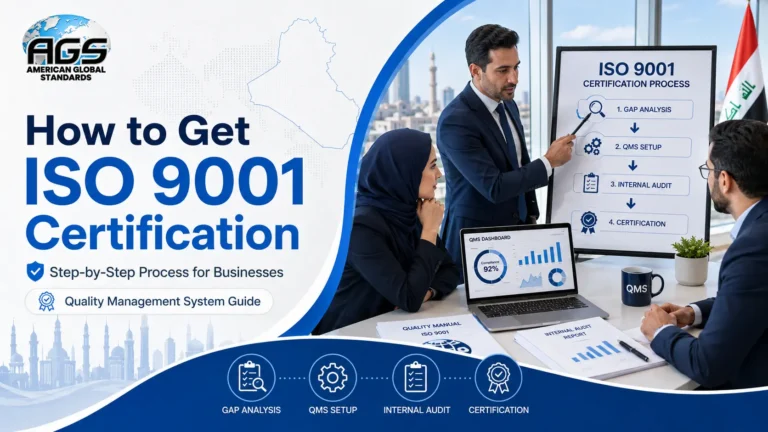
    1. Define the management system scope and sites
    2. Select a certification body and confirm the certificate validation route through IAF CertSearch
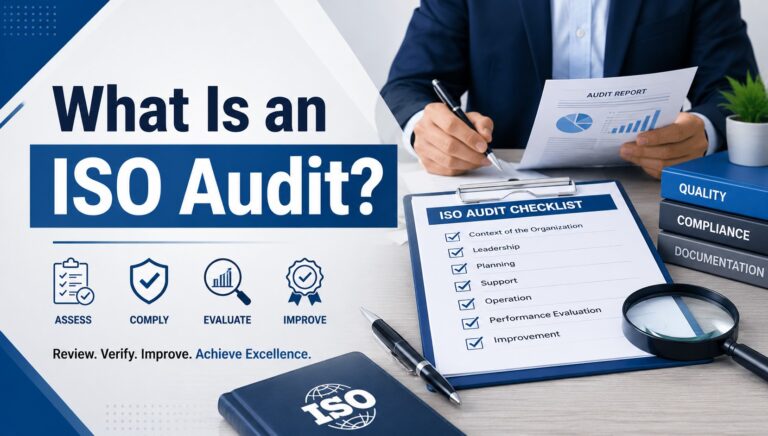
    3. Complete Stage 1 audit to review readiness and documented information
    4. Complete Stage 2 audit to evaluate the implementation and effectiveness of evidence
    5. Record nonconformities and verify corrective action closure evidence
    6. Receive the certification decision and certificate issuance
    7. Maintain certification through surveillance audits and complete recertification audit before expiry

    ISO Certification in Iraq is a Third-Party Conformity Assessment for Management Systems

    ISO certification represents formal third-party verification that an organization’s management system conforms to the requirements of a specific ISO standard. The certification body conducts audits, evaluates evidence, and issues the ISO certificate when conformity is demonstrated.

    Organizations in Iraq pursue ISO certification across multiple standards. ISO 9001 certification addresses Quality Management Systems. ISO 14001 certification covers Environmental Management Systems. ISO 45001 certification applies to Occupational Health and Safety Management Systems. ISO/IEC 27001 certification protects Information Security Management Systems.


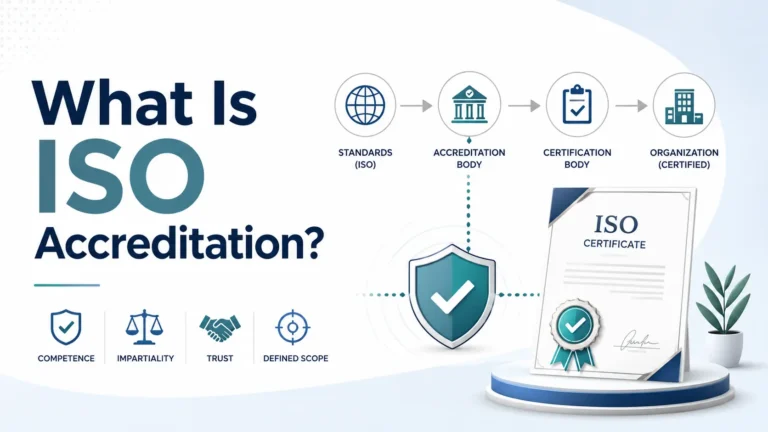
    ISO Certification vs Accreditation:


    Accreditation evaluates a conformity assessment body’s competence to perform certification activities. Certification evaluates an organization’s management system conformity to an ISO standard through audits and a certification decision. The accreditation body assesses whether the certification body operates with competence and impartiality under ISO/IEC 17021-1 requirements.


    The certification body then audits client organizations seeking ISO certificates. This creates a three-tier trust structure: Accreditation Body → Certification Body → Certified Organization. Iraq’s accreditation ecosystem includes IQAS (Iraqi Accreditation System) under the Iraqi Ministry of Planning. IQAS performs accreditation functions for laboratories and conformity assessment bodies within Iraq’s national context.


    Certification Body vs Consultancy:


    A certification body conducts audits and makes certification decisions. ISO/IEC 17021-1 requires certification bodies to maintain impartiality, which prohibits them from providing consultancy services to organizations they certify. An ISO consultancy helps organizations implement management systems and prepare documentation. Consultants provide gap analysis, policy development, and internal auditor training. The consultancy role is distinct from the certification role to preserve audit objectivity.


    Certificate Validity Verification Through IAF CertSearch:


    IAF CertSearch validates certificate status and confirms the accreditation chain for management system certifications issued by accredited certification bodies within the IAF network. Certificate verification requires checking the certificate number, scope, issuing certification body, and validity dates. The IAF (International Accreditation Forum) operates the MLA (Multilateral Recognition Arrangement), which establishes equivalence between accreditation bodies worldwide. Certificates issued under IAF MLA signatory accreditation bodies receive international recognition.

    Doing the right thing, at the right time.

    300+

    Satisfied Clients

    10+

    Years of Experience

    1700+

    ISO certifications

    How ISO Certification Works in Iraq from Application to Certificate Issuance?

    The ISO certification process follows a structured sequence governed by the requirements of ISO/IEC 17021-1. Certification bodies conduct a two-stage initial audit before making the certification decision.


    Define Scope and Sites:


    The scope statement specifies which activities, products, services, and locations the ISO certificate covers. Organizations identify all sites requiring certification, including manufacturing facilities, offices, and operational locations in Baghdad, Basra, Erbil, or other Iraqi cities. The certification body reviews the scope to ensure it accurately represents the organization’s management system boundaries. Scope definition affects audit time, audit team composition, and certification cost.


    Stage 1 Audit Reviews Readiness and Documented Information:


    Stage 1 audit evaluates the organization’s readiness for Stage 2. Auditors review documented information, including policies, procedures, objectives, and records. The audit confirms the management system design addresses all applicable standard requirements. Stage 1 identifies gaps requiring correction before Stage 2 proceeds. The certification body provides a Stage 1 audit report documenting findings, observations, and any nonconformities.


    Stage 2 Audit Evaluates Implementation and Effectiveness Evidence:


    Stage 2 audit examines management system implementation across all processes within the certification scope. Auditors collect evidence through interviews, document review, and observation of activities. The audit evaluates whether the management system achieves intended outcomes and demonstrates continual improvement. Stage 2 typically occurs on-site at the organization’s locations, though remote auditing techniques apply where appropriate.


    Nonconformities and Corrective Action Closure Evidence:


    Auditors classify findings as major nonconformities, minor nonconformities, or opportunities for improvement. Major nonconformities indicate the management system fails to meet a requirement or creates significant doubt about achieving intended outcomes. Organizations submit corrective action evidence demonstrating root cause analysis and implemented corrections. The certification body verifies closure evidence before proceeding to the certification decision. Unresolved major nonconformities prevent certificate issuance.


    Certification Decision and Certificate Issuance:


    The certification body’s decision-making function reviews audit reports, nonconformity closure evidence, and auditor recommendations. The function operates independently from auditors to maintain impartiality. A positive certification decision results in ISO certificate issuance. The certificate states the organization name, scope, applicable standard, certification body, accreditation mark, issue date, and expiry date. Certificate validity extends for 3 years, subject to successful surveillance audits.


    The Certification Cycle Uses Surveillance Audits and Recertification Audits

    ISO/IEC 17021-1 defines the certification cycle structure: initial certification, followed by surveillance audits in years 1 and 2, then recertification audit in year 3. This cycle repeats throughout the certificate’s life.


    Surveillance Audit Timing and Objectives:


    Surveillance audits occur at least annually, typically at 12-month intervals from the initial certification decision. These audits verify the management system remains implemented and effective. Surveillance audits cover a sample of the management system. The certification body schedules on-site activities to review specific processes, verify corrective action effectiveness, and assess continual improvement evidence.


    Recertification Audit Timing and Renewal Decision:


    Recertification audit occurs before the 3-year certificate expiry. The audit evaluates full management system conformity, similar to the initial Stage 2 audit scope. The recertification decision considers the organization’s performance throughout the certification cycle, including surveillance audit results, customer complaints, and changes to the management system. Successful recertification extends the certificate for another 3-year cycle.


    Certificate Suspension and Withdrawal Triggers:


    The certification body suspends certificates when organizations fail to close nonconformities within agreed timelines, miss surveillance audit schedules, or misuse the certification mark. Suspension prevents certificate use until the organization resolves the underlying issues. Certificate withdrawal occurs when suspended organizations fail to address suspension causes within 6 months or when serious conformity failures are identified. Withdrawn certificates require full recertification if the organization seeks future certification.

    Basra Municipality Requirements for ISO Certification

    ISO Certification Cost in Iraq Is Driven by Audit Time and Scope Variables

    ISO certification cost reflects the audit time required to adequately assess the management system. The certification body calculates audit duration based on defined variables and applies daily rates to determine fees.


    Audit Time Determination Logic:


    Audit time determination uses mandatory provisions and guidance in IAF MD 5 for QMS, EMS, and OH&S certifications. The primary variables include the effective number of personnel, management system complexity, and the number of sites. Personnel count affects audit duration most significantly. Organizations with 50 employees require a different audit time than organizations with 500 employees. Multi-site operations add complexity and audit days.


    What Changes ISO Certification Cost?


    • Employee count: Higher personnel numbers increase audit time requirements
    • Number of sites: Each additional site requires audit coverage
    • Shift patterns: Multiple shifts expand the personnel count for calculation purposes
    • High-risk activities: Industries with elevated risk profiles require extended audit time
    • Integrated systems: Combined certifications covering ISO 9001, ISO 14001, and ISO 45001 adjust total audit time through integration factors
    • Management system complexity: Technical processes, regulatory requirements, and scope breadth affect duration


    Timeline Variables Affecting Certification Speed:


    Documentation readiness determines how quickly the Stage 1 audit can proceed. Organizations with complete policies, procedures, and records experience shorter gaps between application and audit scheduling. Corrective action closure speed affects the time between the Stage 2 audit and certification decision. Prompt root cause analysis and effective corrections minimize delays. Certification body scheduling availability influences the overall timeline. Peak periods create longer wait times for audit dates.
    ISO Certification Execution in Iraq: Cities Served, Language, and Industry Patterns

    Organizations across Iraq obtain ISO certification through certification bodies operating locally or internationally. Audit execution considers geographic coverage, communication requirements, and industry-specific expertise.

    City Coverage and On-Site Audit Logistics:

    Arabic and English Documentation and Audit Communication:


    Organizations maintain management system documentation in Arabic, English, or both languages. The certification body assigns auditors capable of reviewing documentation and conducting interviews in the organization’s working language. Bilingual audit teams address organizations operating with mixed language documentation. Audit reports provide findings in the language specified by the client organization.


    Industries Sector

    Oil & Gas
    Construction & Infrastructure
    Manufacturing & Industrial Production
    Food, Agriculture & Processing
    Security & Private Protection Services
    Government & Public Sector
    IT & Digital Services
    Healthcare & Medical Services
    Laboratories & Testing Facilities
    Logistics & Transportation
    Energy & Utilities
    Banking, Financial Services & Insurance
    Educational institutions
    Healthcare Organizations

    Trainings

     
    Quality
     
    Environment
     
    Health & Safety
     
    Food Safety
     
    Business Continuity

    Other ISO Certifications We Provide in Iraq

    As an accredited body, we issue certificates for the most sought-after management system standards:

    How Organizations Maintain ISO Certification After Issuance?

    Certificate maintenance requires ongoing management system operation, internal audit programs, and management review activities. Organizations prepare evidence demonstrating continual conformity for surveillance and recertification audits.


    Management Review and Internal Audit Evidence:


    Top management conducts management reviews at planned intervals to evaluate management system performance. Reviews address audit results, customer feedback, process performance, corrective action status, and improvement opportunities. Internal auditors assess management system conformity to ISO standard requirements and organizational procedures. Internal audit programs cover all processes within the certification scope across the 3-year cycle.


    Corrective Action System and Continuous Improvement:


    Organizations identify nonconformities through internal audits, customer complaints, process monitoring, and operational incidents. The corrective action process requires root cause determination and actions to prevent recurrence. Continual improvement extends beyond corrective action. Organizations establish objectives, measure performance, and implement improvements that enhance management system effectiveness.


    Preparing for Surveillance and Recertification Audits:


    Documentation current status ensures auditors have access to updated policies, procedures, and records. Organizations verify that all documented information reflects actual practices. Internal audit completion before external audits identifies conformity gaps requiring correction. Management review currency demonstrates ongoing top management commitment. Records organization facilitates auditor evidence review. Clear filing systems and accessible documentation support efficient audit execution.

    Blogs & News

    ISO Certification

    ISO certification

    How Many Types of ISO Certification Are There?

    How Many Types of ISO Certification Are There? ISO certification applies to 4 categories of…
    READ MORE →
    ISO certification

    What Is ISO Certification? Definition, Process, and How to Verify It

    What Is ISO Certification? Definition, Process, and How to Verify It ISO certification is a…
    READ MORE →
    Basra Municipality Requirements for ISO Certification

    Government Procurement & Tender Requirements in Basra

    Government Procurement & Tender Requirements in Basra ISO Certification, Compliance Expectations & Practical Guidance Government…
    READ MORE →
    Basra Municipality Requirements for ISO Certification

    Basra Municipality Requirements for ISO Certification: What Businesses Must Comply With

    Basra Municipality Requirements for ISO Certification: What Businesses Must Comply With Basra Municipality does not…
    READ MORE →
    ISO for Food Businesses in Basra

    ISO for Food Businesses in Basra

    ISO for Food Businesses in Basra: A Complete Guide to Food Safety, Compliance & ISO…
    READ MORE →
    ISO for Manufacturing in Basra

    ISO for Manufacturing in Basra

    ISO for Manufacturing in Basra: How International Standards Strengthen Industrial Performance? Basra’s manufacturing sector is…
    READ MORE →
    ISO for Construction Companies in Basra

    ISO for Construction Companies in Basra

    ISO for Construction Companies in Basra: A Complete Guide for 2026 This is the practical…
    READ MORE →
    ISO for Security Companies in Basra

    ISO for Security Companies in Basra

    ISO for Security & PSC Companies in Basra (2026 Guide) This is the practical guide…
    READ MORE →
    ISO Certification for Oil & Gas Companies in Basra

    ISO Certification for Oil & Gas Companies in Basra

    ISO Certification for Oil & Gas Companies in Basra This is the practical guide for…
    READ MORE →
    Logo
    Logo
    Logo
    Logo
    Logo
    Logo
    Logo
    Logo
    Logo
    Logo
    Logo
    Logo
    Logo
    Logo

    ISO Certification in Iraq FAQ

    What is the difference between accredited and non-accredited ISO 9001 certification?

    Accredited ISO 9001 certification is issued by a certification body formally evaluated by a recognized accreditation body (like IAS or UAF), while non-accredited certification carries no independent verification of the certifier's competence. Non-accredited certificates are often not accepted for government tenders, international contracts, or by multinational companies, and cannot be verified through IAF CertSearch.

    How do I verify if an ISO 9001 certificate from Iraq is genuine?

    You can verify an ISO 9001 certificate's authenticity through the IAF CertSearch global database by entering the certificate number or organization name. AGS also provides a dedicated certificate verification tool for quick status checks. Certificates from accredited bodies are registered in IAF CertSearch, where you can check current status, scope, and accreditation details.

    Can a USA-headquartered certification body certify my company in Iraq?

    Yes. AGS is headquartered in the USA with a regional office in Basra, Iraq, and provides on-site audits across Baghdad, Erbil, and other Iraqi cities by locally based auditors. International certification bodies routinely operate across borders through local offices or qualified representatives. AGS's structure ensures both global standards and local presence.

    What are surveillance audits and why are they required?

    Surveillance audits are annual assessments performed in years 1 and 2 of your 3-year certification cycle to verify that your quality management system continues to conform to ISO 9001 requirements. These audits ensure your QMS remains effective and continuously improves, rather than being a one-time effort. They are mandatory to maintain certification.

    Is ISO 9001 certification required for Iraqi government tenders?

    Yes, ISO 9001 certification is increasingly listed as a mandatory requirement or a significant evaluation criterion in Iraqi government tenders, particularly for construction, services, and supply contracts. This is common in tenders issued by the Oil Ministry, Ministry of Construction and Housing, and Ministry of Electricity. Accredited certification carries more weight in tender evaluations than non-accredited alternatives.

    Do you offer Arabic-language documentation support?

    Yes. Auditors review in Arabic or English, conduct interviews in Arabic, and deliver bilingual reports.

    Accredited ISO certification in Iraq is a management system certificate issued by a certification body that operates under an accreditation chain recognized through IAF mechanisms. The certificate confirms audited conformity to a specific ISO standard and a defined scope.

    Define scope, apply to a certification body, complete Stage 1 audit, complete Stage 2 audit, close nonconformities with evidence, receive certification decision, then pass surveillance audits and recertification audits within the certification cycle.

    ISO certification cost in Iraq is determined by audit time and scope variables: employee count, management system complexity, number of sites, shift patterns, and certification scope. Certification bodies calculate fees based on these audit duration factors.
     

    'Certification' involves an independent, accredited body (like AGS Iraq) auditing and approving your system. 'Registration' is an older term, they now mean the same thing. We provide official certification.

    Accreditation evaluates a conformity assessment body's competence to perform certification or testing. Certification evaluates an organization's management system conformity to an ISO standard through audits and a certification decision, followed by surveillance and recertification in a defined cycle.

    Verify an ISO certificate by checking the certificate number, scope, issuing certification body, and validity dates, then validate the status through IAF CertSearch, where the certificate is uploaded. IAF CertSearch confirms certificate validity and the accreditation chain.

    ISO 9001 (Quality Management), ISO 14001 (Environmental Management), ISO 45001 (Occupational Health and Safety), ISO/IEC 27001 (Information Security), ISO 22000 (Food Safety), and ISO 13485 (Medical Devices) are commonly certified standards in Iraq across industries.

    Timeline depends on documentation readiness, corrective action closure speed, and certification body scheduling availability. Organizations with complete management systems and prompt corrective action closures achieve certification more quickly than those requiring extensive implementation work.

    Surveillance audits verify the management system remains implemented and effective. Auditors review a sample of processes, verify corrective action effectiveness from previous audits, and assess continual improvement evidence. Surveillance occurs at least annually.

    Contact AGS Iraq for ISO Certification Services


      ISO Certification

      ISO 9001 CERTIFICATION
      ISO 14001 CERTIFICATION
      OHSAS 18001 CERTIFICATION
      ISO 45001 CERTIFICATION
      ISO 27001 CERTIFICATION
      ISO 22000 CERTIFICATION
      ISO 50001 CERTIFICATION
      ISO 29001 CERTIFICATION
      ISO 18788 CERTIFICATION
      ISO 37001 CERTIFICATION
      ISO 22301 CERTIFICATION
      ISO 13485 CERTIFICATION
      ISO 10002 CERTIFICATION
      ISO 21500 CERTIFICATION
      ISO 17025 CERTIFICATION
      ISO 15189 CERTIFICATION
       

      Industries Sector

      Oil & Gas
      Construction & Infrastructure
      Manufacturing & Industrial Production
      Food, Agriculture & Processing
      Security & Private Protection Services
      Government & Public Sector
      IT & Digital Services
      Healthcare & Medical Services
      Laboratories & Testing Facilities
      Logistics & Transportation
      Energy & Utilities
      Banking, Financial Services & Insurance
      Educational institutions
      Healthcare Organizations

      Trainings

      Quality
      Environment
      Health & Safety
      Food Safety
      Business Continuity
      Translate »